 Skip to content


Oyster King and Flower Mushrooms Braised with Soft-Centre Abalone
Chinese · 30 minutes · Serves 2 to 3
Oyster King and Flower Mushrooms Braised with Soft-Centre Abalone
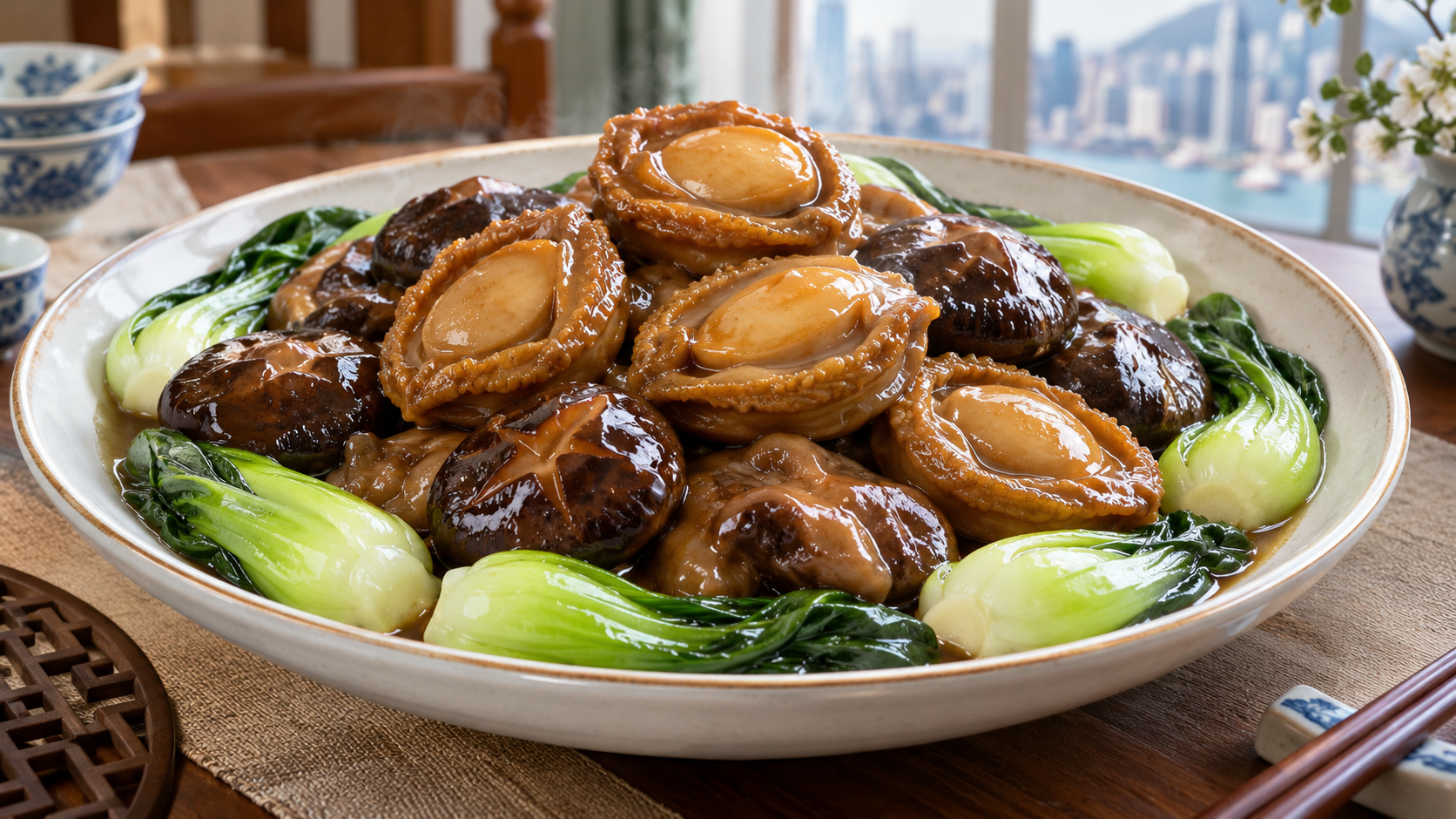
The main product in the photo is abalone, appearing as dried soft-centre abalone, rather than canned abalone; '22-head' is merely a size specification and does not change the ingredient itself. This type of abalone is suitable for the braising method common in Cantonese cuisine, paired with thick flower mushrooms, slowly simmered with chicken stock, oyster sauce, Shaoxing wine, and a small amount of soy sauce to bring out a rich, umami flavour. The focus of the finished dish is not on piling on heavy sauces, but on allowing the sea flavour of the abalone and the aroma of the flower mushrooms to infuse into the broth. If the product is still un-rehydrated dried abalone, the required soaking time will far exceed that of a typical home-style braised dish; the rehydration procedure on the packaging should be followed completely. The cooking section of this recipe assumes the abalone has already been prepared according to the packaging requirements.
Quick Answer
First, thaw and complete any required rehydration of the abalone according to the packaging instructions; if the product is already rehydrated, simply drain it. Sauté ginger slices, garlic, and flower mushrooms until fragrant, then add chicken stock, oyster sauce, light soy sauce, and a small amount of Shaoxing wine. Braise on low heat until the abalone is infused with flavour and the flower mushrooms are soft and tender, then reduce the sauce. Do not assume the product is cooked; actual thawing, rehydration, and heating times should prioritize the packaging instructions.
Ingredients
- Soft-centre abalone, thawed and rehydrated according to packaging instructions, 6 pieces
- Dried flower mushrooms, 6 pieces
- Ginger slices, 6 slices
- Garlic, 2 cloves, crushed
- Chicken stock, 350 ml
- Oyster sauce, 1 tablespoon
- Light soy sauce, 1 teaspoon
- Shaoxing wine, 1 tablespoon
- Rock sugar, 1 teaspoon
- Dark soy sauce, 1/2 teaspoon
- Cornflour, 1 teaspoon
- Water, 2 tablespoons
- Cooking oil, 1 tablespoon
- Baby Bok Choy, 6 heads
Method
-
First prepare the abalone and flower mushrooms
Frozen abalone must be thawed according to packaging instructions; do not leave it at room temperature for extended periods. If the packaging requires rehydration, complete the entire process before cooking. Rinse rehydrated abalone gently with clean water and drain; wash dried flower mushrooms with clean water and soak until soft, remove the stems, and reserve the clean soaking water.
-
Sauté ginger and garlic
Heat a wok over medium heat, add cooking oil, and stir-fry ginger slices and garlic for about 1 minute until fragrant; do not fry until burnt.
-
Braise flower mushrooms first to infuse flavour
Add the flower mushrooms and stir-fry for about 1 minute. Pour in the chicken stock, about 100 ml of mushroom soaking water, oyster sauce, light soy sauce, Shaoxing wine, rock sugar, and dark soy sauce. Bring to a simmer, then reduce to low heat, cover, and braise for about 12 minutes until the flower mushrooms are plump and tender.
-
Add abalone and simmer gently
Add the abalone prepared according to packaging requirements. Maintain a low simmer for about 5 to 8 minutes, turning gently once during cooking. The sauce should bubble gently; avoid a vigorous boil to prevent the abalone texture from becoming tough.
-
Reduce sauce and thicken
Remove the abalone and flower mushrooms and place them temporarily on a plate. Mix cornflour with water, then gradually pour it into the pot. Keep on low heat for about 1 to 2 minutes until the sauce becomes thick enough to coat the back of a spoon thinly.
-
Blanch vegetables and plate
Boil water in another pot, blanch the Baby Bok Choy for about 1 to 2 minutes until just cooked, then drain and arrange around the edge of the plate. Place the abalone and flower mushrooms in the centre and pour over the hot Oyster King sauce. If the abalone is an uncooked product, you must use a food thermometer to confirm the thickest part reaches the packaging requirement and a safe core temperature of at least 75°C; if it is a shellfish product with stricter packaging requirements, follow the packaging and food safety guidelines.
FAQ
What does '22-head' abalone mean?
'22-head' is typically a size specification for dried abalone, meaning there are approximately 22 pieces per catty (jin). Generally, a smaller number indicates a larger individual piece. It is not a cooking method, nor is it a variety name for abalone.
Must dried abalone be soaked for several days?
If it is truly un-rehydrated dried abalone, the traditional method indeed requires a longer soaking and repeated heating process; soaking overnight does not necessarily mean it is ready to braise immediately. The time required varies depending on the size, dryness, and processing method of the dried abalone, so the rehydration procedure on the product packaging should be followed. Pre-rehydrated or specially processed products should not use the long-duration process for traditional dried abalone.
Why is abalone not suitable for high-heat boiling at the start?
Abalone requires appropriate time and gentle braising to improve its texture; a common practice in recipe research is to braise with chicken stock, flower mushrooms, and seasonings first, then add the prepared abalone for a short simmer to infuse flavour. High heat and vigorous boiling for a long time do not equal tenderness; instead, it may make the texture tough.
What vegetables can be paired with Oyster King Abalone?
Baby Bok Choy, Choy Sum, or Baby Cabbage are all suitable. Green vegetables can balance the richness of the abalone and oyster sauce, and make it easy to serve the sauce with rice.