 Skip to content


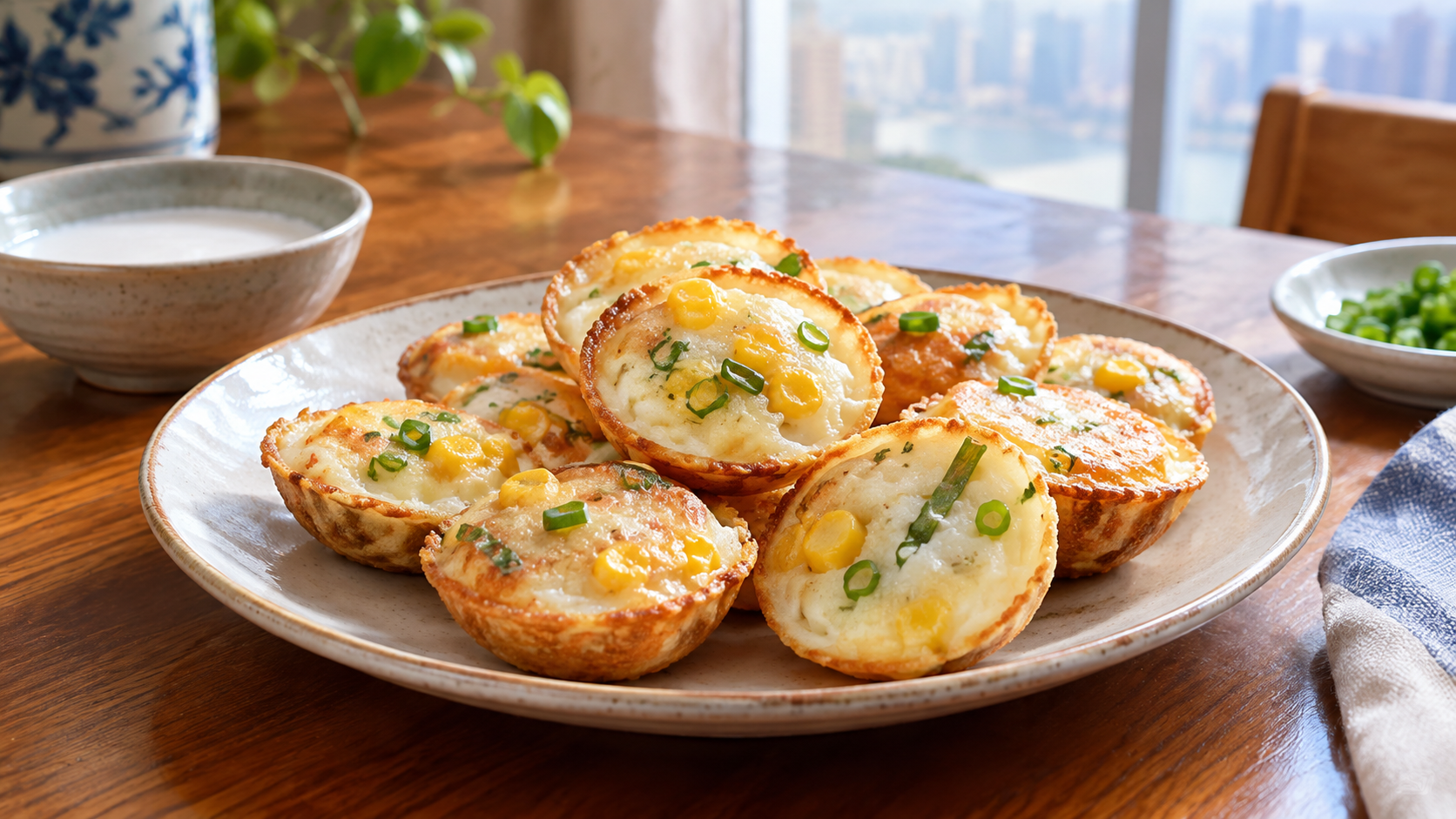
Thai-style vanilla coconut small pan-fried cakes
Thai cuisine · 30 minutes · Serves 2 to 3
Vanilla Coconut Thai Mini Pancakes
The actual ingredient selected for this recipe is a ready-to-drink vanilla protein milkshake, which is a processed dairy beverage, not milk powder or pure whey powder. After researching several Thai desserts, the core of mango sticky rice is steamed glutinous rice mixed with sweet coconut milk, while red ruby (a Thai dessert) uses water chestnuts, tapioca flour, and coconut milk to create a crisp and chewy texture; both are difficult to naturally integrate a protein milkshake into their original structure. Khanom Krok, however, is made from a batter of rice flour and coconut milk, pan-fried in a grooved pan until the edges are crispy and the centre is soft, with a second layer of coconut milk batter on top. Since dairy liquid is a key component, it is the most suitable for reasonably incorporating the milkshake. Traditional versions usually combine sweet and savoury flavours, and often include toppings like corn and spring onions. This time, we have reduced the extra sugar and used coconut milk to maintain the primary aroma, allowing the vanilla to act only as a subtle background scent, which is more suitable for Hong Kong family tastes.
Quick Answer
Add the protein milkshake as a liquid ingredient to the rice flour batter of Thai coconut mini pancakes (Khanom Krok), while retaining the traditional two-layer structure of sweet and savoury coconut milk. The method is not to use the milkshake directly as a sauce, but to blend its vanilla dairy aroma with the rice flour and coconut milk; since the milkshake itself is already sweet, the amount of extra granulated sugar needs to be significantly reduced. For storage, defrosting, or heating methods before opening and use, follow the packaging instructions; do not assume defrosting is required.
Ingredients
- Vanilla protein milkshake 165 ml
- Coconut milk 120 ml
- Rice flour 80 g
- Glutinous rice flour 20 g
- Cooked white rice 30 g
- Granulated sugar 10 g
- Fine salt 1/4 teaspoon
- Water 40 ml
- Coconut cream 100 ml
- Rice flour 10 g
- Granulated sugar 5 g
- Fine salt 1/8 teaspoon
- Sweet corn kernels 30 g
- Spring onion 1 stalk, finely sliced into rings
- Vegetable oil 1 to 2 tablespoons, for brushing the pan
Method
-
Prepare the rice flour batter
Place the rice flour, glutinous rice flour, cooked white rice, 10 g of granulated sugar, and 1/4 teaspoon of salt in a blending cup. Add the vanilla protein milkshake, 120 ml of coconut milk, and water, and blend for about 30 to 45 seconds until smooth. The cooked rice makes the traditional rice batter texture softer; after completion, let it rest for about 10 minutes to allow the rice flour to fully absorb the water.
-
Prepare the coconut-topped layer
Mix 100 ml of coconut cream, 10 g of rice flour, 5 g of granulated sugar, and 1/8 teaspoon of salt until no lumps remain. This layer should not be too sweet; its function is to form the smooth, coconut-aromatic centre of traditional Khanom Krok.
-
Preheat the frying pan
Use a Khanom Krok pan, an octopus grill pan, or a heavy-bottomed pan with small round grooves, and preheat over medium heat for about 2 to 3 minutes. Thinly brush each groove with oil; when the pan surface is hot enough, a small drop of rice batter should immediately make a slight sizzling sound, but should not smoke.
-
Fry the rice batter base first
Stir the main rice batter again. Pour into each groove until about two-thirds full, leaving space for the coconut cream topping. Fry over medium heat for about 2 minutes; when the edges begin to set and small bubbles appear on the surface, it indicates the base layer is half-cooked.
-
Add coconut cream and toppings
Spoon about 1 teaspoon of the coconut cream topping into each groove, then add a small amount of sweet corn kernels and spring onion. Cover with a lid and fry over medium-low heat for about 4 to 6 minutes; do not rush to flip. The traditional method is to let the bottom heat directly, gradually forming a crispy browned edge, while the top layer remains soft.
-
Judge doneness and remove from pan
When the edges are golden, the bottom has formed a complete crispy shell, and the centre has changed from a flowing batter to a soft, set state, it can be lifted with a small spoon along the edge. If obvious raw batter is still visible, continue heating over medium-low heat for 1 to 2 minutes; if using a food thermometer, the centre can reach approximately 75°C as a conservative doneness judgment. Do not fry over high heat, to avoid the outer layer burning black while the centre remains undercooked.
-
Enjoy while hot
Eat immediately after removing from the pan to best appreciate the layers of crispy edges, soft centre, and coconut aroma. Since a processed dairy beverage is added, any handling requiring refrigeration or defrosting before opening, after opening, or otherwise should prioritize the product packaging instructions; leftover opened milkshake and finished products should also be handled according to packaging and general perishable food refrigeration requirements; do not leave at room temperature for long periods.
Frequently Asked Questions
What can I do if I don't have a Khanom Krok pan?
You can use an octopus grill pan or other pans with small round grooves as substitutes; the key is that the grooves allow the rice batter to form a thick centre and crispy edges. Traditional sources also mention using Ebelskiver-type grooved pans. While a flat pan can fry small round cakes, it will lose the iconic hemispherical shape and two-layer texture of Khanom Krok.
Why does this Thai mini pancake have two layers?
The characteristic of Khanom Krok is precisely the base layer of rice flour and coconut milk, plus a thicker, sweet and savoury coconut milk topping; the frying pan directly creates a crispy browned edge on the bottom, while the top layer remains soft. This contrast of one crispy and one soft is closer to the traditional method than simply mixing all ingredients into a single sweet pancake.
The protein milkshake itself is sweet, do I still need to add sugar?
A small amount is needed, but you should not follow the sugar amount of traditional recipes exactly. The coconut milk layer of traditional Khanom Krok is inherently sweet, and this time the milkshake already provides sweetness and vanilla aroma, so only 10 g of sugar is added to the main rice batter and 5 g to the topping; if the milkshake used is sweeter, the extra sugar can be reduced further.
Can I replace all the coconut milk with protein milkshake?
Not recommended. The coconut milk in traditional Khanom Krok is responsible for the main coconut aroma, fat content, and smooth texture; this time, only part of the liquid in the main rice batter is replaced with milkshake, and coconut milk and coconut cream are retained, in order to maintain the core flavour and texture of this Thai snack.