 Skip to content


Japanese Snakehead Fish Fillets Simmered in Ginger Sauce
Japanese cuisine · 30 minutes · Serves 2 to 3
Japanese-style Ginger Soy Simmered Black Fish Fillets
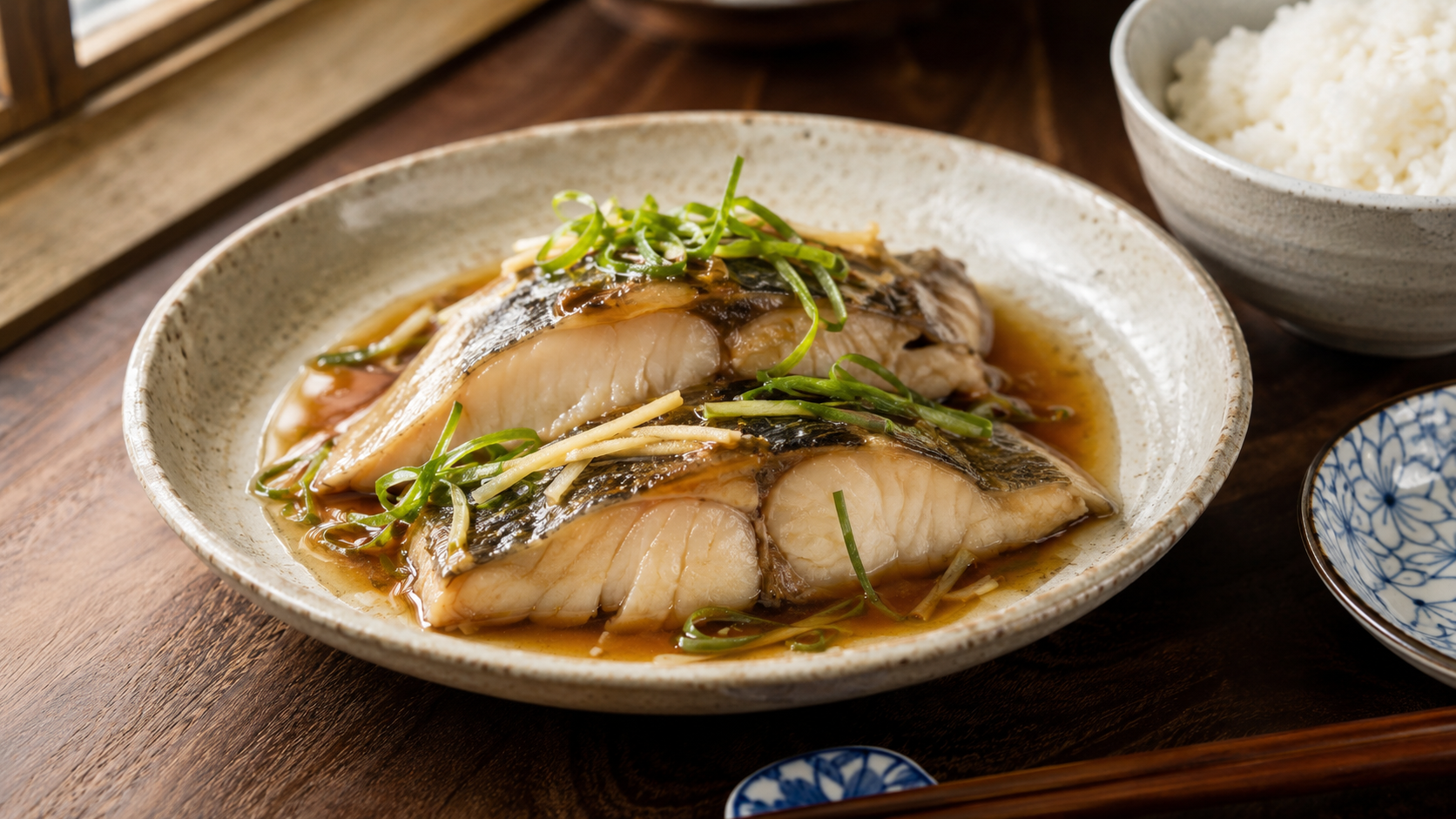
Black fish fillets are boneless fillets made from freshwater fish of the black eel family. The flesh is firm and the flavour is relatively mild, making them suitable for preparation in the style of the Japanese home-cooked dish 'Nimono' (simmered fish). Unlike stir-frying, Nimono does not rely on heavy wok hei; instead, it allows the fish to slowly absorb the salty, sweet, and aromatic flavours of soy sauce, mirin, sake, and ginger. This method is particularly well-suited to be served with white rice. Since the black fish fillets are already sliced, there is no need to follow the methods used for whole flounder or golden eye snapper; controlling the heat and avoiding turning the fillets actually helps keep them intact.
Quick Answer
Thaw the black fish fillets according to the package instructions, drain them, and simmer in a Japanese-style fish broth made with sake, mirin, soy sauce, and ginger juice to create a 'Nimono'. First, let the fillets set in the boiling broth, then reduce the heat to medium-low and simmer gently for about 8 to 10 minutes. During this time, spoon the broth over the fish until the flesh is opaque and reaches an internal temperature of 63°C, then serve.
Ingredients
- Black fish fillets 350g
- Ginger 15g, sliced thinly
- Sake 60ml
- Mirin 45ml
- Japanese soy sauce 35ml
- Water 120ml
- Sugar 1 teaspoon
- White rice, as needed
- Green onion 1 stalk, sliced into strips for garnish
Method
-
Thaw according to package instructions
Keep the black fish fillets in their packaging and thaw in cold water for approximately 15 to 30 minutes, as per the package instructions, until the fillets become soft. Remove the fillets from the bag and drain them. Do not assume the product can be cooked raw or is already cooked.
-
Bring the ginger-scented broth to a boil first
Take a wide flat-bottomed pan and add the sake, mirin, water, soy sauce, sugar, and ginger slices. Heat over medium heat until the broth is visibly boiling. Allow the alcohol aroma to evaporate before adding the fish; this makes it easier to control the shape of the fish compared to simmering in cold liquid.
-
Lay the fillets flat to set
Place the drained fillets into the pan one by one, laying them flat and trying to avoid overlapping. Keep the heat at medium and simmer for about 2 minutes. Once the surface of the fish turns from translucent to milky white and the edges begin to set, do not rush to turn them over.
-
Reduce to medium-low heat and simmer gently
Adjust to medium-low heat, keeping the broth at a state of small bubbles rather than a violent boil. Cover with a lid or place a sheet of perforated baking paper close to the surface of the fish, and continue simmering for about 6 to 8 minutes. Every 1 to 2 minutes, spoon the broth over the fish to avoid repeatedly turning the fillets with a spatula.
-
Check doneness and reduce the sauce
The thickest part of the fillets should be completely opaque, and the flesh should separate easily when gently pushed with chopsticks. If you have a food thermometer, the centre must reach 63°C or higher to be considered safe. If the fish is cooked but there is still a lot of liquid, you can increase the heat to medium and reduce the sauce for about 1 to 2 minutes until the liquid is slightly glossy. Avoid reducing it too dry, as this will make the fish salty.
-
Plate and serve with rice
Carefully transfer the fillets to a plate using a spoon or wide spatula. Drizzle with a small amount of the concentrated broth and garnish with green onion strips. Serve hot with white rice, allowing the sauce to seep into the grains to best bring out the home-style flavour of Japanese Nimono.
Frequently Asked Questions
Can black fish fillets be cooked using the Japanese Nimono method?
Yes. Traditional fish Nimono is not limited to a specific type of fish; white-fleshed fish such as flounder, golden eye snapper, cod, and other fish with firm flesh can all be used. Since black fish fillets have firm flesh, this technique can be applied.
Why should you not keep turning the fish when cooking Japanese Nimono?
During the gentle simmering process, the fish fillets gradually become tender, and repeated turning can easily cause the flesh to fall apart. Japanese recipes often use a lid or the method of spooning broth over the fish to ensure the broth covers the surface while minimising the need to turn the fish.
Do black fish fillets need to be thawed before cooking?
For this product, the thawing and heating instructions on the packaging should take priority. Thaw in cold water for approximately 15 to 30 minutes according to the package instructions, and remove from the bag once the fillets are soft. Do not leave them to thaw at room temperature for extended periods.
How do you know when the black fish fillets are fully cooked?
The most reliable method is to use a food thermometer to measure the thickest part of the fillet; the centre must reach 63°C (145°F) or higher. Without a thermometer, the fish flesh should change from translucent to opaque and can be easily flaked apart with a fork.