 Skip to content


Fitness Meal Prep: Handling Chicken Breast, Beef + Pet Venison at the Same Time? A Process to Avoid Cross-Contamination of Raw Meat
Popular FAQs
Fitness Meal Prep: Handling Chicken Breast, Beef, and Pet Venison Simultaneously? A Process to Avoid Cross-Contamination of Raw Meat
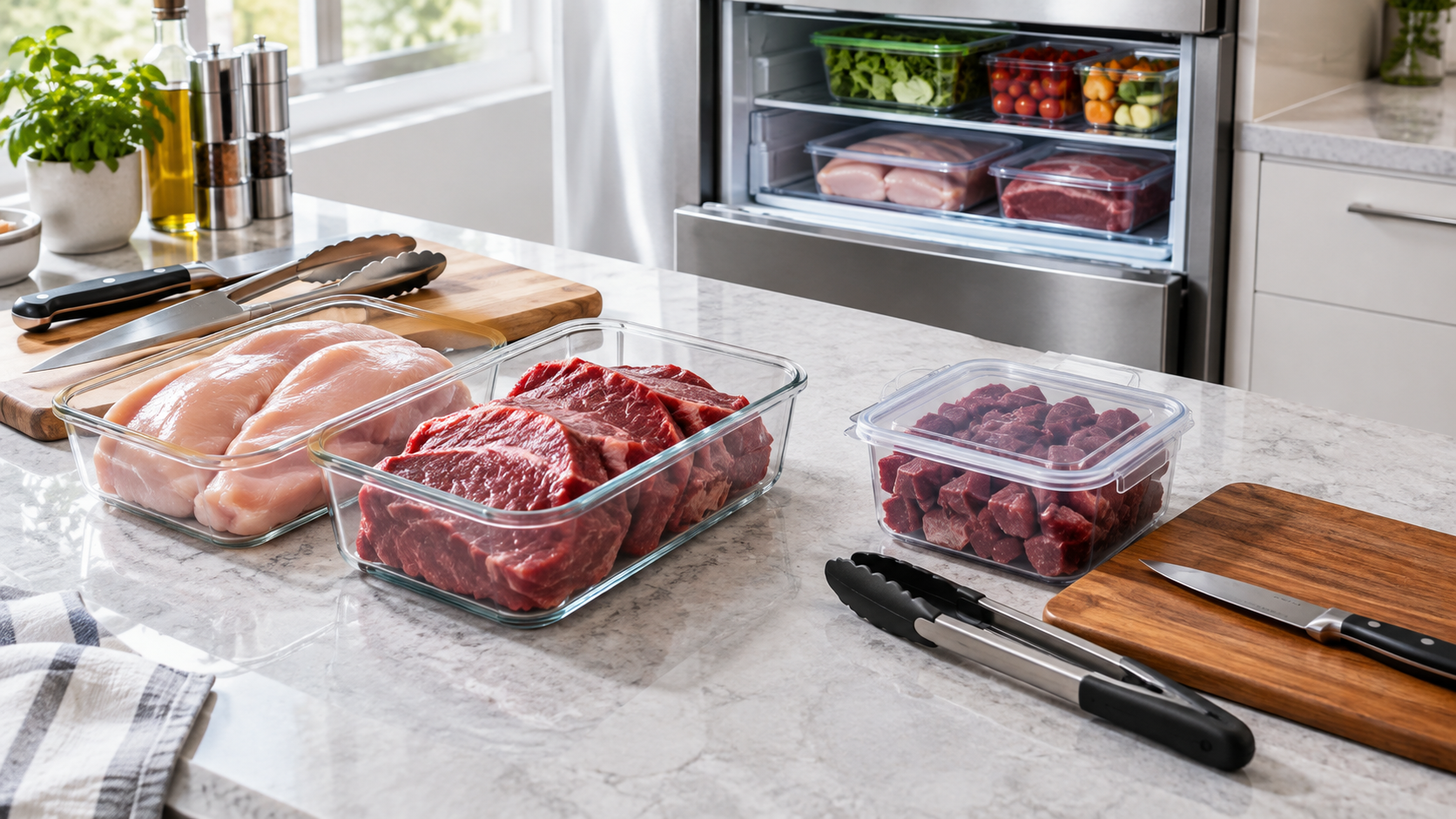
You can use a 'two workstream' approach: keep the human-edited chicken breast/beef and pet venison completely separate throughout, ideally using different cutting boards, knives, and tongs. When thawing pet venison, place it in a leak-proof container inside a refrigerator set at 0 to 4 degrees Celsius, positioned so that juices do not drip onto other foods. After handling raw pet meat, wash your hands first, then clean and disinfect any surfaces and utensils that came into contact with it before handling ingredients for human consumption. This product is labelled as 'Pet Food' and requires cooking, so do not treat pet venison as meat for human consumption or add it to human Meal Prep. The Centre for Food Safety in Hong Kong recommends thawing refrigerated meat at 0 to 4 degrees Celsius to prevent cross-contamination from dripping juices; if thawing quickly under running cold water or in a microwave, it must be cooked immediately.
Key Points Illustrated
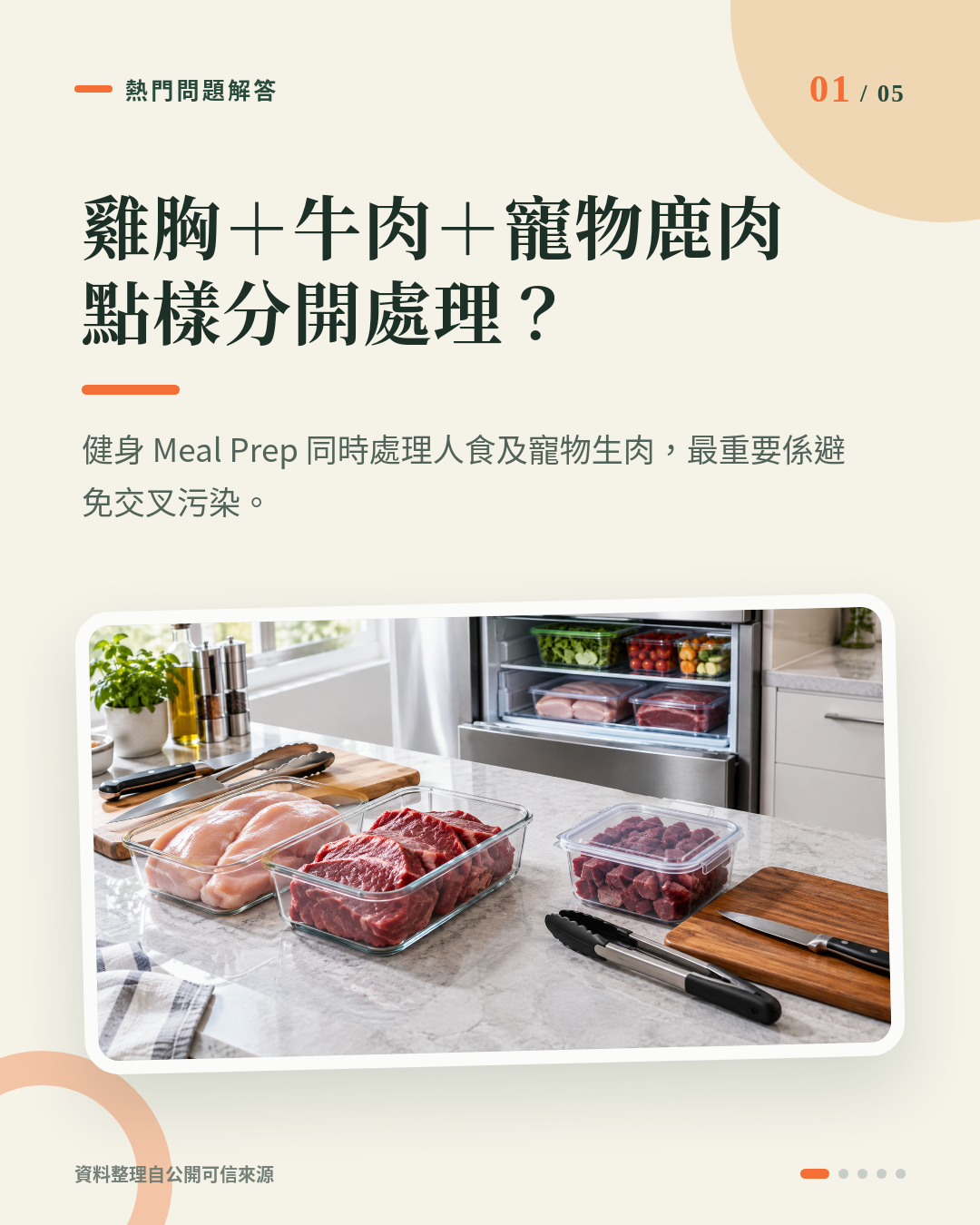
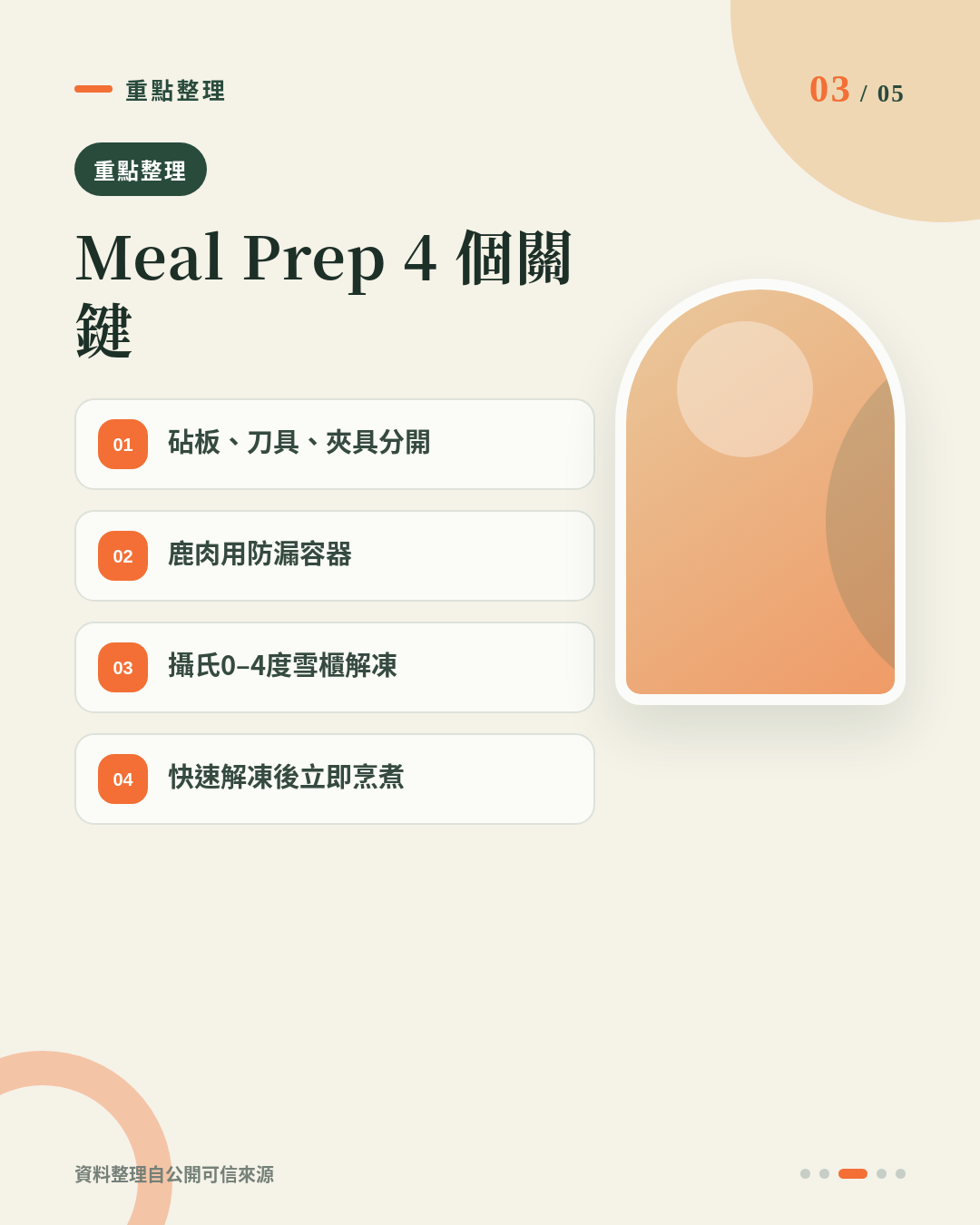
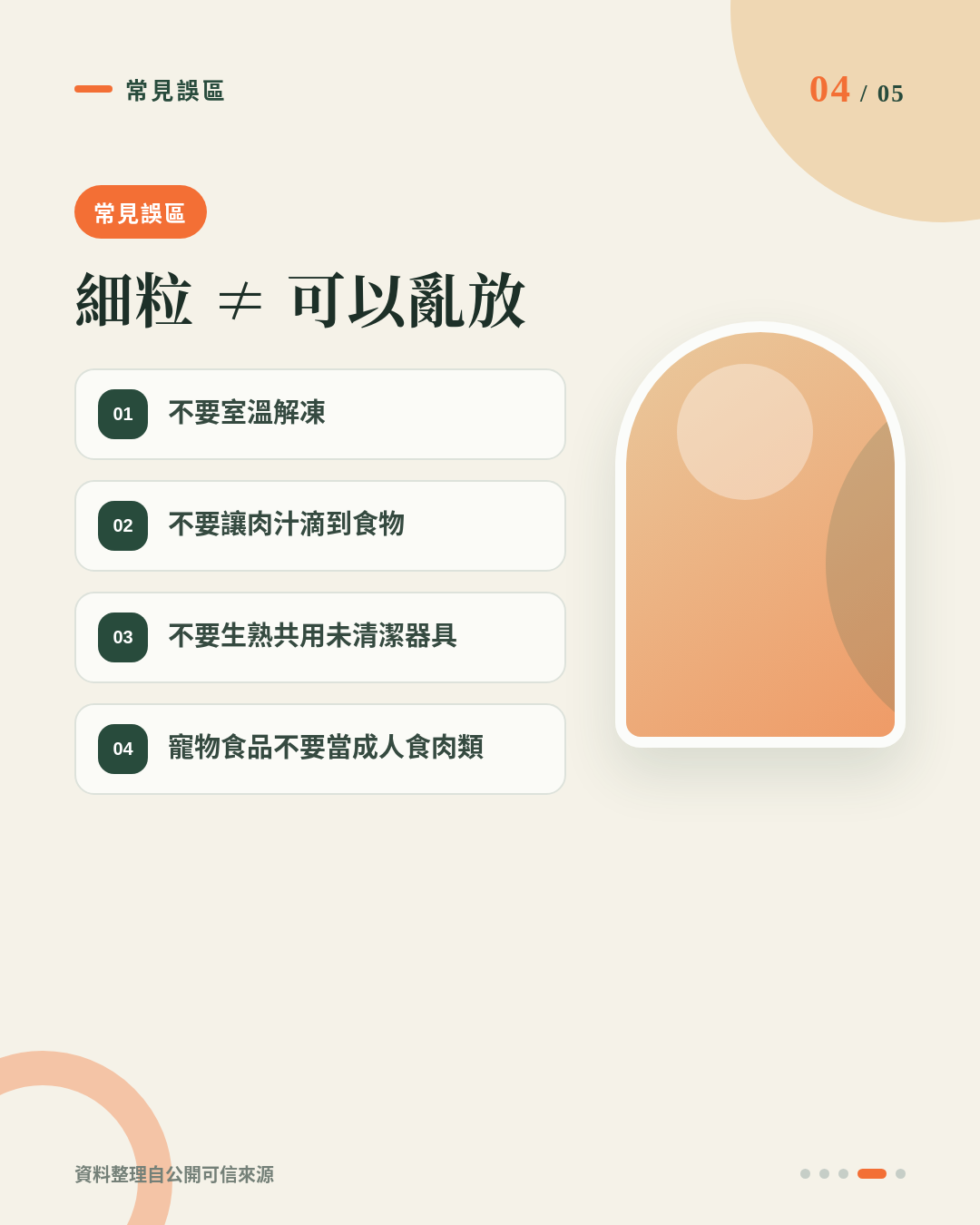
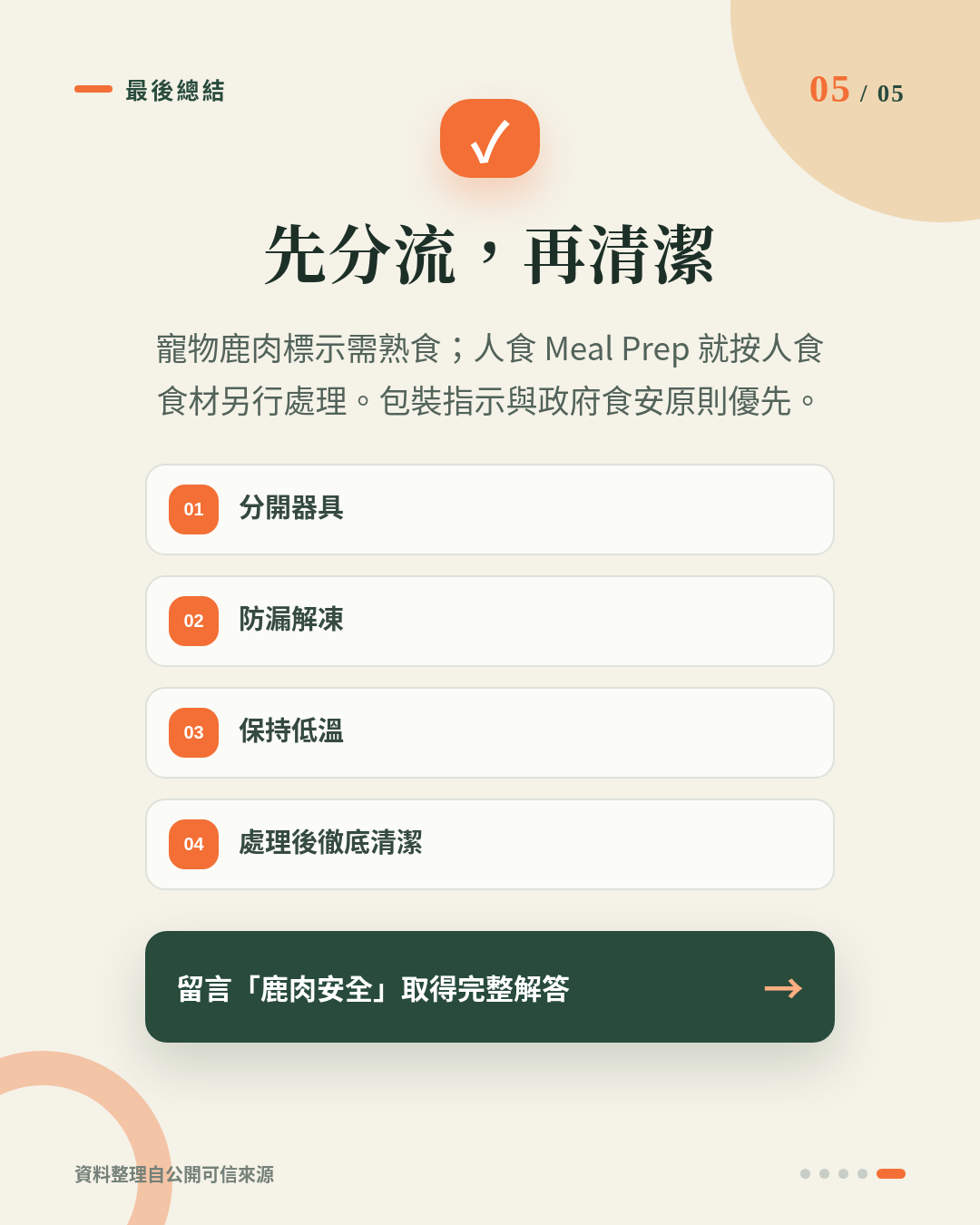
If a single Meal Prep session requires handling chicken breast and beef for humans, as well as preparing 2cm venison cubes for pets, the most practical method is not just to 'wash it clean', but to separate the two types of raw meat from the start. In particular, pet venison belongs to a separate food handling line and should be kept away from human ingredients, ready-to-eat foods, and cooked Meal Prep items using uncleaned utensils and work surfaces. The following breaks down a general home kitchen process from refrigerator thawing, portioning, and cutting to cleaning, following the food safety principles of the Centre for Food Safety and the Food and Environmental Hygiene Department in Hong Kong. citeturn0view0
1. First, divide into two workstreams: one for human consumption, the other for raw pet meat
The safest approach is to decide before starting Meal Prep which utensils are exclusively for human food and which are exclusively for raw pet meat. Human-edited chicken breast and beef should use dedicated cutting boards, knives, and tongs; pet venison should use a separate set. If you do not have two complete sets of utensils at home, at least ensure there is no residual raw meat juice between consecutive handling sessions, and clean thoroughly before switching workstreams. The Food and Environmental Hygiene Department also points out that cooked food should be handled and stored separately from uncooked food to prevent cross-contamination.
- Human-edited chicken breast/beef: One set of cutting board, knife, and tongs.
- Pet venison: A separate set of cutting board, knife, and tongs, clearly distinguished.
- After handling raw venison, do not touch ready-to-eat foods with the same hands or utensils.
- Cooked Meal Prep should be kept separate from all raw meat work areas.
2. Thawing Venison: Leak-proof Container + Refrigerator at 0 to 4 Degrees Celsius
Refrigerated meat should not be thawed at room temperature or with hot water. The Centre for Food Safety in Hong Kong recommends thawing in a refrigerator set at 0 to 4 degrees Celsius, using a leak-proof container or packaging to prevent juices from dripping onto other foods and causing cross-contamination. In practical home Meal Prep, you can place the pet venison in its original packaging inside another lidded leak-proof box, then put it in the refrigerator; do not place raw pet meat directly above chicken breast, beef, or ready-to-eat foods.
- Refrigerator thawing: 0 to 4 degrees Celsius.
- Use a leak-proof box or leak-proof packaging to support the venison.
- Avoid meat juices contacting other foods inside the refrigerator.
- Refrigerated meat should generally be handled according to the storage instructions on the product packaging; the Centre for Food Safety recommends storing refrigerated meat at minus 18 degrees Celsius or below.
3. If Cooking Immediately After Thawing: Portioning and Cooking Must Follow Up
If the venison is not thawed slowly in the refrigerator but is quickly thawed under running cold water or in a microwave, do not leave it on the kitchen worktop for a long time. The Centre for Food Safety points out that thawing under running cold water or in a microwave places the meat partially or fully in a temperature range favourable for bacterial growth, so it must be cooked immediately; the Food and Environmental Hygiene Department also requires that if not handled immediately after thawing, it should be kept at 4 degrees Celsius or below, and food thawed in a microwave must be cooked immediately.
- Microwave thawing: Cook immediately after thawing.
- Running cold water thawing: Proceed to cooking immediately after thawing is complete.
- Do not leave quickly thawed venison on a room-temperature worktop to wait.
- When cooking raw meat, one of the standards listed in the Food and Environmental Hygiene Department's 'Food Hygiene Code' is a core temperature of 75 degrees Celsius for at least 30 seconds.
4. What is Easily Overlooked: Hands, Worktops, and Utensils
Cross-contamination does not come only from cutting boards. After handling venison, handles, knife handles, refrigerator door handles, kitchen worktops, tongs, and areas near the tap can all become contact points. Therefore, practical Meal Prep can adopt the sequence: 'Finish one raw meat line → Clean → Then handle the other line'. In particular, do not hold a raw venison package in one hand while immediately opening a cooked food container or putting fruit in your mouth with the other. The Food and Environmental Hygiene Department points out that hands should be washed before handling food and after using the toilet, and emphasises that cooked food must be handled and stored separately from uncooked food.
- Wash hands first after handling raw venison before touching ready-to-eat foods.
- Clean worktops and utensils that have contacted raw meat juices before switching lines.
- Do not use raw meat tongs directly on cooked meat.
- Handling cooked foods and portioning into boxes last in Meal Prep helps reduce cross-contact.
5. A Home-Style Meal Prep Sequence: From Cleanest to Most Needing Cleaning
If the same kitchen is handling human-edited chicken breast, beef, and pet venison all at once, you can first complete preparation work that does not involve raw meat, then handle raw meat for human consumption, and finally handle pet venison; after that, clean the work area thoroughly before portioning cooked foods. This is a practical arrangement to reduce the chance of cross-contact, not the only process specified by the government. If the product packaging has separate thawing, storage, or cooking instructions, those instructions should take priority.
- ① First prepare rice, vegetables, and other ready-to-eat ingredients.
- ② Handle chicken breast/beef for human consumption.
- ③ Clean the work area and hands.
- ④ Process the pet venison and cook immediately, or keep refrigerated as specified.
- ⑤ Then clean and disinfect contact surfaces, utensils, and hands.
- ⑥ Finally, handle cooked food, portion into containers, and refrigerate.
6. Common Misconception: 2cm dice does not mean you can handle it carelessly
Cutting venison into 2cm dice does make it easier to heat evenly compared to large chunks, but 'cutting into small dice' does not mean you can skip thawing, separation, or cleaning steps. The Food Safety Centre points out that refrigeration cannot kill bacteria, and meat must be thoroughly cooked before consumption, even if cooked directly from frozen without thawing.
- Do not thaw at room temperature just because the meat is diced small.
- Do not allow raw meat juices to flow onto other foods just because it will be cooked thoroughly at the end.
- Do not place pet venison and raw meat for human consumption in the same unpartitioned container.
- Do not interpret the 'Pet Food' label as being for human consumption.
- The product label does not provide nutritional data for humans, so this article does not estimate its protein, fat, or calorie content.
Frequently Asked Questions
Can pet venison be stored in the same fridge as chicken breast and beef?
It can be stored in the same fridge, but should be sealed separately, preferably in leak-proof containers, and kept below other foods to prevent meat juices from dripping and causing cross-contamination. Refrigerated meat during thawing should be handled according to the 0 to 4 degrees Celsius principle.
Can I use the same cutting board to cut chicken breast first, then pet venison?
It is not recommended to use it consecutively without cleaning. Ideally, use two sets of cutting boards and utensils; if only one set is available, thoroughly clean after finishing one type of raw meat before handling another ingredient, and ensure the work surface and hands are clean again before handling cooked food.
Can I put venison in the fridge to wait before cooking after thawing it in the microwave?
This arrangement should not be made. The Food Hygiene Code by the Food and Environmental Hygiene Department states that food thawed using a microwave must be cooked immediately. citeturn1search1
How well-cooked should pet venison be?
The product itself is labelled 'Must be cooked' and recommends full cooking. From a food safety perspective, one of the raw meat cooking standards listed by the Food and Environmental Hygiene Department is that the centre of the meat reaches 75 degrees Celsius for at least 30 seconds; in practice, it should still be handled according to product packaging instructions and applicable food safety requirements.
Can this pet venison be added directly to a human high-protein Meal Prep?
It should not be treated as meat for human consumption just because it is labelled with descriptions like high protein and low fat. The product information you provided is explicitly labelled as 'Pet Food', so this article only treats it as a raw ingredient for pets; human protein, fat, and calorie data are not provided, so adult nutritional data cannot be estimated based on this.