 Skip to content


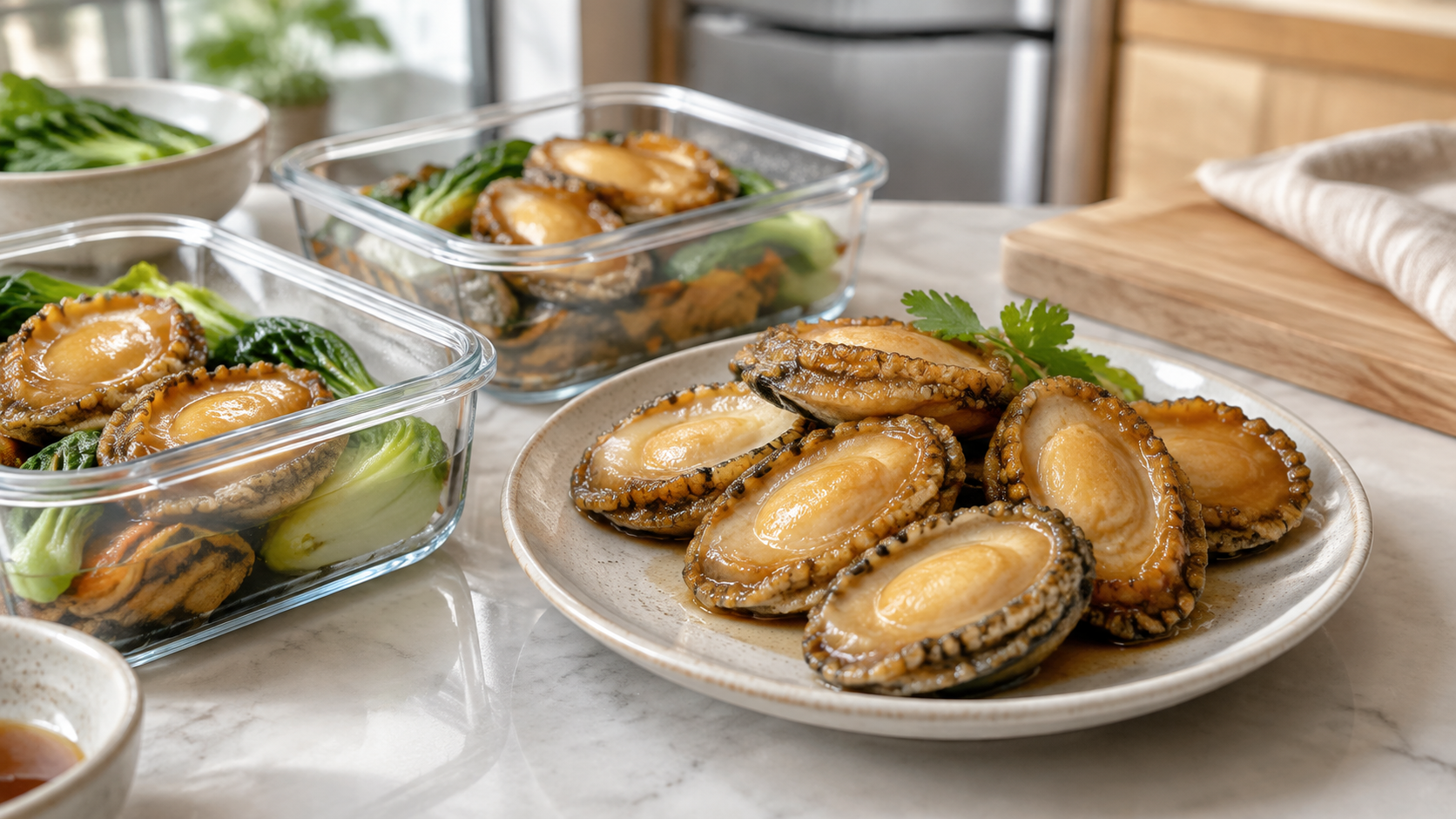
How to store rehydrated dried abalone? A complete guide to fitness Meal Prep: fridge, freezer, and reheating food safety
Popular Questions Answered
How to store rehydrated dried abalone? A complete guide to fitness Meal Prep: fridge, freezer, and reheating food safety
Once dried abalone is soaked and absorbs water, it should no longer be treated as dried goods. After soaking, it should be managed as perishable food: uncooked soaked abalone should be kept in a 0–4°C refrigerator; after cooking, it should be portioned quickly and placed in shallow containers for rapid cooling, then refrigerated or frozen. Cooked refrigerated food should be eaten as soon as possible; the Centre for Food Safety recommends discarding refrigerated leftover cooked food after more than 3 days. When reheating, heat thoroughly and avoid reheating repeatedly.
Illustrated Key Points
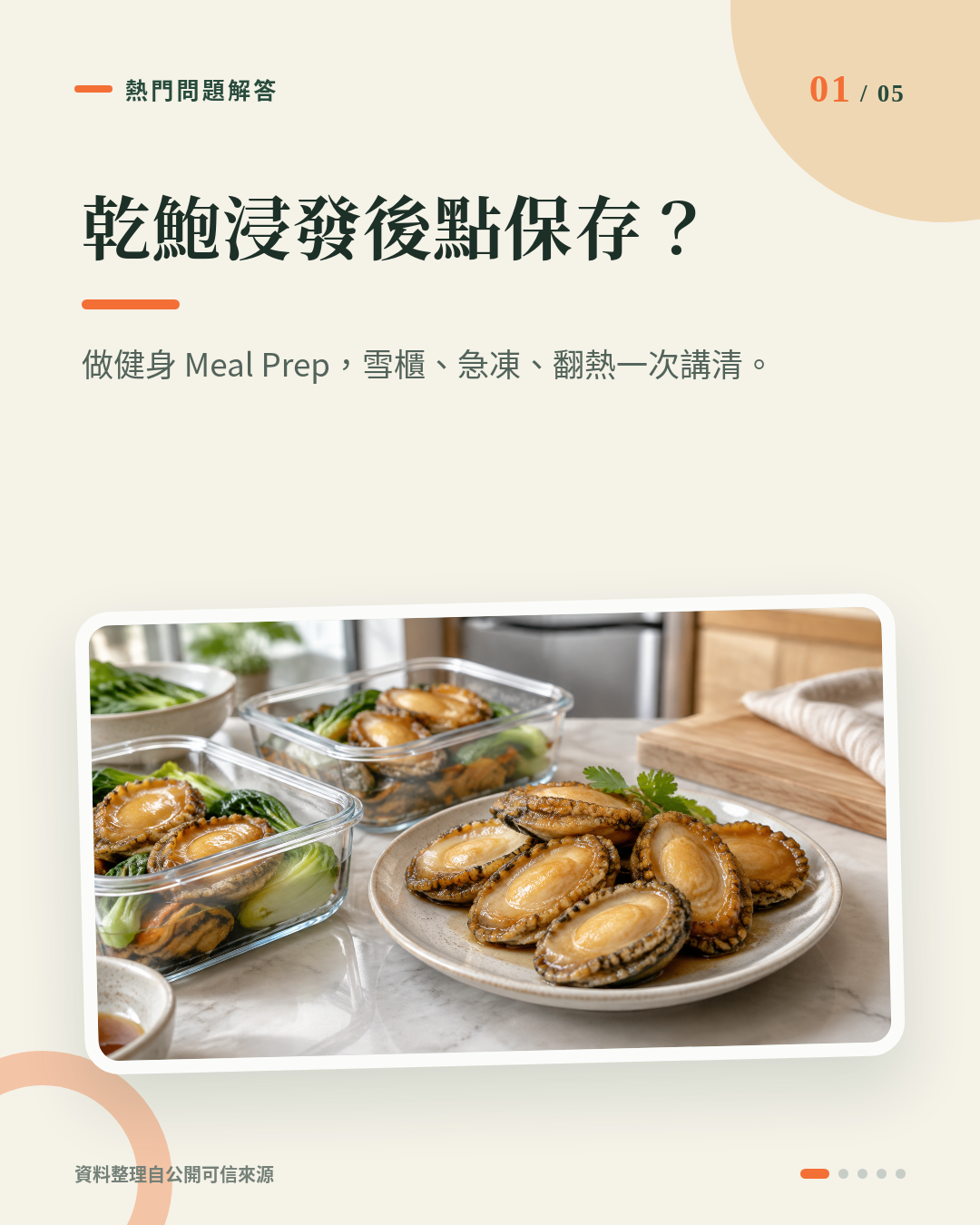
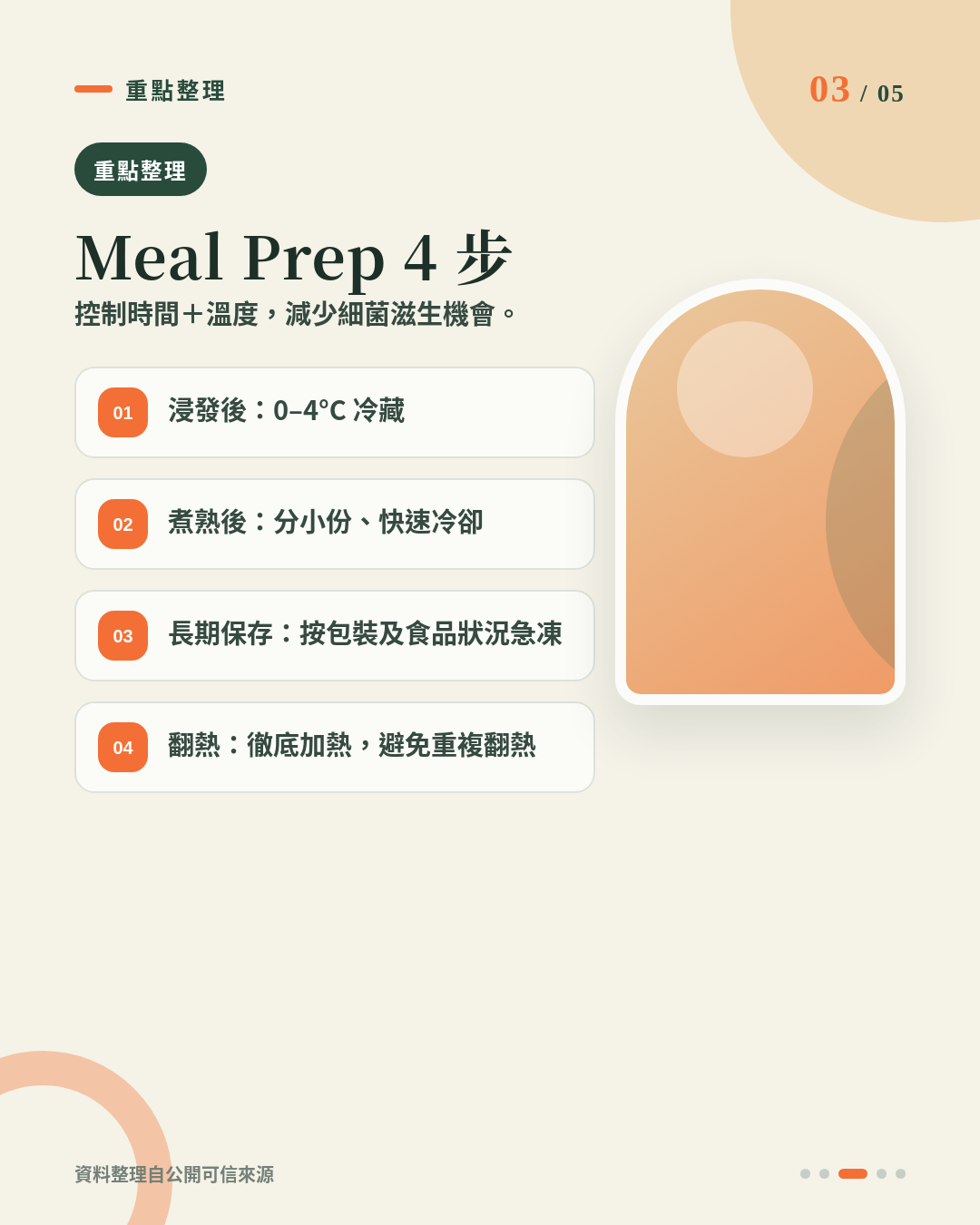
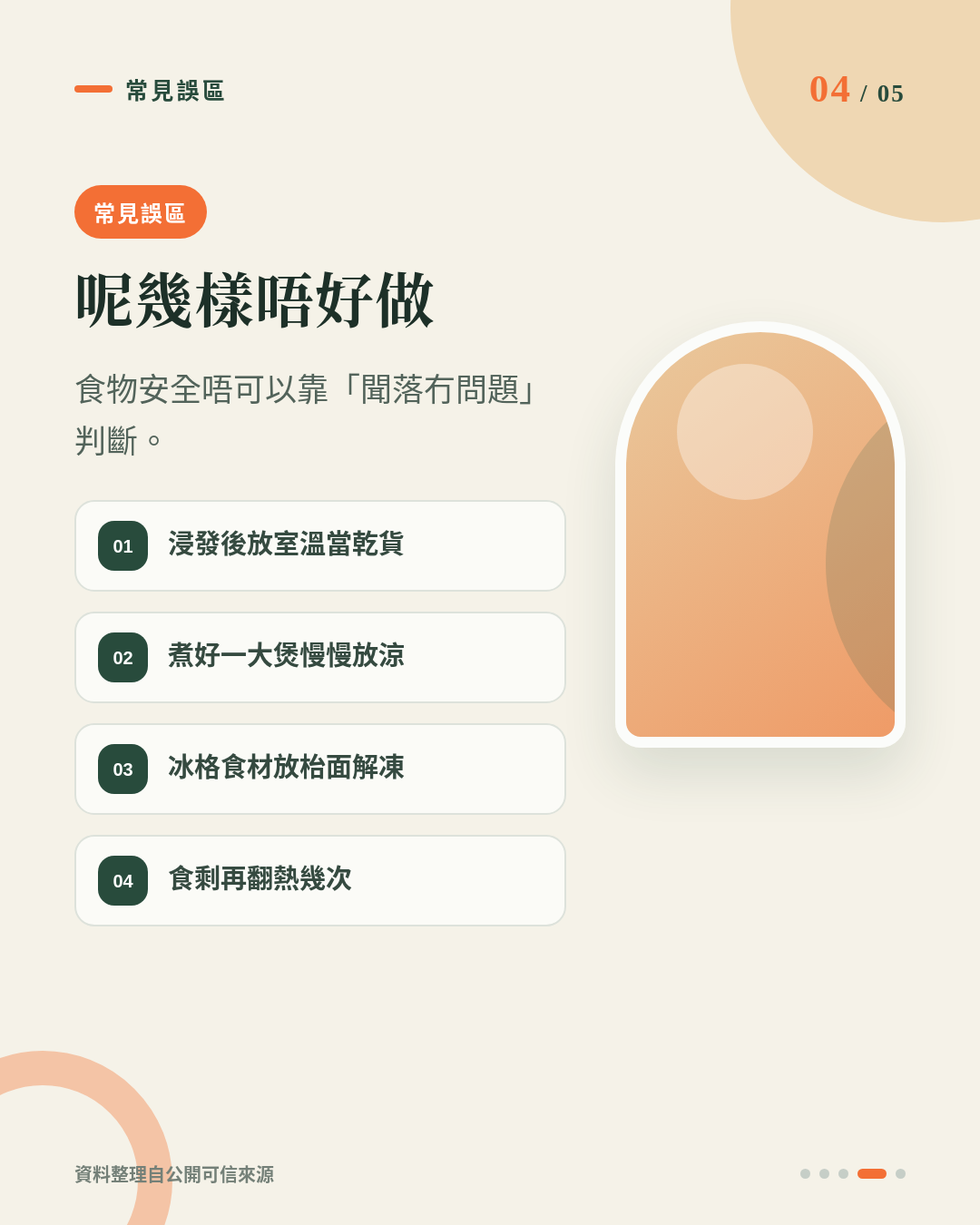
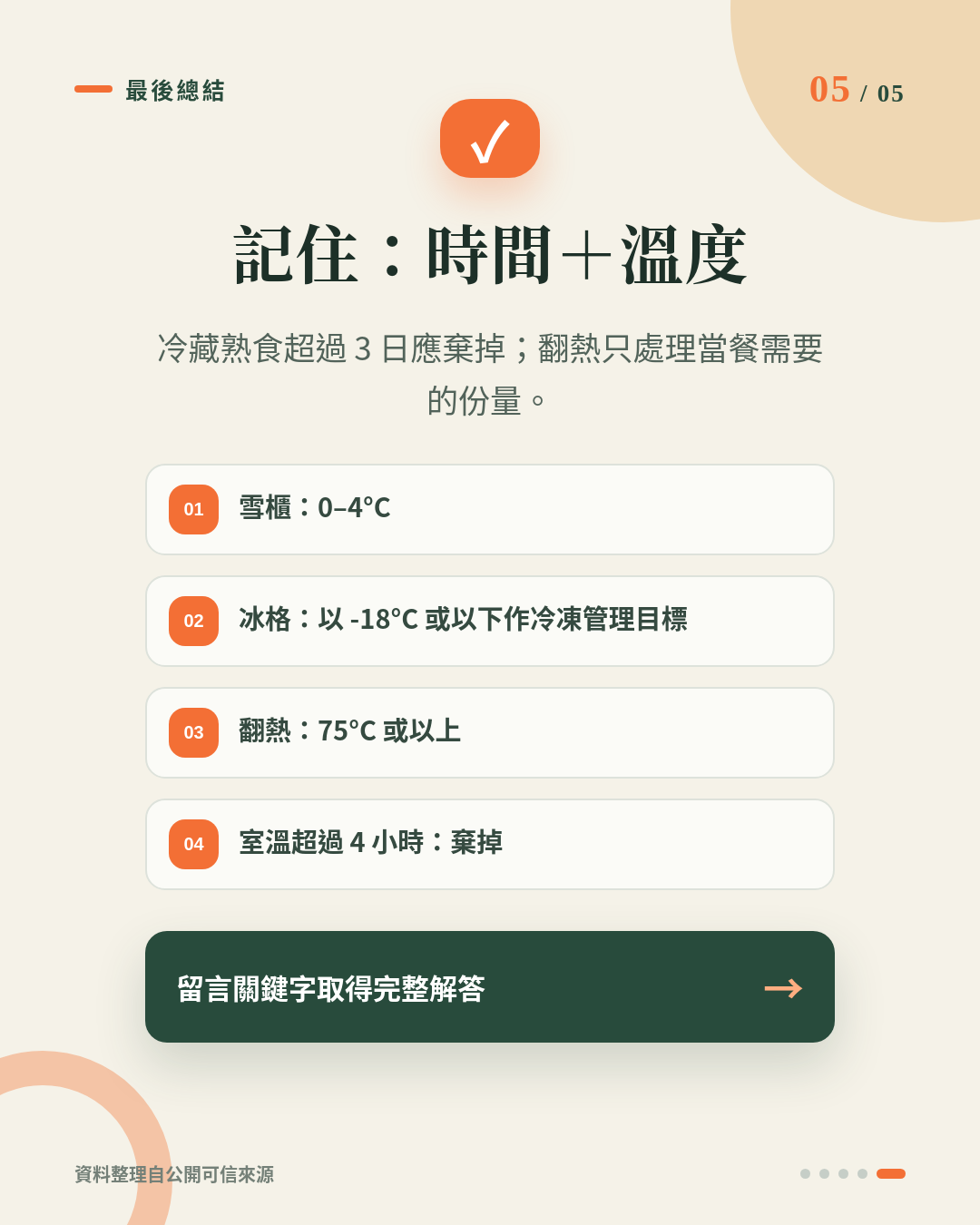
For people doing fitness Meal Prep, the most confusing point after soaking dried abalone is that 'dried goods' and 'absorbed-water food' actually cannot use the same storage method. Unsoaked dried abalone can be handled according to packaging and dried goods storage requirements; but once soaked, the food state has changed and should be viewed as food requiring refrigerated management. Below is the actual process from soaking, cooking, cooling, portioning to Meal Prep reheating, organized according to temperature control principles from the Centre for Food Safety and the Food and Environmental Hygiene Department.
1. First thing after soaking: Manage from 'dried goods' to 'perishable food'
When dried abalone is unsoaked, you cannot directly apply the storage methods for after soaking. Soaked abalone has already absorbed water and should not be left at room temperature for long periods. The Food and Environmental Hygiene Department's 'Code of Practice on Food Hygiene' states that potentially hazardous foods should be kept at 4°C or below; pathogens reproduce faster in the temperature range of 4°C to 60°C.
- If not cooked immediately after soaking, store in a 0–4°C refrigerator.
- Use a clean, covered, leak-proof container to avoid contamination of other foods by soaking water or food juices.
- Raw food and ready-to-eat/cooked food should be separated inside the refrigerator; uncooked ingredients should be placed below cooked food.
- If the product packaging or soaking instructions specify other storage requirements, follow the packaging instructions.
2. The most reliable Meal Prep process: Soak → Cook → Rapid Cool → Portion
If you plan to cook several meals at once, the focus is not simply 'cook and put in the fridge', but controlling the cooling speed after cooking. The Food and Environmental Hygiene Department recommends that cooked food requiring refrigeration should drop from 60°C to 20°C within 2 hours, and then from 20°C to 4°C within the following 4 hours; portioning into small amounts and using shallower containers helps speed up heat dissipation.
- After cooking, do not leave a large pot of abalone with soup for a long time at room temperature to cool slowly.
- Prepare several clean, shallower Meal Prep containers in advance.
- Portion according to the amount needed for one meal to reduce food volume and help rapid cooling.
- Do not pack containers too tightly to allow refrigerator air to circulate.
- Avoid touching ready-to-eat food with bare hands during cooling and portioning to reduce cross-contamination.
3. Refrigerator or Frozen? Decide based on when you will eat
If you will eat within the next one or two meals, you can refrigerate; if you cannot eat within a short time, freezing is a better long-term storage option for Meal Prep. The Food and Environmental Hygiene Department notes that frozen food should be kept at -18°C or below; however, freezing mainly inhibits microbial growth and does not mean it can be stored indefinitely.
- Short-term Meal Prep: Cook, rapid cool, then place in a 4°C or below refrigerator.
- Eat later: Portion and seal meals, then place in ice trays; recommend freezing at -18°C or below as the target.
- Mark the cooking date and contents on each box for First-In-First-Out convenience.
- Official sources do not provide a directly applicable frozen shelf life for this product, so do not estimate the shelf life yourself; refer to the product packaging and actual cold chain conditions.
4. Thawing and reheating: Do not take the easy route and leave on the counter
The Centre for Food Safety recommends that refrigerated food be thawed in a 0–4°C refrigerator, under running cold water, or in a microwave; never thaw at room temperature or in hot water. After thawing under running cold water or in a microwave, cook immediately. For Meal Prep, moving a box from the freezer to the refrigerator compartment the night before is the easiest method to control.
- Preferred method: Move a Meal Prep box from the freezer to a 0–4°C refrigerator to thaw the night before.
- Do not let frozen abalone thaw naturally on the kitchen counter.
- Do not use hot water to speed up thawing.
- After thawing in a microwave, cook/reheat immediately and do not put back in the refrigerator to store slowly.
- When reheating cooked and cooled food, heat as quickly as possible to at least 75°C in the centre; do not cool and reheat again after reheating.
5. Timing: Refrigerated Meal Prep should not be left indefinitely
The Centre for Food Safety's recommendations for leftover food are: cooked food should be eaten as soon as possible, leftovers should be cooled quickly and placed in the refrigerator within 2 hours; refrigerated leftovers should be reheated thoroughly and should not be reheated more than once. If leftovers are stored in the refrigerator for more than 3 days, discard them.
- When doing Meal Prep, it is best to arrange refrigerated boxes according to the amount you will eat within the actual few days.
- Do not judge safety by smell or appearance for cooked food stored in the refrigerator for more than 3 days; discard directly.
- Food that has been at 4–60°C for a long time should not rely solely on reheating to 'make up for it'.
- If food has been at room temperature for more than 4 hours, it should be discarded directly; for 2–4 hours, it should not be put back in the fridge for later consumption.
6. Common Food Safety Myths in Fitness Meal Prep
Abalone can provide part of the protein in a meal, but high protein content and safe storage are separate considerations. For meal preparation, manage time, temperature, cross-contamination and reheating frequency rather than relying on whether the food smells or tastes off.
- Myth 1: Storing rehydrated abalone at room temperature as though it were still dry. Once rehydrated, it must be handled using the temperature controls for chilled food.
- Myth 2: Leaving a large pot of cooked food at room temperature until completely cool before refrigerating it. Divide it into smaller portions in shallow containers to speed up cooling.
- Myth 3: Taking the container out of the freezer and letting it thaw naturally on the kitchen counter. The Food Safety Centre of Hong Kong explicitly advises against thawing food at room temperature.
- Myth 4: Believing that reheating once makes food that has been stored too long safe again. If the food was previously cooled or stored improperly, reheating may not eliminate certain heat-resistant toxins.
- Myth 5: Reheating the entire box at once and saving the leftovers for the next meal. A safer approach is to reheat only the portion needed for the current meal.
Frequently Asked Questions
How long can rehydrated dried abalone be kept in the refrigerator?
It should be kept at 0–4°C and managed according to the product packaging and actual soaking and cooking processes. If cooked for Meal Prep, the Centre for Food Safety of Hong Kong recommends discarding leftovers stored in the fridge for more than 3 days; when there is no specific product shelf life, you should not estimate it yourself.
Can rehydrated abalone be frozen directly?
If soaking needs to be delayed, safe methods to keep it chilled should be used first. Regarding whether thawed food can be refrigerated or frozen again, the Centre for Food Safety of Hong Kong suggests that it is only advisable to consider refrigerating again if it has been thawed correctly in the fridge and kept at 4°C or below; after thawing in running cold water or a microwave, it should be cooked immediately.
What temperature should be used to reheat abalone for meal prep?
The Food Hygiene Code issued by the Food and Environmental Hygiene Department states that when reheating cooked and cooled potentially hazardous food, it should be heated as quickly as possible to 75°C or above. It should not be cooled and reheated again after reheating.
Can I take it out of the freezer and let it thaw at room temperature just before eating?
Not recommended. The Centre for Food Safety of Hong Kong clearly states that thawing should not be done at room temperature or in hot water; a safer method is to thaw in a 0–4°C fridge.
If I want to eat cooked abalone over several days, what should I do?
Divide into small portions as soon as possible after cooking, use shallower containers to speed up cooling, and then store in a refrigerator at 4°C or below. If it will not be consumed in the short term, consider freezing in individual meal portions according to packaging and food condition. Discard cooked food refrigerated for more than 3 days.