 Skip to content


Korean Spicy Stir-Fried Baby Cuttlefish
Korean cuisine · 25 minutes · Serves 2 to 3
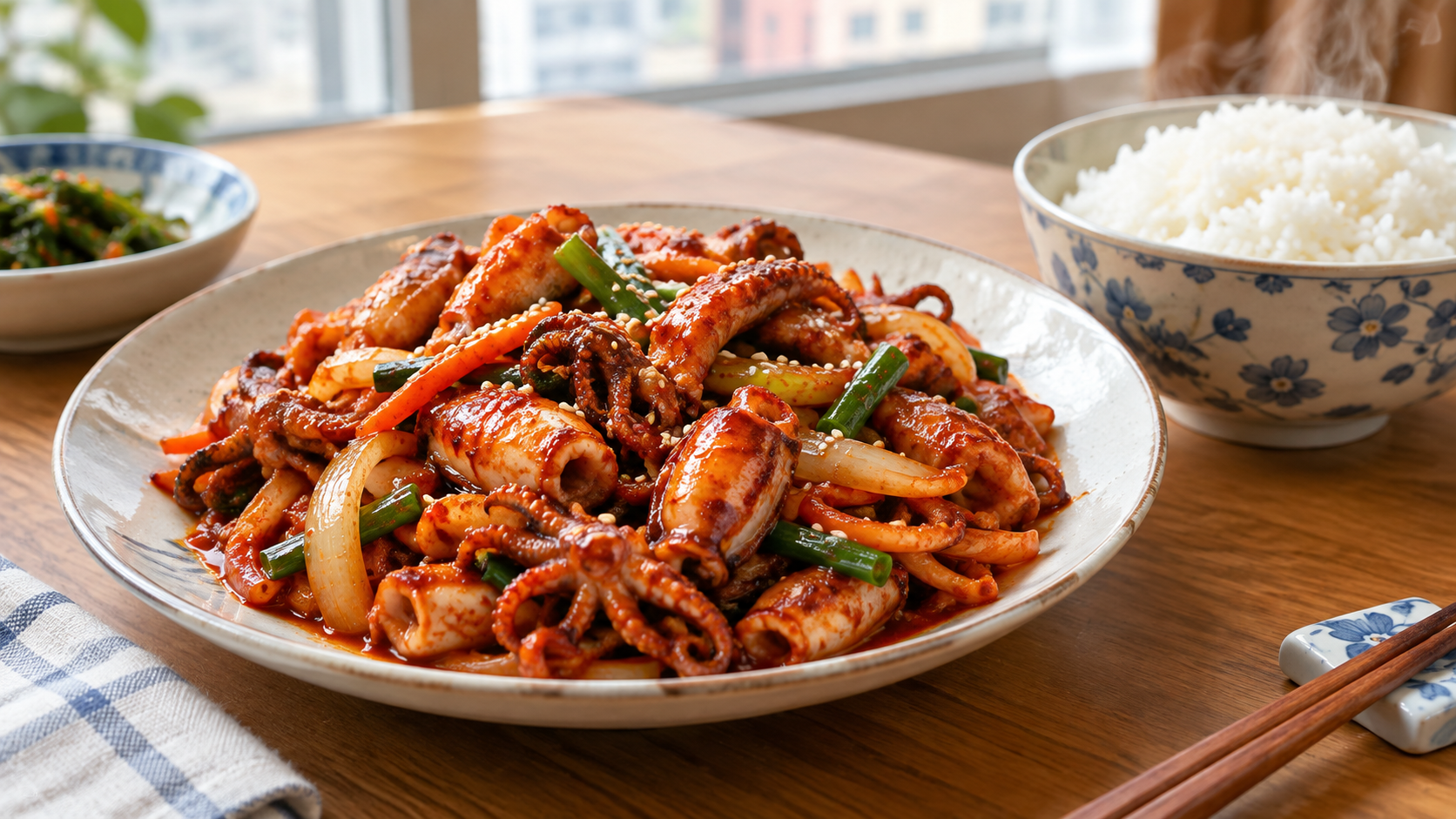
Korean Spicy Stir-fried Baby Squid
This Korean spicy stir-fried baby squid follows the classic method of the Korean home dish 'ojingeobokkeum', stir-frying baby squid quickly with onion, carrot, spring onion, and Korean chili seasoning sauce. The Korean version commonly uses Korean chili paste, Korean chili powder, soy sauce, garlic, ginger, and a small amount of sugar, resulting in a savory, slightly sweet, and spicy flavour that is more than just a layer of chili sauce. Since this ingredient is frozen baby squid, which is small in size, it is particularly suitable for high-heat quick stir-frying; after thawing, it must be thoroughly drained, otherwise the pan will easily release water, making it difficult for the sauce to coat the squid. This version slightly reduces the amount of chili powder and sugar, retaining the spicy-savory framework of Korean spicy stir-fry while being more suitable for Hong Kong families to eat with white rice.
Quick Answer
Baby squid is best suited for Korean spicy stir-fried squid (ojingeobokkeum): first thaw according to package instructions or cook directly, then stir-fry onion, carrot, and spring onion on high heat until fragrant, add Korean chili paste, chili powder, soy sauce, garlic, and ginger and stir-fry, finally add the baby squid and stir-fry quickly until curled and the flesh is opaque, confirming the centre reaches 63°C (145°F) with a food thermometer. The key is high-heat quick stir-frying to avoid overcooking which makes the squid tough.
Ingredients
- Frozen baby squid 400g
- Onion 1/2, cut into coarse strips
- Carrot 1/2, cut into thin strips
- Spring onion 3 stalks, cut into approx. 5cm segments
- Korean chili paste 1 1/2 tablespoons
- Korean chili powder 1 tablespoon
- Light soy sauce 1 tablespoon
- Minced garlic 1 tablespoon
- Minced ginger 1 teaspoon
- Sugar 1 teaspoon
- Sesame oil 1 teaspoon
- Cooking oil 1 tablespoon
- White sesame seeds 1 teaspoon
- Black pepper a pinch
Method
-
Thaw and drain baby squid
Prioritise the thawing and heating instructions on the package. If the package does not specify direct cooking, you can place the frozen baby squid in the refrigerator to thaw slowly overnight; for faster processing, you can seal it and soak in cold water, or use the microwave defrost mode, then cook immediately. After thawing, pour off the water and pat dry thoroughly with kitchen paper. Do not leave to thaw at room temperature.
-
Prepare the Korean spicy sauce
In a bowl, add Korean chili paste, Korean chili powder, light soy sauce, minced garlic, minced ginger, sugar, and black pepper, and mix well into a thick sauce. This ratio intentionally reduces chili powder and sugar to make the spiciness milder, while still retaining the spicy-savory and slightly sweet layers expected of Korean spicy stir-fry.
-
Stir-fry vegetables first
Heat the pan on high heat, add cooking oil. First stir-fry the carrot for about 1 minute, then add onion and spring onion, and stir-fry quickly on high heat for about 1 to 2 minutes, until the onion starts to soften but still retains some crispness, do not stir-fry until completely watery.
-
Add baby squid and sauce
Push the vegetables to the side of the pan, add the drained baby squid and Korean spicy sauce, and stir-fry quickly on medium-high to high heat for about 1 to 2 minutes. The squid will start to curl, and the flesh will turn from translucent to opaque, which indicates it is nearly done; baby squid is small and should not be left in the pan for a long time like stewing.
-
Let the sauce coat the squid
Mix the vegetables and baby squid together, and stir-fry for another 30 to 60 seconds to allow the sauce to evenly coat the ingredients. If there is a large amount of water at the bottom of the pan, keep the heat high to let the steam evaporate quickly, do not add extra water, otherwise the finished dish will become a thin spicy broth.
-
Check doneness and adjust seasoning
Use a food thermometer to check the centre of the largest piece of baby squid; raw squid should reach at least 63°C (145°F). It should also be opaque and fully cooked. After confirming safe doneness, turn off the heat immediately, drizzle with sesame oil and sprinkle with white sesame seeds, and mix using residual heat.
-
Serve hot
Serve the Korean Spicy Stir-fried Baby Squid immediately, best eaten with hot white rice. If making a bento, it should be portioned and refrigerated as soon as possible after cooking, do not leave at room temperature for a long time; when reheating, heat thoroughly and avoid repeated reheating which makes the squid tough.
Frequently Asked Questions
Can frozen baby squid be stir-fried without thawing?
You must check the package instructions first; you cannot assume all frozen baby squid is suitable for direct pan-frying. If the package does not state it can be cooked directly, it is recommended to thaw in the refrigerator; after thawing with cold water or microwave, it should be cooked immediately. Regardless of the method, avoid leaving to thaw at room temperature.
Why does baby squid become tough after stir-frying?
The texture of squid is very affected by cooking time. The method for Korean spicy stir-fried squid is to stir-fry quickly on high heat until curled and opaque, not to cook for a long time. The Korean Bapsang method also emphasises that squid only needs to be stir-fried until curled and opaque, then immediately mixed with vegetables and sesame oil added.
Does Korean spicy stir-fried squid have to use Korean chili paste?
Different recipes have different ratios, but Korean spicy stir-fried squid commonly uses Korean chili paste, Korean chili powder, soy sauce, garlic, and a small amount of sugar as the seasoning base. If you want to maintain a more typical Korean flavour, it is recommended not to replace all the Korean chili paste and chili powder with ordinary chili sauce.
What state is baby squid considered cooked?
The flesh should change from translucent to opaque and show obvious curling; if you have a food thermometer, the thickest part should reach at least 63°C (145°F). Official food safety information also recommends that fish and shellfish reach a minimum internal temperature of 145°F (approx. 63°C).