 Skip to content


Are Snakehead Fish Fillets High in Protein? Are They Suitable for Fitness and Fat Loss? Protein, Fat and Cooking Methods Explained
Popular Questions Answered
Are black fish slices high in protein? Can they be eaten for fitness and fat loss? A complete breakdown from protein and fat to cooking methods
Yes, but it depends on your overall diet and cooking method. Snakehead fish itself contains protein, and a study on snakehead fish (Channa striatus) measured the average protein in raw fish meat at approximately 13.9% and fat at approximately 5.9%. From a fitness and fat-loss perspective, black fish slices can serve as a protein source, but they should not be automatically considered a low-fat or high-protein food simply because of the name 'black fish'; actual nutrition should be based on the nutritional label on the product packaging. Frying absorbs cooking oil, which significantly increases fat content, so steaming, blanching, boiling, or pan-frying with little oil usually makes it easier to control the total calories of the meal.
Key Points Illustrated
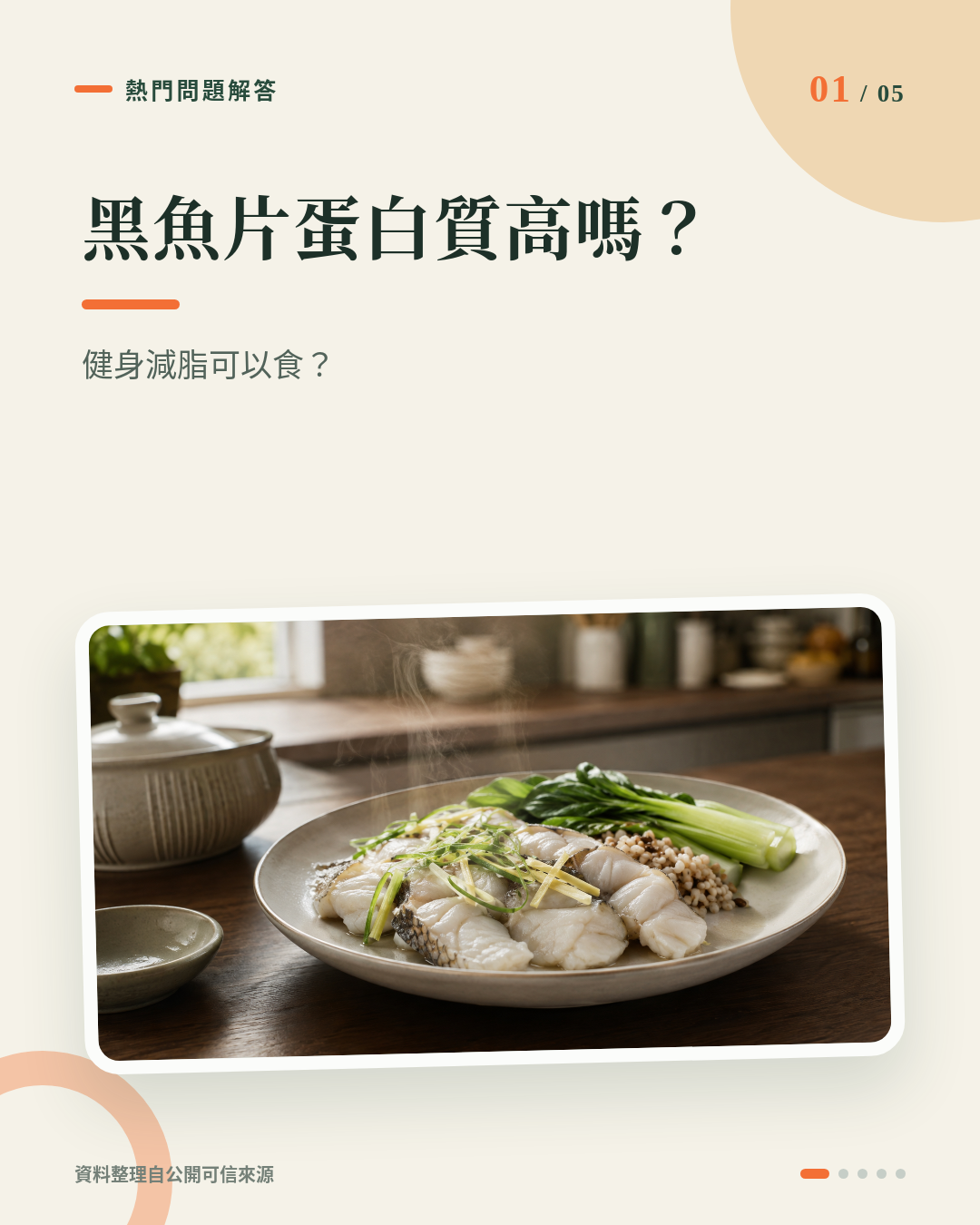




When choosing fish for fitness and fat loss, many people immediately ask: 'Are black fish slices high in protein?' In fact, the answer cannot be determined by the type of fish alone; one must also consider the portion size, the nutritional label of the product itself, and how much oil is used and what sauces are paired with it. Studies have compared raw snakehead fish with boiled, baked, pan-fried, and grilled preparations, finding that different cooking methods cause changes in the proportions of protein, fat, and moisture. In other words, the same fish, cooked using different methods, can have a significant difference in actual calories for a fat-loss meal.
1. Are black fish slices high in protein? Look at the research data first
A study analysed the nutritional composition of striped snakehead fish (Channa striatus), finding that raw fish meat contains an average of 13.9% protein and 5.9% fat. The study also found that the protein proportion in samples was higher after pan-frying and grilling, but this change is related to moisture loss during cooking and cannot be simply understood as 'cooking suddenly creates more protein'. Using the research figures for a very rough conversion, 250 grams of raw snakehead fish meat is approximately equivalent to 34.8 grams of protein, but this is only an estimate from the research sample and cannot be directly taken as the actual protein content of 'Craftsman's Kitchen Black Fish Slices 250g'. When purchasing the product, the nutritional label on the packaging should still be the reference.
- The average protein in raw snakehead fish in the study was approximately 13.9%.
- The protein proportion is affected by moisture loss after cooking.
- The actual protein content of the product should be based on the nutritional label on the packaging.
2. Is it suitable for fitness and fat loss? The key is not just protein
If the goal is to control body fat, one must pay attention to total calories, fat, sauces, and side dishes in the same meal, in addition to protein. Black fish slices can be a source of fish protein in a meal, but 'suitable for fat loss' does not mean that eating more is better. Especially after pan-frying, deep-frying, using thick sauces, or adding a large amount of oil, the total calories of the meal will increase. A more practical approach is to first arrange portions according to your own total calorie and protein needs, then pair them with vegetables and an appropriate amount of carbohydrates.
- Fat loss depends on the total calories of the entire meal, not just the protein in the fish.
- The nutrition of the fish itself and the cooking method/sauces are two different things.
- Portions should be adjusted to fit individual dietary goals and daily requirements.
3. How to cook black fish slices to better control fat?
The study compared boiling, baking, pan-frying, and grilling, finding that pan-fried fish had the highest fat content; the study authors attributed the increase to the absorption of cooking oil during the cooking process; the fat content in grilled samples was also higher than in raw fish. For people controlling their calorie intake, steaming, blanching, boiling, or baking with little oil usually makes it easier to control extra oil. Of course, actual results also depend on the amount of oil used, the thickness of the fish slices, and other ingredients, so there is no need to view any single cooking method as the only answer.
- Cooking with little oil makes it easier to control extra fat.
- Pan-frying and deep-frying are most likely to increase the total calories of the meal due to oil absorption.
- Seasoning sauces, sesame oil, and other ingredients must also be counted in the total calories of the meal.
4. Common Misconception: A high protein percentage does not necessarily mean it is more suitable for fat loss
In the study, the protein percentage in pan-fried and grilled fish was higher, but at the same time, the fat content in pan-fried fish also increased significantly. One reason is the reduction in moisture after cooking, and another is the absorption of cooking oil during frying. Therefore, one cannot look only at the protein percentage of cooked fish to determine that a certain cooking method is most suitable for fat loss. Another common misconception is directly applying the snakehead fish data from the study to any commercially available black fish slices; different varieties, cuts, processing methods, and product formulations can all result in different nutritional values.
- 'An increase in protein percentage' does not mean the calories are necessarily lower.
- Oil absorption from frying can increase fat content.
- Research data cannot directly replace the nutritional label of a specific product.
5. How to handle frozen black fish slices? Food safety is equally important
If the black fish slices are a frozen product, you should first check the storage and cooking instructions on the packaging. The Food Safety Centre of Hong Kong recommends that frozen food should generally be thawed in the refrigerator, or using running cold water or a microwave as appropriate; it should not be thawed at room temperature. If not thawed in the refrigerator, it should be cooked immediately after thawing. When cooking fish, it should also be thoroughly cooked; the Food Safety Centre recommends using a food thermometer to confirm that the internal temperature reaches at least 75°C, or if no thermometer is available, cook until the fish meat becomes opaque and flakes easily.
- Follow the storage and cooking instructions on the product packaging first.
- Avoid leaving frozen fish at room temperature to thaw.
- Fish should be thoroughly cooked, and cross-contamination between raw and cooked ingredients should be avoided.
6. If you want to choose fish for fitness and fat loss, you can use this method to judge
Instead of just asking 'Are black fish slices a fat-loss miracle', it is better to use a three-step judgment: First, look at the protein and fat on the nutritional label; second, look at your actual portion size; third, look at how much oil and high-calorie sauces are added during cooking. For products like 'Craftsman's Kitchen Black Fish Slices 250g', they can serve as a fish option in a fitness meal, but the product itself cannot replace a complete diet. If the nutritional information on the packaging fits your daily nutritional plan, and is paired with vegetables and an appropriate amount of staple food, it will be more practical than simply pursuing a 'high protein' label.
- First, look at the protein, fat, and calories per 100g and per serving.
- Then, determine the portion size according to your own dietary goals.
- Finally, control the oil, sauces, and overall meal combination.
Frequently Asked Questions
Are snakehead fish slices a high-protein food?
Snakehead fish contains a certain proportion of protein, with raw fish meat in studies averaging approximately 13.9% protein. However, whether 'high protein' applies to a specific commercial product should be judged by that product's nutrition label and serving size, not solely based on the fish species.
Can I eat snakehead fish slices during a fat-loss period?
They can serve as one source of fish protein, but fat-loss results are not determined by a single food. You should also monitor total calories, portion sizes, cooking oil, sauces, and overall diet.
How should snakehead fish slices be cooked to be more suitable for fat loss?
Steaming, blanching, boiling, baking, or pan-frying with little oil makes it easier to control additional fat. Studies have found that fried fish has a higher fat content, related to the absorption of cooking oil during preparation; therefore, if you are controlling calories, frying should not frequently be the main cooking method.
Can frozen snakehead fish slices be thawed directly at room temperature?
Not recommended. The Food Safety Centre of Hong Kong advises against thawing frozen food at room temperature; you may thaw it in the refrigerator according to product instructions, or use suitable methods such as running cold water or a microwave. If not thawed in the refrigerator, it should be cooked immediately after thawing.