 Skip to content


Are Black Tiger Prawns Suitable for Fitness and Fat Loss? Choosing Prawns Is About More Than Just Protein; Here Are Other Nutritional Label Items to Watch
Popular Questions Answered
Are Black Tiger Prawns Suitable for Fitness and Fat Loss? Choosing Prawns Is About More Than Just Protein; Here Are Other Nutritional Label Items to Watch
Suitable, but you need to look at the whole picture. Shrimp is a source of protein, and the Food and Health Bureau data also indicates that shrimp meat is rich in protein and various minerals. However, a fitness fat-loss meal cannot be judged simply by the words "high protein, low fat"; the actual protein, fat, sodium per 100 grams, and whether there are additives should all be based on the nutrition label and ingredient list of the product you have. The cooking method is equally important; extra cooking oil, sauce, and high-sodium seasonings can change the nutrition of the whole meal.
Illustrated Key Points
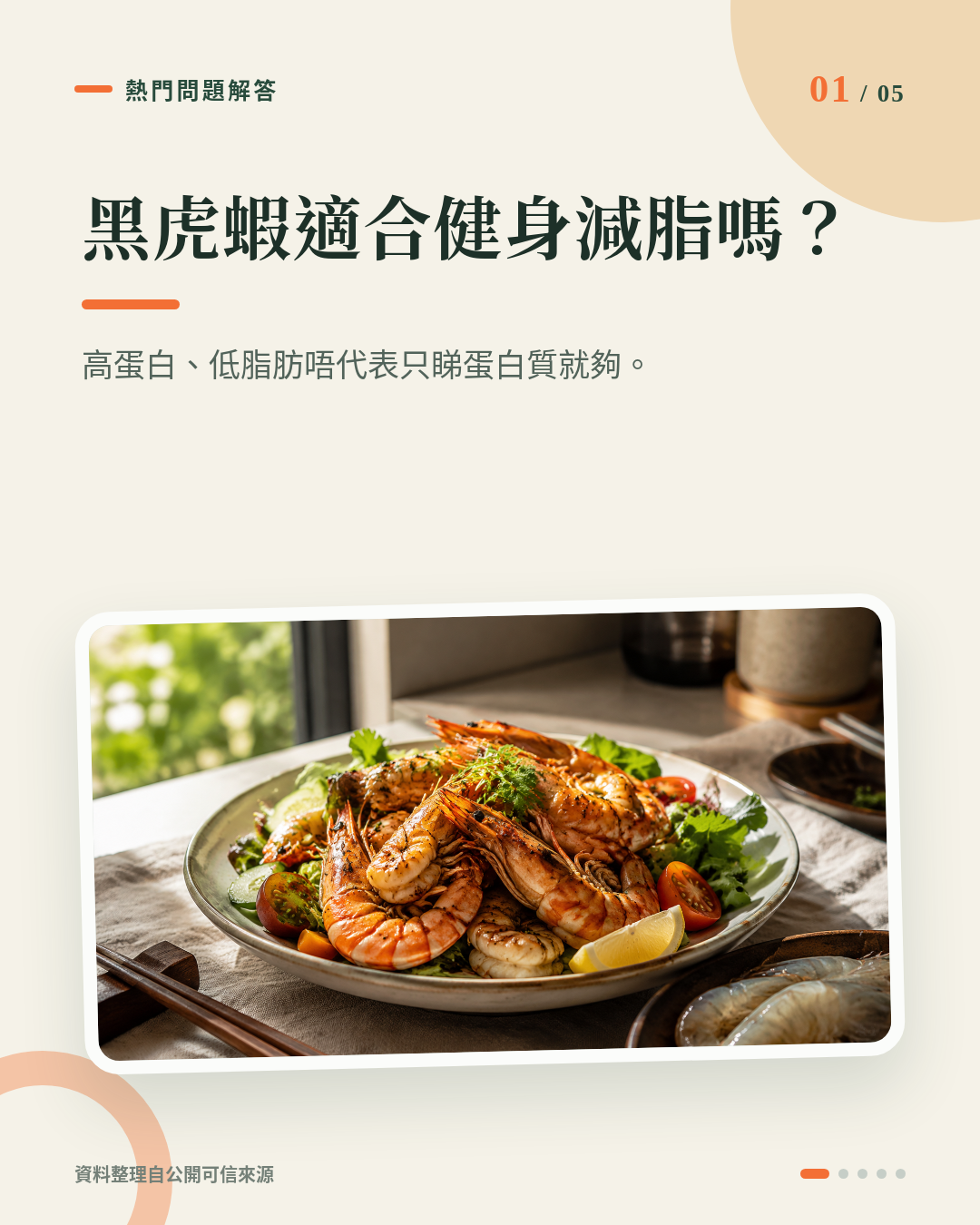




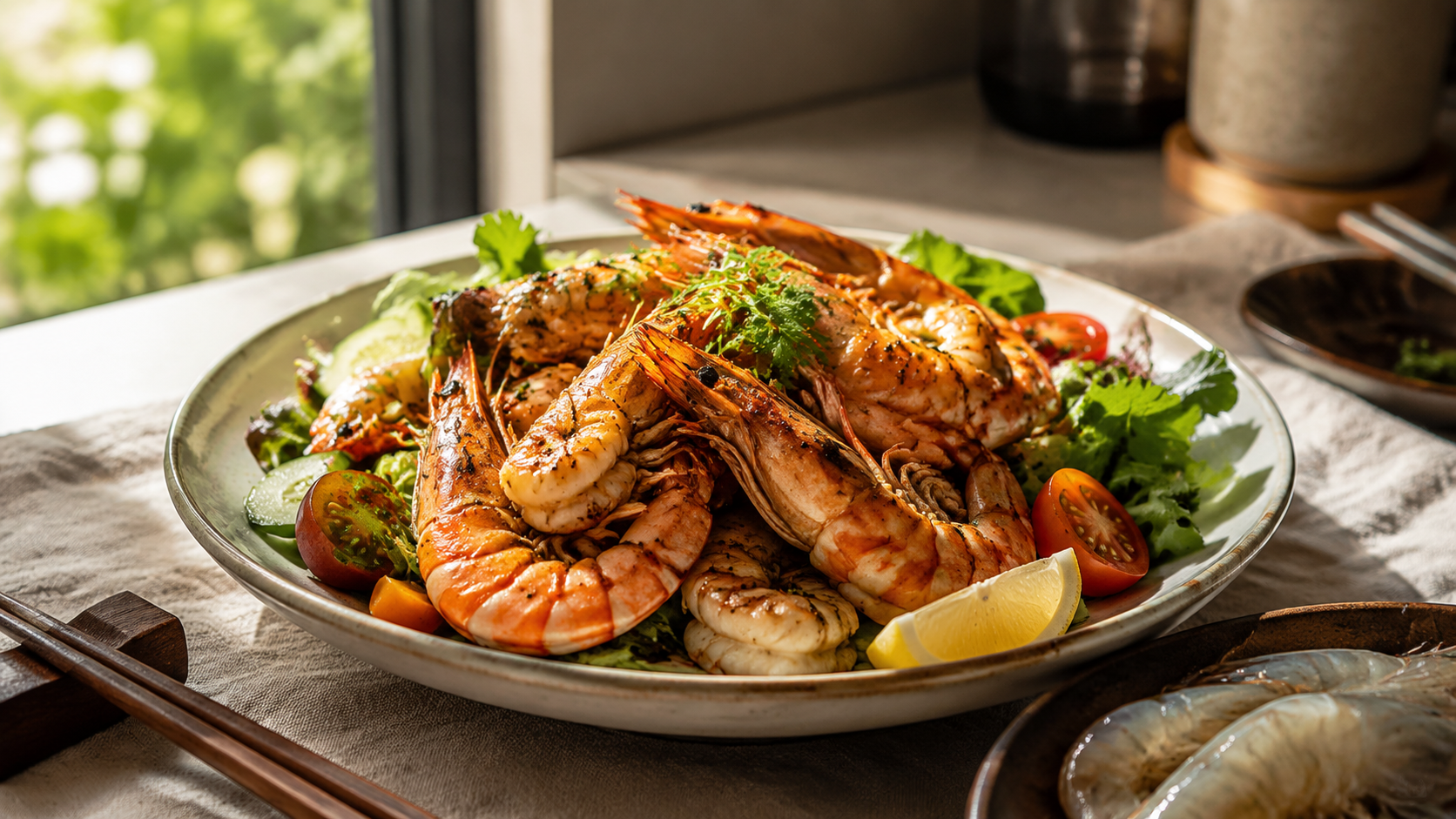
Black tiger shrimp often appears in fitness meals, salads, bento boxes, and high-protein dishes, partly because shrimp meat can provide protein and is not a high-fat meat. The Food and Health Bureau data also classifies shrimp and crab as fish and seafood food sources, noting that this type of food is rich in protein. For those controlling their weight or planning fitness meals, shrimp can be one of the convenient protein choices. However, when actually choosing a pack of frozen shrimp, you cannot just look at the variety name or promotional words; the most practical approach is still to check the nutrition label, ingredient list, serving size, and storage and cooking instructions on the packaging one by one.
1. Why can shrimp be put in a fitness fat-loss meal?
Shrimp meat can serve as a source of protein in a daily diet. In the shrimp soup demonstration recipe of the Food and Health Bureau's "Star-rated Healthy Eating Establishments" campaign, each serving provides 12 grams of protein and 2 grams of fat; the Centre for Health Protection also classifies shrimp and crab as fish and seafood food sources, noting that this type of food is rich in protein. In other words, shrimp itself can be one of the protein sources in a fitness meal, but "suitable for fat loss" does not mean that relying solely on eating shrimp will achieve fat loss results.
- Shrimp can provide protein and is suitable as a protein source in a balanced diet.
- The nutrition of shrimp itself is not exactly the same as that of an actual processed or seasoned shrimp product for sale.
- Fat-loss meals still depend on the overall diet, portion sizes, and cooking methods.
2. When choosing shrimp, check at least these 4 items on the nutrition label
If you are buying frozen products such as Vietnam peeled and deveined black tiger shrimp, the most direct method is to turn to the nutrition label and ingredient list. Do not simply judge based on the packaging writing "high protein, low fat"; compare the values per 100 grams and pay attention to whether the label lists the values before defrosting, before cooking, or in other edible states.
- Protein: Compare the content per 100 grams for easy fair comparison between different products.
- Fat: In addition to looking at total fat, also pay attention to the actual serving size.
- Sodium: Some products may have higher sodium content due to processing or seasoning; follow the packaging indication.
- Ingredient List: Confirm that there are only shrimp and related basic ingredients, and pay attention to salt, seasonings, or other additives.
3. What fitness meals often overlook is actually the cooking method
Even though shrimp itself is not high in fat, the nutrition of the whole dish can still be very different once it hits the pan. For example, large amounts of cooking oil, cream, thick sauce, or high-sodium seasonings will increase the energy or sodium intake of the whole meal. Therefore, if your goal is to control the nutrition of the whole meal, you should calculate it together with the side dishes, seasonings, and cooking oil, rather than just the shrimp.
- Simple cooking methods like steaming and blanching make it easier to control extra oil content.
- Pay attention to the amount of oil used when stir-frying shrimp.
- Extra ingredients like salad dressing, teriyaki sauce, cheese sauce, etc., should also be counted into the whole meal.
- The same shrimp, made using different cooking methods, can have significantly different nutritional values in the final meal.
4. Common Misconceptions: Seeing 'High Protein, Low Fat' and thinking it is fitness food
'High protein, low fat' can only describe part of the nutritional profile and cannot replace a complete nutrition label. In particular, different shrimp products may vary in processing methods, water content, sodium, and ingredients, so do not simply apply general online shrimp meat nutrition figures to a specific actual product.
- Misconception 1: Looking only at protein, while ignoring sodium and ingredients.
- Misconception 2: Overlooking the extra nutrients contributed by cooking oil and sauces.
- Misconception 3: Using general shrimp meat data instead of the product's own nutrition label.
- Misconception 4: Interpreting 'suitable for fitness meals' as 'the more you eat, the better'.
5. When buying shrimp in practice, you can use this method to judge
Facing different brands and packaging, first fix a comparison of nutritional values per 100 grams, then look at the ingredient list and the processing method on the packaging. Only then consider price, convenience such as shelling and removing the tail, and what cooking method you intend to use. For fitness or fat-loss individuals, whether a shrimp product is convenient to integrate into daily diet is often more worth considering than a single 'high protein' label.
- Step 1: Check the protein content per 100 grams.
- Step 2: Check the fat and sodium content.
- Step 3: Review the full ingredient list.
- Step 4: Include cooking oil, sauces, and other ingredients in the count.
- Step 5: Handle according to the packaging storage and cooking instructions.
Frequently Asked Questions
Is Black Tiger Shrimp suitable for fitness enthusiasts?
It can serve as a protein source in a fitness meal, but you cannot judge solely by the variety name. The actual protein, fat, sodium, and ingredients of the product should be based on the nutrition label on the packaging.
Is it enough to just look at protein when choosing shrimp for fat loss?
No. Besides protein, you should also look at fat, sodium, ingredients, and actual portion sizes, while paying attention to cooking oil and sauces.
What should I pay attention to with frozen peeled and gutted shrimp?
Besides the nutrition label, you should also check the ingredients, storage method, and cooking instructions on the packaging. The actual values should be based on the label of the specific product you purchased.
Does eating shrimp for fat loss mean I can eat unlimited amounts?
No. Shrimp is just one type of food in an overall diet, and actual intake should still match personal dietary needs and portion sizes of the whole meal.