 Skip to content

Is Frozen Broccoli Always Less Nutritious Than Fresh? Choosing Vegetables Is About More Than Freshness
Popular Questions Answered
Is Frozen Broccoli Always Less Nutritious Than Fresh? Choosing Vegetables Is About More Than Freshness
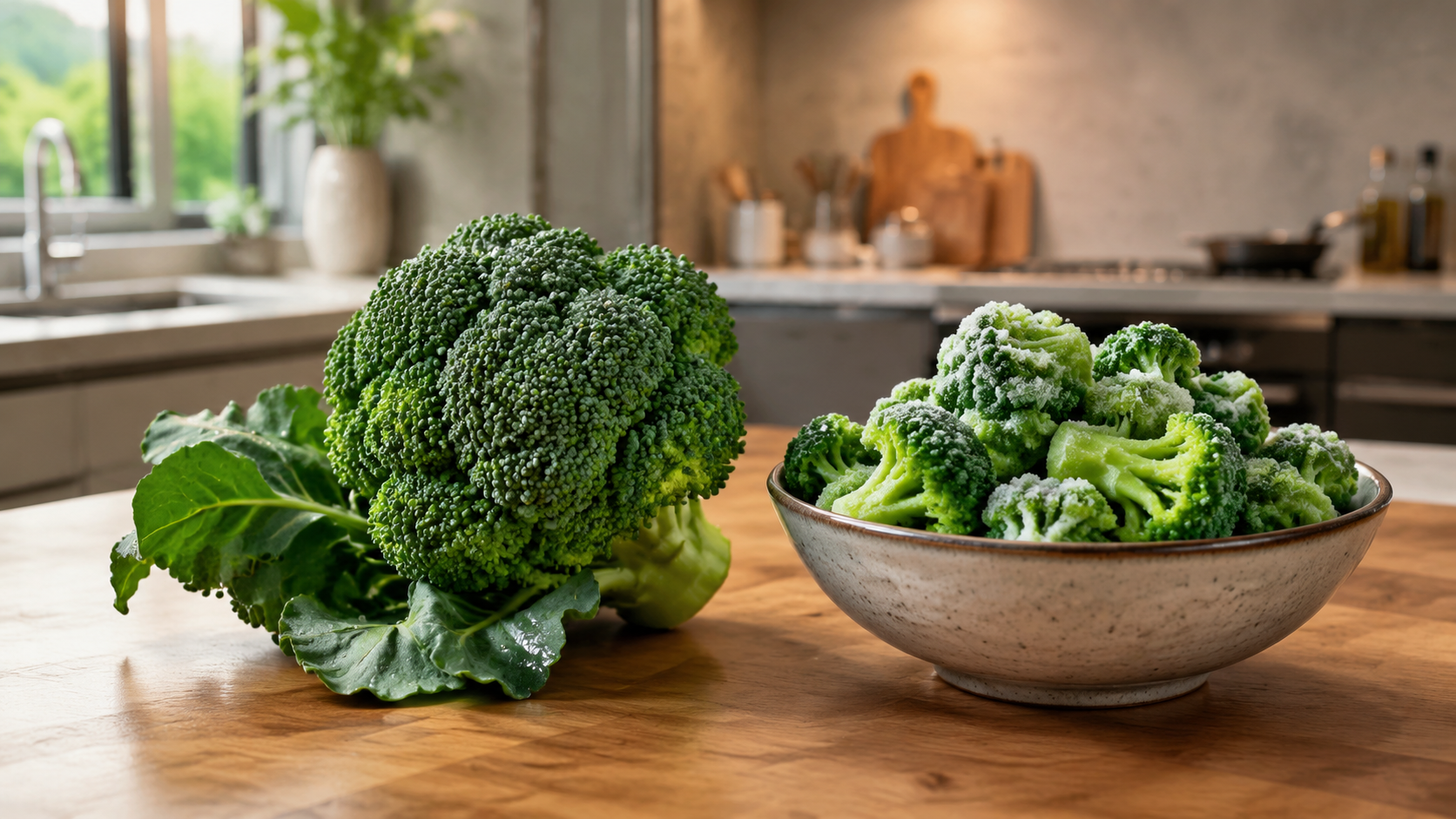
Not necessarily. Frozen broccoli is not necessarily less nutritious than fresh broccoli; the key lies in how long it has been after harvest, storage temperature, freezing treatment, and subsequent cooking. Consumer Council data indicates that the lower the storage temperature, the less generally Vitamin C declines in fruits and vegetables; at the same time, Vitamin C loss in broccoli is also affected by cooking methods. In other words, if fresh broccoli bought home is left for a few days, and frozen broccoli is stored under good freezing conditions, the two may not have a significant difference as imagined.
Illustrated Key Points
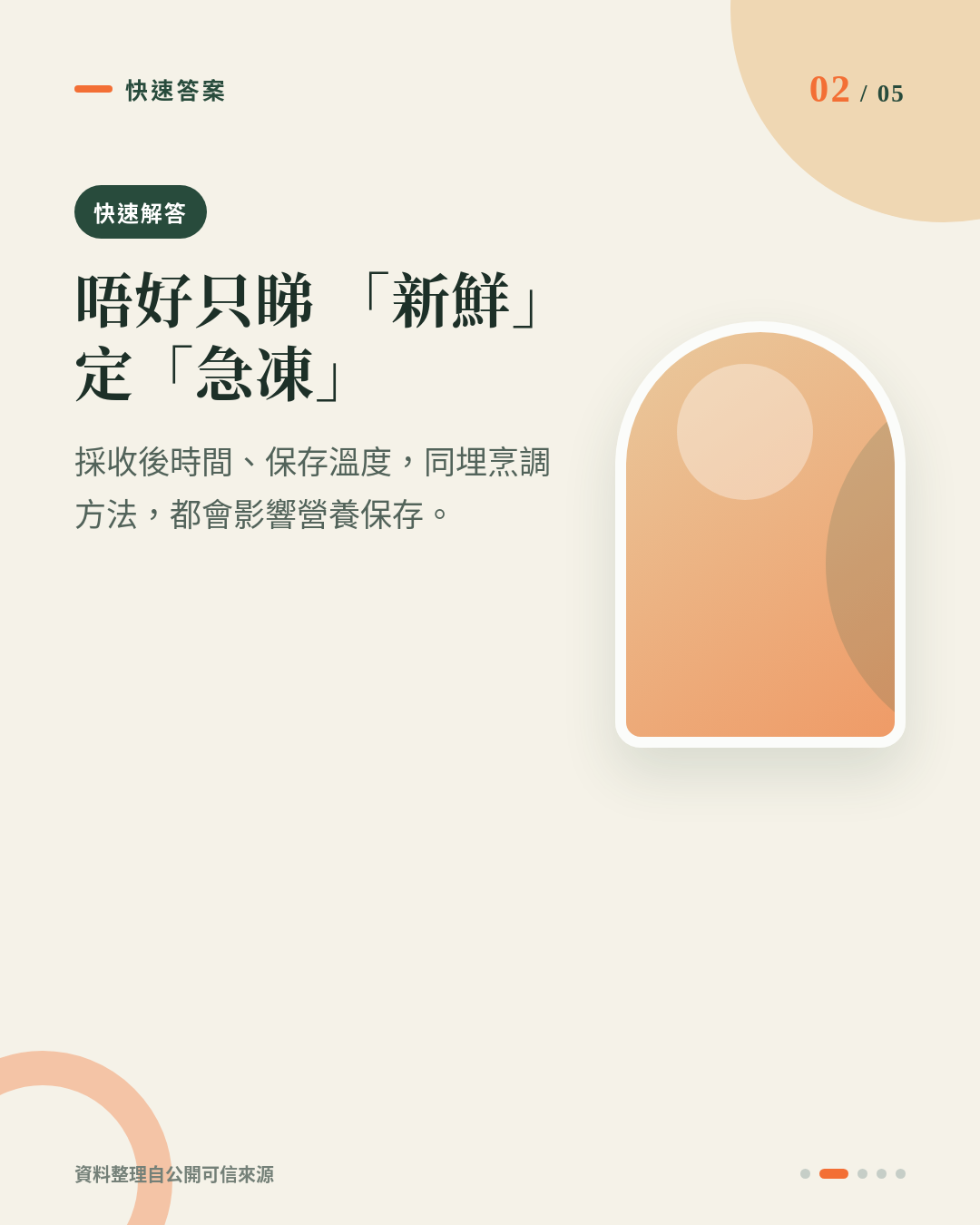
When buying broccoli, many people intuitively think "fresh means best" and frozen means a nutrition discount. However, the time and temperature experienced from harvest, transport, shelving to putting it in the home refrigerator affect nutrient preservation. Frozen vegetables are usually sold for their convenience in long-term preservation, so when comparing the two, what is truly worth noting is the entire process "from buying home to eating" rather than judging based solely on the fresh or frozen labels.
1. Frozen broccoli does not mean nutrition is necessarily less
Broccoli contains nutrients such as Vitamin C, and Vitamin C is more sensitive to storage time, temperature, and heat. The Consumer Council has compiled relevant data indicating that the lower the storage temperature of fruits and vegetables, the relatively less Vitamin C declines; the longer the storage time, the more it may decline. Thus, a fresh broccoli that has been refrigerated for a long time after being bought home may not necessarily have an advantage over broccoli that is properly frozen and stored. Hong Kong 01 has also discussed the comparison between frozen and fresh vegetables from the perspective of preservation and food spoilage.
- "Fresh" mainly describes the state at the time of purchase and does not mean it has not undergone time after harvest.
- One advantage of freezing is the convenience of long-term preservation, reducing the situation where ingredients spoil before being eaten.
- When comparing, you should consider harvest, transport, storage, and eating time together.
2. Cooking methods may be more important than you imagine
Even if the ingredients themselves are well preserved, the cooking method also affects nutrient preservation. The Consumer Council cites data indicating that Vitamin C is a water-soluble nutrient easily affected by heat and water; taking broccoli as an example, when comparing the two common methods of stir-frying and blanching, blanching results in more Vitamin C loss than stir-frying, partly because Vitamin C may be lost into the water used for blanching. However, stir-frying usually requires more cooking oil, so one cannot simply say that one method is definitely better in all aspects.
- Long-term heating is generally not conducive to preserving Vitamin C.
- When blanching, some water-soluble vitamins may be lost into the water.
- The nutritional trade-offs of stir-frying also include the amount of oil used and cannot be judged solely on Vitamin C.
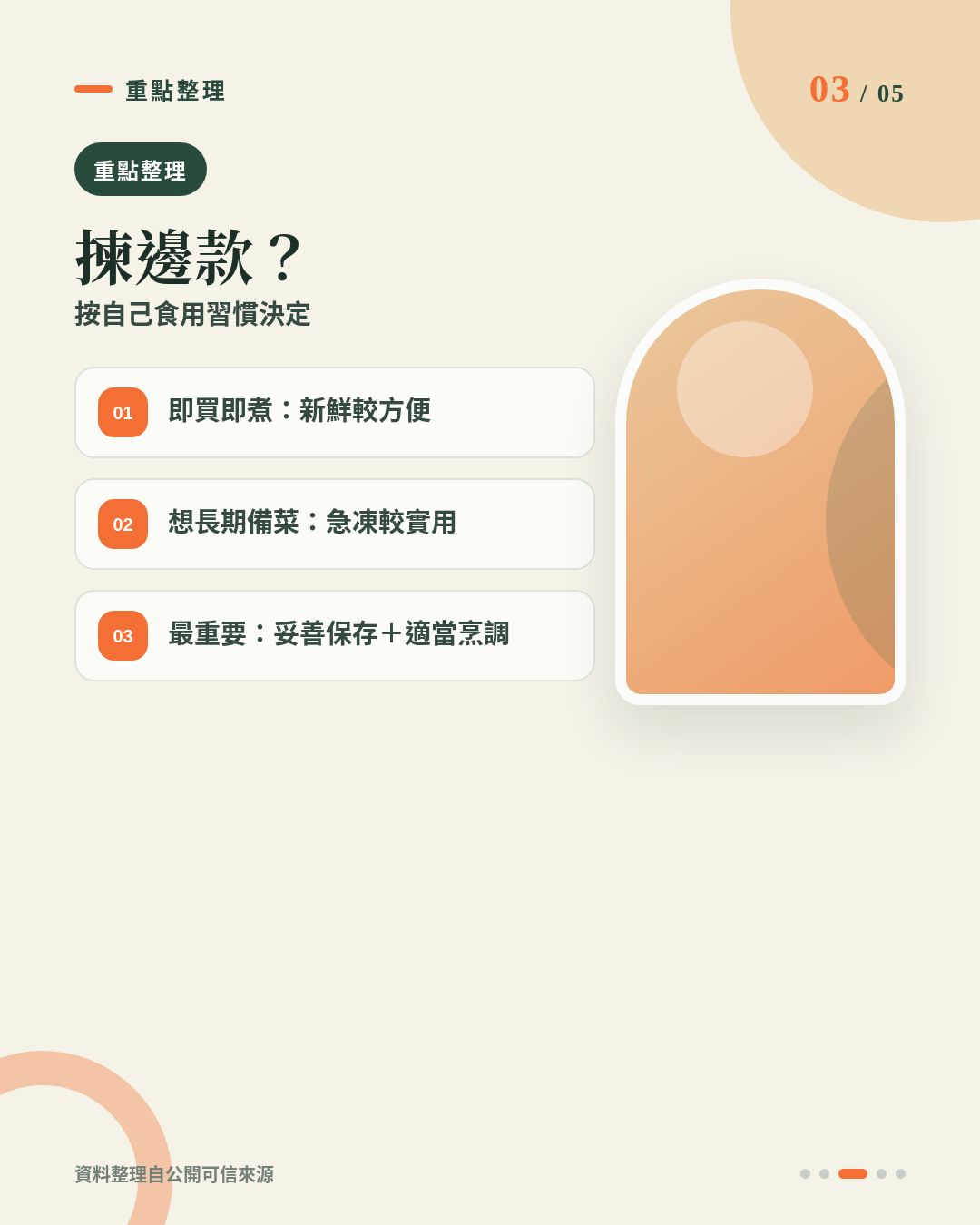
3. How to choose reasonably? Decide according to eating habits
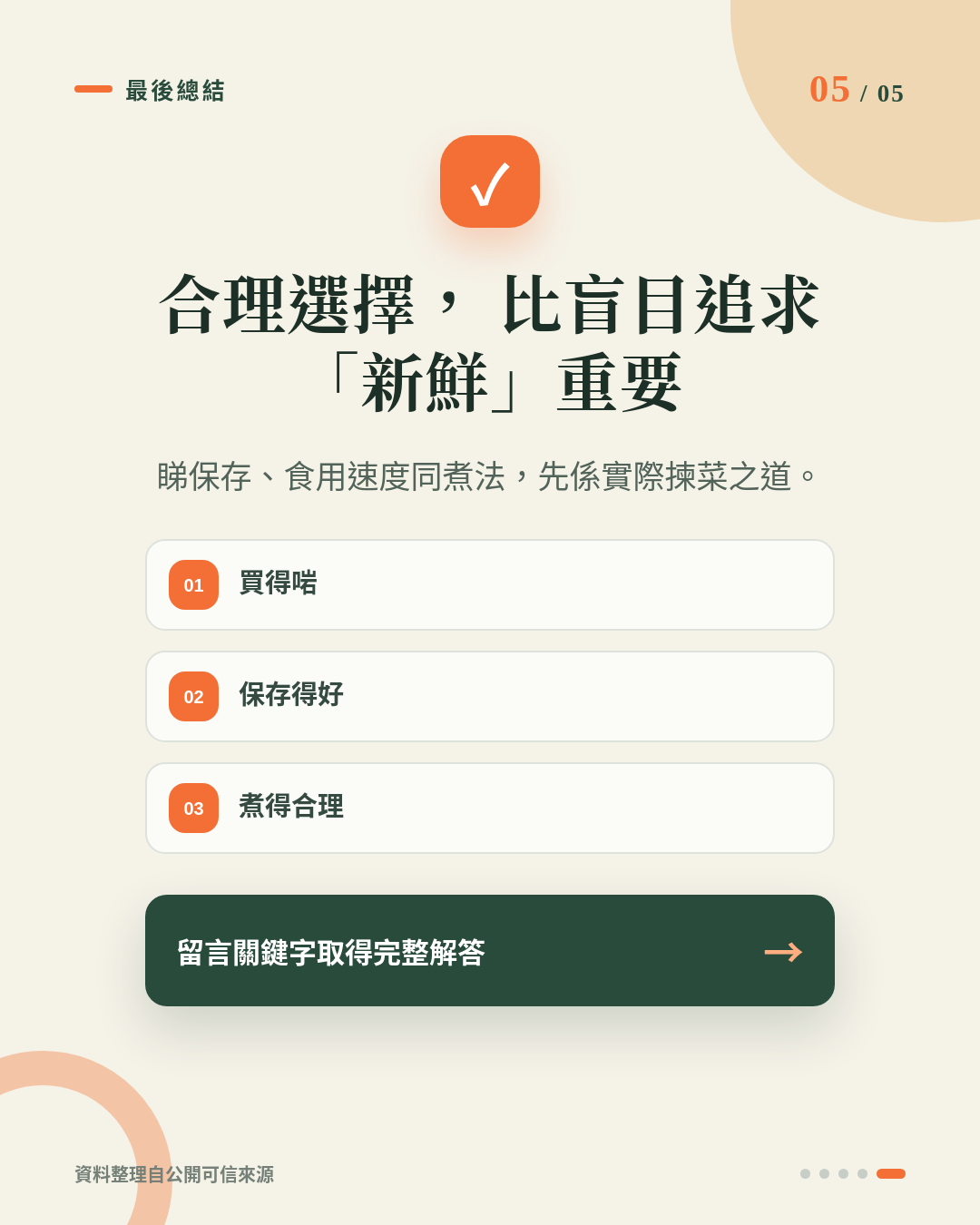
If you cook broccoli a few times a week and can eat fresh vegetables soon after buying, fresh broccoli is certainly a very natural choice; if you are busy with work during the week, cooking times are irregular, or you often buy vegetables but cannot eat them in time, frozen broccoli can provide another practical choice. The point is not to pursue either "frozen" or "fresh", but to choose a method that is easier for you to store, eat on time, and cook properly.
- Buy and cook immediately: You can choose fresh broccoli.
- Want to prep for a long time: Frozen broccoli is more convenient to arrange.
- Meal Prep or limited cooking time during the week: Choose according to actual portions to reduce buying too much and not finishing.
- Regardless of which one, you must pay attention to packaging, dates, and storage conditions.
4. How to buy and store frozen broccoli?
Regarding food safety, you should not only look at nutrition but also pay attention to the cold chain and packaging condition. The Centre for Food Safety recommends that frozen food should be kept at minus 18°C or below; when buying, choose products properly stored in the freezer and check that the packaging is intact and the date label is clear. For pre-packaged, non-ready-to-eat frozen vegetables, they should be processed according to cooking or preparation instructions on the packaging; unless clearly marked as ready-to-eat, do not treat them as food that can be eaten directly.
- If the packaging is damaged, leaking, or shows obvious abnormalities, consider carefully whether to purchase.
- Put it in the freezer at minus 18°C or below as soon as possible after returning home.
- Process according to the storage and cooking instructions on the product label.
- Do not treat non-ready-to-eat frozen vegetables as directly edible just because "they are already frozen".
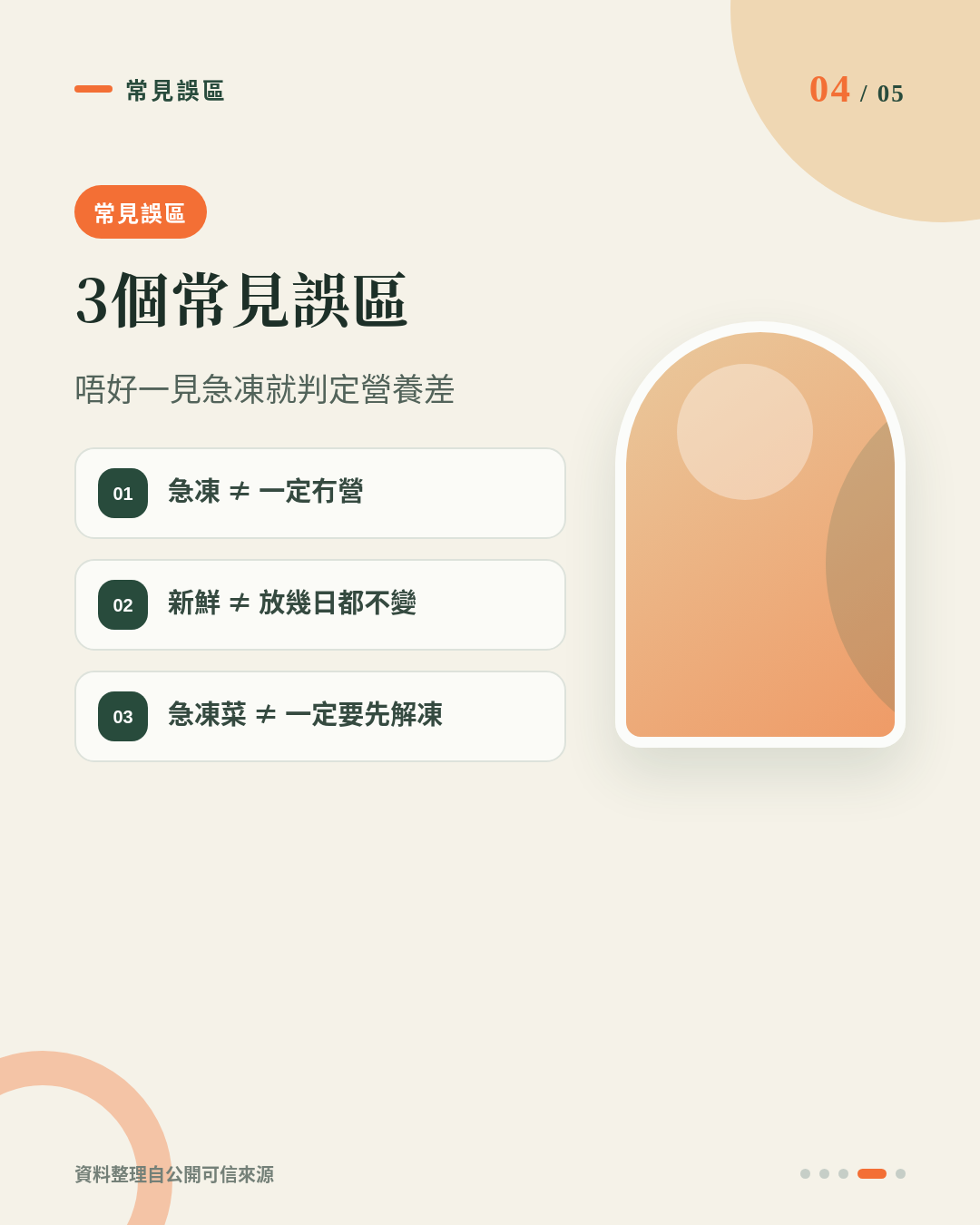
5. Common misconceptions: Don't just judge with "fresh = best"
The first misconception is thinking that freezing will definitely cause a large loss of nutrition; in reality, nutrition preservation is related to storage time and temperature. The second misconception is thinking that fresh vegetables are completely the same after a few days in the fridge; vegetables may still undergo nutritional changes during storage. The third misconception is thinking that all frozen vegetables must be thawed first; the actual handling method should be based on the product packaging instructions. The Centre for Food Safety also reminds that frozen food should not be thawed at room temperature for a long time to avoid increasing food safety risks.
- Myth 1: Frozen = definitely no nutrition.
- Myth 2: Fresh = stays completely unchanged for days.
- Myth 3: All frozen vegetables should be thawed first.
- Myth 4: Only looking at nutritional figures, ignoring storage and cooking methods.
6. If you want convenient meal prep, frozen broccoli can be a practical choice.
If you usually want to reduce the situation of vegetables turning yellow and soft after buying, frozen broccoli can serve as one of the family staples. In terms of portion sizes like 'Frozen Broccoli 450g', it is suitable for taking out according to the needs of one or a few meals; when actually eating, you should still follow the storage and cooking instructions on the product packaging. Its value lies mainly in convenient storage and meal prep, not in representing that it is definitely superior to fresh broccoli in all nutritional items.
- Suitable for people who want to pre-prep meals and reduce the frequency of last-minute grocery shopping.
- Suitable for taking out as needed, making it convenient to arrange daily cooking.
- Do not equate 'frozen' directly with being more nutritious, nor equate 'fresh' directly with definitely higher nutrition.
Frequently Asked Questions
Is frozen broccoli definitely less nutritious than fresh broccoli?
Not necessarily. Nutrient retention is affected by time after harvest, storage temperature, and cooking methods, so you cannot judge based solely on the labels 'frozen' or 'fresh'.
How should I handle fresh broccoli when I bring it home?
If you plan to eat it within a short period, fresh broccoli can be properly refrigerated like a regular vegetable and stored for as short a time as possible. Purchase quantity should be based on your actual eating speed to reduce spoilage or waste.
Do I need to thaw frozen broccoli first?
It cannot be generalized; you should follow the cooking and preparation instructions on the product packaging. Non-ready-to-eat frozen vegetables should be thoroughly cooked according to label instructions; they should also not be thawed at room temperature for a long time.
Why are frozen vegetables sometimes more suitable for busy families?
Mainly due to storage and convenience. For people who may not be able to cook immediately, frozen vegetables are easier to store for a long time; compared to buying fresh vegetables and leaving them for a long time, reasonably stored frozen options can better fit daily eating habits.