 Skip to content


Beef Short Ribs for Fitness Meal Prep: How to convert package weight to edible meat? How much to buy per meal to hit protein targets easily
Popular Questions Answered
Beef Short Ribs for Fitness Meal Prep: How to convert package weight to edible meat? How much to buy per meal to hit protein targets easily
When doing fitness Meal Prep, you should not directly use the packaging total weight of beef short ribs with bone to calculate protein. A more practical method is to first record the live weight with bone, measure the actual edible meat weight after processing, then calculate protein using the value of 'edible portion per 100g' in reliable nutrition data, and finally allocate to each meal box according to your daily protein target and other food sources. Bone weight and trimmed inedible parts should not be counted as actual meat intake.
Illustrated Key Points





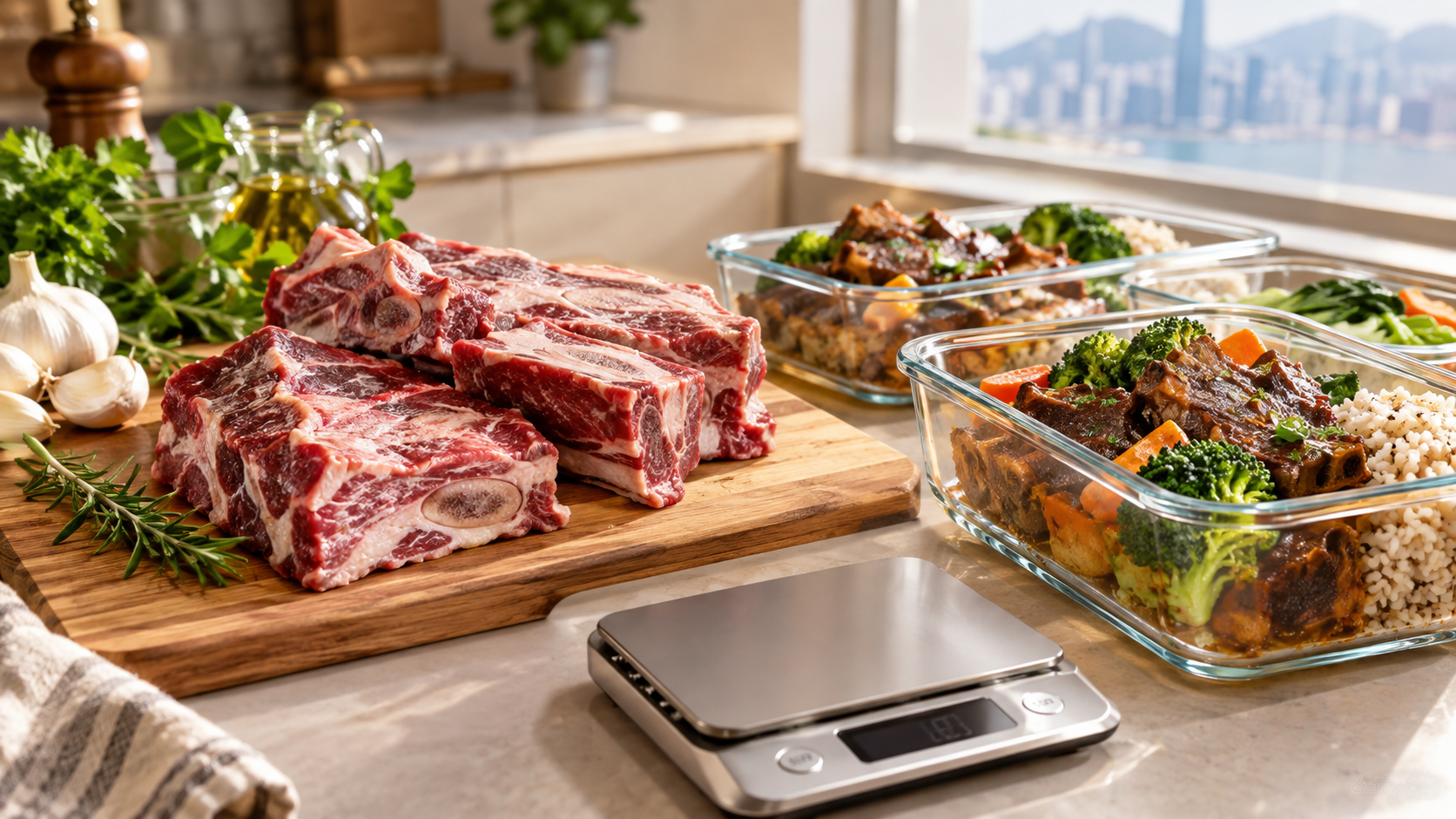
When buying beef short ribs with bone for Meal Prep, the most common misconception is seeing '500g' written on the packaging and directly treating it as 500g of beef, then calculating protein and portion per meal. However, the purchase weight of a bone-in product is a different concept from the actual amount of meat eaten. For those with strength training, muscle building, fat loss, or high-protein diet goals, to improve the accuracy of Meal Prep, the key is not to estimate the bone ratio, but to actually record 'bone-in purchase weight' and 'edible weight after processing' separately.
I. Why can't the packaging total weight be directly used as the basis for protein calculation?
The packaging weight of beef short ribs with bone includes meat, bones, and possibly inedible parts depending on the trimming method. USDA beef rib data also clearly presents nutritional values as '100 grams of edible portion (100g edible portion)', reflecting that the calculation basis of nutrition data is not exactly the same as the bone-in weight at purchase. Therefore, if you directly apply the total bone-in weight of the whole box to the protein value of beef per 100g, the result may overestimate the actual protein eaten.
- Packaging weight = purchase weight, which does not equal all being edible meat.
- Nutrition data should first confirm whether it is calculated based on edible portion, bone-in weight, raw meat, or cooked meat.
- The most reliable method for Meal Prep is to actually weigh after processing.
- Without actual edible weight, you should not assume a fixed meat yield yourself.
II. The most practical conversion framework for fitness Meal Prep
The whole process can be divided into four steps. The first step is to record the packaging live weight when bought back; the second step is to process according to actual eating method, for example, after deboning and removing non-edible parts, weigh the meat truly prepared to eat; the third step is to find reliable nutrition data matching that meat type, calculating based on edible portion per 100g; the fourth step is to allocate the total edible meat amount to different Meal Prep meal boxes.
- Step 1: Packaging live weight.
- Step 2: Weigh the edible meat weight after deboning/removing inedible parts.
- Step 3: Refer to the nutrition information for every 100g of the edible portion.
- Step 4: Distribute the meat amount evenly or as needed according to the meal target.
- Step 5: Include beef protein together with other sources such as eggs, chicken, fish, and dairy products in the daily total.
III. How much beef should be bought per meal? Start by working backwards from the daily protein target.
There is no fixed purchase weight that suits all fitness enthusiasts. A more reasonable approach is to first establish a personal daily protein target, then decide how much of that protein will be provided by beef short ribs. ACSM data indicates that the protein requirement for individuals who regularly engage in weight training can be higher than the general adult recommendation and can be formulated into a range based on weight and training conditions; actual needs should still be adjusted according to personal weight, training volume, dietary structure, and professional advice.
- First, confirm the daily protein target.
- Subtract other sources such as breakfast, dairy products, eggs, chicken, fish, and protein drinks.
- Calculate how much protein is intended to be provided by beef for the day.
- Then work backwards to determine the required edible meat weight based on the nutrition information for every 100g of edible meat.
- Finally, decide how much packaging weight to buy based on the actual meat weight after deboning.
IV. Common portion concepts in Hong Kong: Distinguish between raw meat weight and actual edible amount.
The health dietary information from the Centre for Health Protection of the Hong Kong SAR Government uses raw meat weight for meat portion conversion, indicating that there are already different weight bases for daily dietary assessment. For Meal Prep, it is more important to maintain consistency in the recording method: if you choose to record using raw edible meat weight, you should use the same basis throughout; if using cooked meat weight, you must avoid mixing it directly with raw meat nutrition information.
- Do not mix raw meat weight and cooked meat weight in the same formula.
- Do not directly treat bone-in weight as pure meat weight.
- It is best to use the same weighing method for the same week of Meal Prep.
- If the packaging label provides nutrition information, its indicated basis should be confirmed first.
V. Three common misconceptions about using bone-in beef short ribs for Meal Prep
First, directly multiplying the packaging total weight by the protein value per 100g of meat; second, finding any 'yield rate' online and applying it to all beef short ribs; third, calculating only the beef while forgetting that there are other protein sources for the whole day. For those who need to control calories and macronutrients, the most useful thing is not to pursue absolute precision in one calculation, but to establish a repeatable and verifiable recording method.
- Misconception: 500g of bone-in product = 500g of edible beef.
- Misconception: All beef short ribs have the same bone ratio.
- Misconception: Calculating only a single meal without looking at the daily protein allocation.
- Misconception: Estimating calories or protein yourself when there is no product label data.
- Correct approach: Weigh the edible part in practice, then combine it with reliable nutrition information.
VI. What to choose when buying in practice? First consider cooking methods and Meal Prep recording habits.
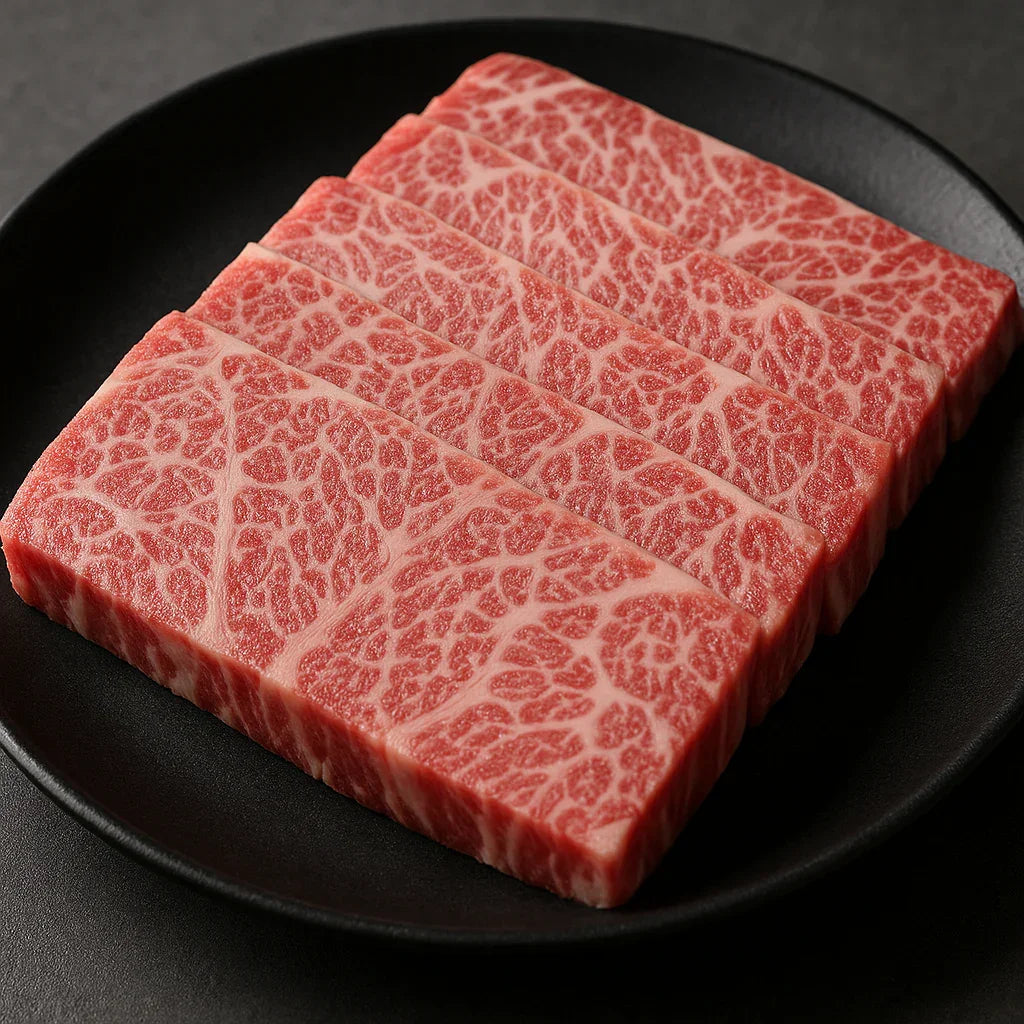
If you like the marbling, meat aroma, and more textured Meal Prep of short ribs, you can choose bone-in beef short ribs suitable for pan-frying, grilling, or braising, then divide them into boxes according to the actual weight after processing. Taking Irish ABP hormone-free beef short ribs as an example, the product is a high-marbling short rib slice suitable for Korean BBQ, pan-frying, and braising. However, the product does not list protein, fat, calories, or actual edible rate per 100g in the currently provided information, so related figures should not be estimated yourself.
- Suitable for those who want a richer beef flavor in their Meal Prep.
- Can be divided into multiple meal boxes according to the actual weight after deboning.
- If you want to track nutrition accurately, the product label and actual weighing should be the standard before or after cooking.
- When product information does not provide complete nutrition data, it is not advisable to calculate macronutrients yourself.
Frequently Asked Questions
500g of bone-in beef short ribs, does that mean there is 500g of beef to eat?
No. 500g is the purchase weight including bones and other parts that may not be edible. When calculating nutrition, the processed edible meat weight is a more appropriate basis.
Can I directly find the beef short rib yield rate online to calculate?
Different cuts, bone sizes, marbling, and trimming methods can all affect the edible ratio. Unless there is reliable data specific to that product or cut, it is not recommended to use a fixed percentage instead of actual weighing.
Should Meal Prep weigh raw meat or cooked meat?
Both methods are fine, but the most important thing is consistency. If using raw edible meat weight, match it with the corresponding raw meat nutrition information; if recording cooked meat weight, use the corresponding cooked meat data to avoid mixing bases.
Do muscle-building individuals have to eat a large amount of beef at every meal?
Not necessarily. Daily protein can be composed of various food sources. Individuals who regularly engage in weight training can plan protein intake based on personal weight and training conditions, and the actual menu must also consider the whole day's dietary arrangement and personal needs.