 Skip to content


Golden Broth Fish Maw and Chicken Hot Pot
Chinese · 140 minutes · Serves 2 to 3
Golden Broth Fish Maw Chicken Pot
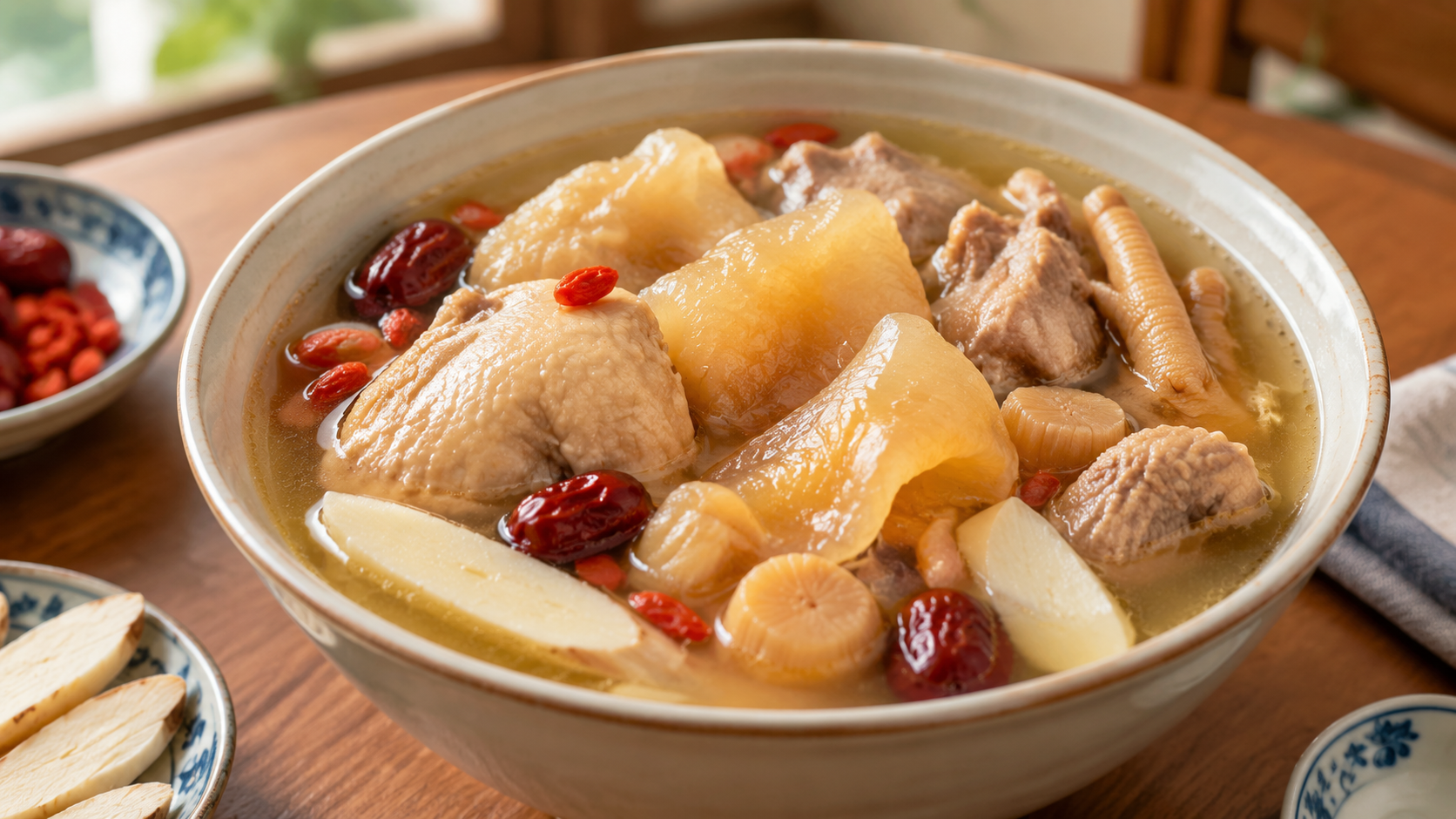
Based on the images and product description, this 'Chicken Maw' is actually fish maw, a dried seafood ingredient made from processed fish swim bladders; the specific fish species cannot be reliably confirmed from the product name and photos alone. Fish maw has a mild flavour, and the method truly suitable for Hong Kong households is not a heavy stewing sauce, but rather a clear, sweet, and substantial broth made with chicken, chicken feet, lean meat, ginger, and spring onions, allowing the fish maw to be the star. This time, we chose the fish maw chicken soup direction, reducing Jinhua ham and sweet ingredients to preserve the umami of the chicken broth, which is more suitable for a daily family table.
Quick Answer
First, defrost the frozen fish maw according to the packaging instructions; if the packaging indicates it is dried fish maw, it must first be rehydrated according to the soaking method. Blanch the chicken pieces, then simmer slowly over low heat for about 1.5 hours with ginger, spring onions, chicken feet, and lean meat. Finally, add the prepared fish maw and simmer over low heat for about 30 minutes. Season with salt only at the end, ensuring the broth is clear and sweet while the fish maw remains thick and smooth.
Ingredients
- Fish maw 40 to 50g (weight after rehydration and draining; handle frozen products according to packaging instructions)
- Bone-in chicken pieces 500g
- Chicken feet 4 pieces
- Lean meat 100g
- Dried scallops 3 pieces, soaked until soft
- Chinese yam 30g
- Red dates 3 pieces, pitted
- Goji berries 10g
- Ginger 5 slices
- Spring onions 2 stalks
- Shaoxing wine 1 tablespoon
- Water 1.5 to 1.7 litres
- Salt approx. 1/2 teaspoon, adjust to taste
Method
-
Prepare the fish maw first
Frozen or pre-treated fish maw must first be handled according to the packaging's defrosting and heating instructions; do not assume it is cooked or can be boiled directly. If the item is dried fish maw, it should first be rehydrated until soft, then blanched in ginger and spring onion water to remove any fishy smell. Traditional methods may involve soaking in water overnight, while thick fish maw requires extended soaking time depending on size.
-
Blanch chicken pieces to remove impurities
Place chicken pieces, chicken feet, and lean meat in a pot of cold water, add 2 slices of ginger and Shaoxing wine. Heat over medium heat until boiling, then boil for another 3 to 5 minutes. Remove and rinse with clean water. This is sufficient once there is no visible blood foam on the chicken skin and meat surface; avoid prolonged blanching which causes loss of meat flavour.
-
Simmer the chicken broth base first
Add water, chicken pieces, chicken feet, lean meat, Chinese yam, red dates, dried scallops, and remaining ginger slices to a deep pot. Bring to a boil over high heat, then reduce to low heat, cover, and simmer slowly for about 90 minutes. Maintain a gentle simmer; avoid a rolling boil, otherwise the broth will be cloudy.
-
Add the fish maw
Uncover and check that the chicken is fully cooked and the chicken feet skin is soft and tender, then add the prepared fish maw. If the broth level is low, add only an appropriate amount of boiling water to avoid a sudden drop in temperature inside the pot from adding cold water.
-
Simmer over low heat for the right texture
Bring back to a gentle simmer, then reduce to low heat, cover, and simmer for about 25 to 30 minutes. The fish maw should be soft yet still have thickness when lifted with chopsticks; it should be smooth and tender in the mouth but not cooked until it completely falls apart; thick varieties may be cooked for an additional 5 to 10 minutes depending on actual condition.
-
Add goji berries at the end
Add goji berries in the last 5 minutes to preserve their aroma without overcooking. Taste before adding salt, starting with approx. 1/2 teaspoon and adjusting, to avoid the saltiness masking the natural umami of the dried scallops and chicken broth.
-
Confirm doneness before serving
If the fish maw or chicken pieces are raw frozen foods, ensure the centre is thoroughly cooked upon completion; Hong Kong food safety guidelines recommend that high-risk foods reach a core temperature of 75°C or above for at least 30 seconds. Consume immediately after completion; do not leave at room temperature for a long time.
Frequently Asked Questions
How long should the fish maw for fish maw chicken soup be soaked?
It depends on whether the fish maw is dried, its thickness, and the packaging treatment. Traditional dried fish maw usually needs to be soaked until soft; some methods involve refrigerated soaking for one night to several days; thick fish maw can be extended based on condition. If you buy frozen, pre-treated products, follow the packaging instructions and do not apply dried fish maw soaking times arbitrarily.
When should the fish maw be added to the soup?
For home-style fish maw chicken soup, you can first simmer the chicken broth base to develop flavour, then add the rehydrated fish maw and simmer over low heat for about 25 to 30 minutes. This method aligns with the common local recipe direction of simmering chicken broth first and adding fish maw later, helping to maintain the thick texture of the fish maw.
How to ensure the fish maw chicken soup is not fishy?
The key is pre-treating the fish maw and blanching with ginger and spring onions. Chicken pieces should also be blanched first to remove blood foam before formally simmering the soup. Do not use large amounts of pepper or heavy-flavoured sauces to mask the fishy smell, as this will instead steal the umami of the fish maw and chicken broth.
Can frozen fish maw be put directly into the soup to simmer?
It cannot be generalized. If the packaging explicitly states it can be cooked directly, follow the packaging method; if defrosting is required, handle it according to the instructions. Hong Kong food safety data also recommends that frozen foods should be properly defrosted and thoroughly cooked, avoiding assuming the product is already cooked.