 Skip to content


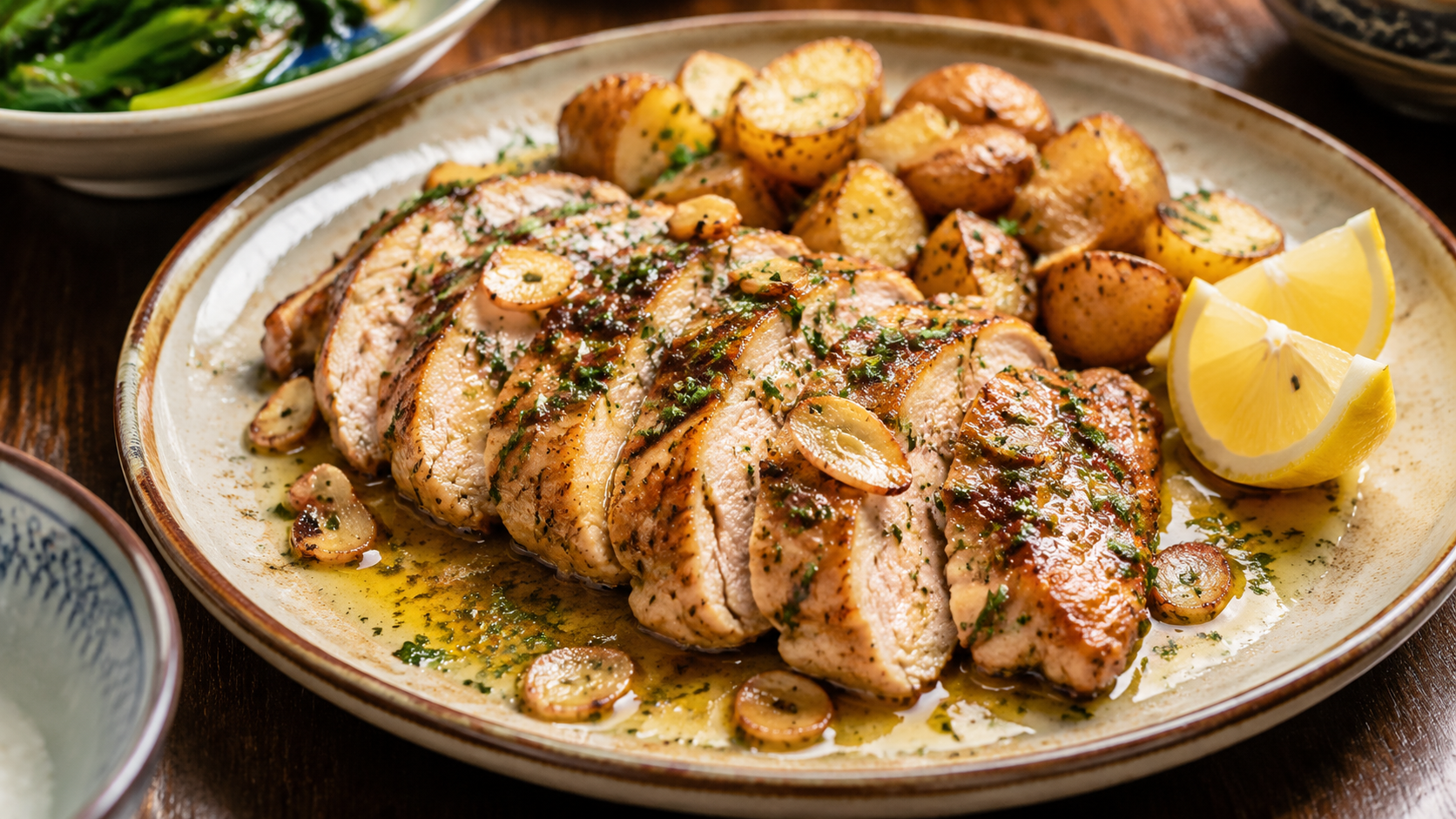
Spanish Garlic and Lemon Chicken Breast
Spanish Cuisine · 30 mins · 2-3 servings
Spanish Garlic and Lemon Chicken Breast
This dish is inspired by the Spanish home classic Pollo al ajillo. Originally made with bone-in chicken pieces, it is flavoured by frying in olive oil, a large amount of garlic, white wine, and lemon to build a deep aroma; this time, to suit the characteristics of ready-to-eat cooked chicken breast, less oil and a shorter heating time are used, preserving the garlic, wine, and refreshing sour notes while matching the Hong Kong family's pursuit of convenient, low-fat eating habits. Chicken breast meat is leaner, and the key is not to overcook it, letting the sauce coat the surface instead.
Quick Answer
After thawing and heating the chicken breast according to the packaging instructions, process it using the traditional Spanish garlic chicken (Pollo al ajillo) method: fry garlic slices slowly in olive oil, add white wine and lemon to make a rich sauce, and finally mix in the chicken breast, avoiding long cooking that would dry out the lean meat.
Ingredients
- Cooked chicken breast 450g (use after thawing and heating according to packaging instructions)
- Extra Virgin Olive Oil 15ml
- Garlic 6 cloves, sliced thinly
- Dry White Wine 60ml (or 30ml non-alcoholic white grape juice plus a little lemon juice as a substitute)
- Fresh Lemon Juice 15ml
- Chicken Stock 50ml
- Spanish Smoked Paprika 1/2 tsp
- Dried Bay Leaf 1 piece
- Fresh Coriander (Cilantro) chopped 2 tbsp
- Black pepper to taste
- Sea salt to taste (adjust according to the saltiness of the chicken breast itself)
Method
-
Prepare chicken breast and spices
First, process the chicken breast according to the refrigeration, thawing, and heating methods on the packaging, confirming the product centre has reached a safe state for eating. Cut the chicken breast into slices about 1.5cm thick or diagonally into strips, and set aside. Slice the garlic and chop the coriander.
-
Fry garlic slices over low heat
Add olive oil to a frying pan and heat over medium-low heat for about 1 minute. Add the garlic slices and fry slowly for about 2 to 3 minutes until they turn pale golden and release their aroma. Avoid high heat to prevent the garlic from burning, otherwise the sauce will have a bitter taste.
-
Build the Spanish garlic sauce
Add the smoked paprika and bay leaf, stir-fry over low heat for about 20 seconds, then immediately pour in the white wine. Turn to medium heat and simmer for about 2 minutes to let the alcohol evaporate and scrape up the flavour from the bottom of the pan. Then add the chicken stock and simmer for about 3 minutes until the flavours meld.
-
Add chicken breast to warm up
Add the prepared chicken breast slices and simmer over low heat for approximately 3 to 5 minutes, turning 1 to 2 times during the process to allow the surface to absorb the garlic sauce. Since the chicken breast is a pre-cooked processed food, it does not require long stewing; this helps keep the meat tender and smooth.
-
Season and finish
Before turning off the heat, add the lemon juice and black pepper. Taste and add a small amount of salt if needed. Sprinkle with chopped coriander and serve. It can be enjoyed with roast potatoes, salad, or wholemeal bread.
Frequently Asked Questions
Does frozen cooked chicken breast need to be thawed first?
Yes, it needs to be processed according to the product packaging instructions. Different processed foods have different storage and heating methods, and one should not assume they can be cooked directly. After thawing or heating, seasoning with garlic will be easier to control the texture.
Why is traditional chicken leg not used to make Spanish garlic chicken?
Traditional Pollo al ajillo often uses bone-in chicken pieces with a richer fat content; the chicken breast version is designed to meet low-fat needs, using garlic, white wine, lemon, and olive oil to provide aroma, but with a shortened heating time to avoid dryness.
How should chicken breast be cooked so it doesn't dry out?
Chicken breast has a low fat content, and the key is to avoid long, high-temperature cooking. For this dish, the sauce is prepared first, and then the chicken breast absorbs the flavour for a short time, which better preserves tenderness than pan-frying until overcooked.
What can I use instead of white wine?
You can use non-alcoholic white grape juice with a little lemon juice as a substitute, preserving the fruity and acidic notes, but the flavour will be milder.