 Skip to content


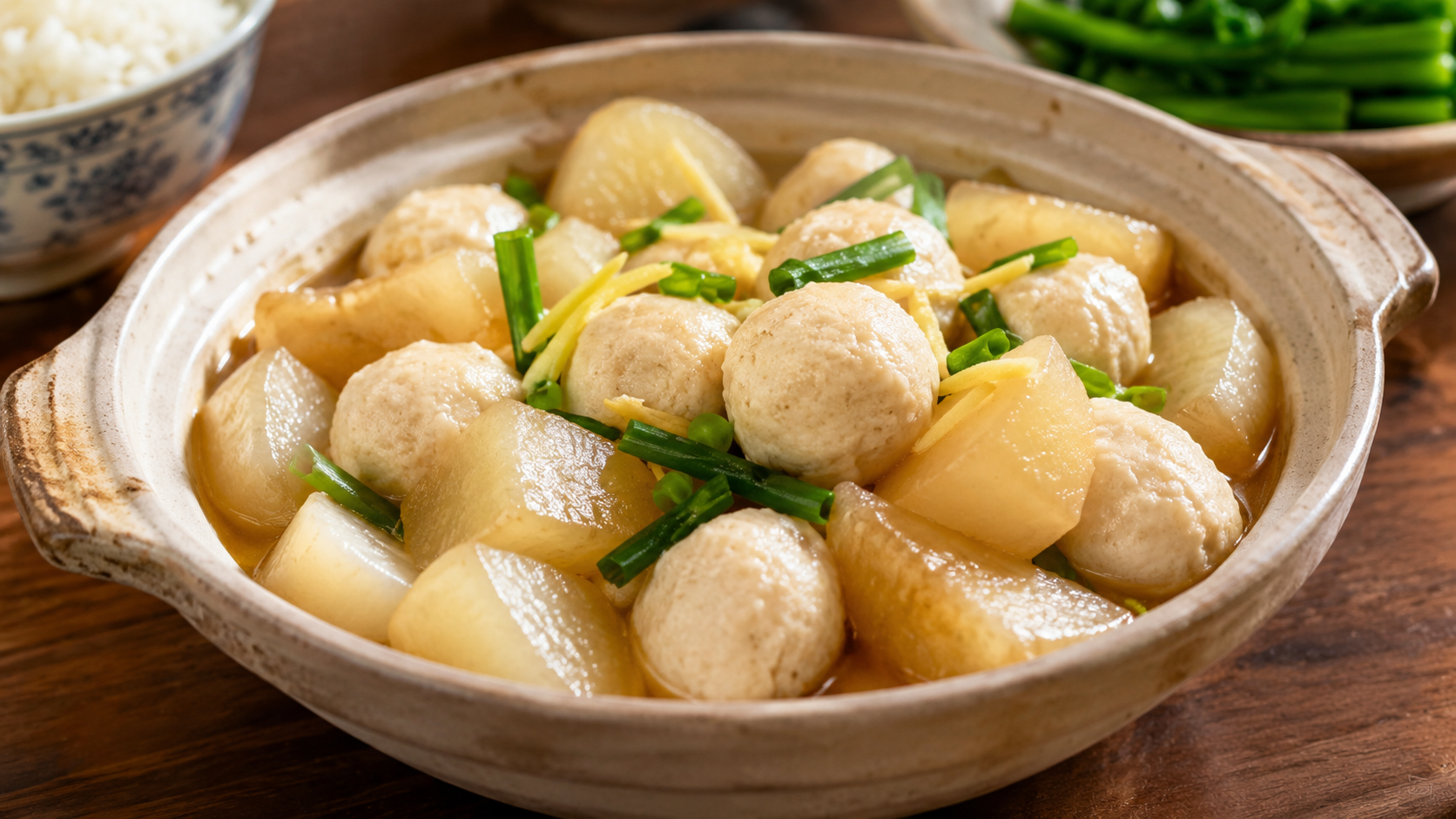
Cantonese Oyster Sauce Radish and Fish Ball Hot Pot
Chinese · 35 minutes · Serves 2 to 3
Cantonese Oyster-Scented Radish and Fish Ball Claypot
Pie-shaped fish balls are essentially processed fish products made from fish paste; the round pie shape is merely a forming method, and the flavour and preparation can still follow the home-style cooking of Cantonese fish balls. After researching common Hong Kong fish ball dishes, besides street-style curry fish balls, another direction more suitable for the family table is braised white radish with fish balls: the radish absorbs the salty and umami-rich juices, while the fish balls retain their springy texture, pairing naturally with white rice or tossed noodles. This time, the traditional braised radish and fish ball dish omits pork skin, allowing the fish balls to be the star, while also reducing the proportions of oyster sauce, dark soy sauce, and sugar. The flavour is lighter and more suitable for everyday consumption.
Quick Answer
This method is not curry fish balls, but follows the home-style route of Cantonese braised radish: first cook the white radish until it begins to turn translucent, then braise with ginger, garlic, oyster sauce, light soy sauce, and a small amount of dark soy sauce to bring out a salty and umami aroma. Finally, add the pie-shaped fish balls and simmer over medium-low heat until cooked through, preserving the fish balls' crisp and springy texture. If the product packaging has separate thawing or heating instructions, the packaging instructions should take priority; if it is labelled as suitable for direct cooking from frozen, thawing is not required.
Ingredients
- Pie-shaped fish balls 300g
- White radish 500g
- Ginger 4 slices
- Garlic 2 cloves, crushed
- Spring onion 1 stalk, cut into sections
- Cooking oil 1 teaspoon
- Oyster sauce 1 tablespoon
- Light soy sauce 1 teaspoon
- Dark soy sauce 1/2 teaspoon
- Rock sugar 1/2 teaspoon
- Water 350ml
- White pepper powder 1/8 teaspoon
Method
-
Prepare the fish balls first
First read the thawing and heating instructions on the packaging. If the packaging allows direct cooking from frozen, use them directly; if thawing is required, thaw slowly in the lower shelf of the refrigerator before cooking. Do not judge whether the fish balls are cooked solely by appearance.
-
Cut the white radish
Peel the white radish and cut into half-moon pieces or rolling dice approximately 3cm thick. Keep the sizes as consistent as possible to ensure they cook tenderly at the same time; slice the ginger, crush the garlic, and cut the spring onion into sections.
-
Cook the radish first
Add approximately 350ml of water, ginger slices, and spring onion sections to a pot. Bring to a boil over high heat, then add the white radish and cook over medium heat for about 8 to 10 minutes. It is ready when the edges of the radish begin to turn translucent and a chopstick can be inserted with slight resistance.
-
Sauté the aromatics
In a separate wok, heat over medium heat and add 1 teaspoon of oil. Add the garlic and sauté for about 30 seconds until fragrant, ensuring it does not turn scorched brown. Add the oyster sauce, light soy sauce, dark soy sauce, and rock sugar, then stir-fry over medium-low heat for about 20 seconds to blend the seasonings with the garlic aroma.
-
Braise to infuse radish aroma
Pour the translucent radish and approximately 350ml of the radish cooking water into the wok. Add white pepper powder, bring to a boil over high heat, then reduce to medium-low heat and braise with a lid on for about 7 minutes. Stir once during this time. When the radish becomes glossy and a chopstick can easily be inserted into the centre, it has absorbed the basic flavours.
-
Add fish balls and simmer
Add the pie-shaped fish balls, ensuring the liquid covers about half to two-thirds of the fish balls. Maintain a gentle simmer over medium-low heat for about 6 to 8 minutes, turning gently 1 to 2 times during this period. Avoid prolonged high heat boiling, which may cause the fish balls to over-expand and affect their elasticity.
-
Check doneness and reduce sauce
Finally, increase to medium heat and cook for about 1 to 2 minutes to slightly thicken the liquid. The centre of the fish balls should be thoroughly heated; if using a food thermometer, the centre of the thickest part should reach at least 75°C. Without a thermometer, cook until the entire ball is hot and the centre is no longer cold or raw when cut open. Turn off the heat, let it sit for 2 minutes, then serve.
Frequently Asked Questions
Can pie-shaped fish balls be cooked directly from frozen?
Check the packaging instructions first. The Centre for Food Safety in Hong Kong notes that some small chilled food items, such as fish balls, can be boiled directly from a chilled state, but chilled processed foods should not be judged as cooked solely by appearance; if the packaging requires thawing, follow the instructions.
Why should fish balls not be cooked continuously over high heat?
Fish balls need to be cooked through, but prolonged vigorous boiling can cause them to over-expand, making the texture loose or hard. This dish first cooks the radish until tender, then uses medium-low heat to allow the fish balls to absorb the juices, which is a more reliable method.
To what degree should the white radish be cooked before adding the fish balls?
Testing with a chopstick is most practical: when a chopstick can be inserted into the centre of the radish with slight resistance, and the edges are translucent, it is suitable to add the fish balls. Adding them too early means the radish has not absorbed the flavour; adding them too late risks overcooking the fish balls.
What can this oyster-scented radish and fish ball dish be paired with?
It pairs best with white rice, oil noodles, or Cantonese thin noodles. For a lighter meal, add a plate of blanched choy sum; for a noodle-shop style dinner, drizzle a small amount of the braised radish sauce over the noodles, then top with fish balls and radish.