 Skip to content
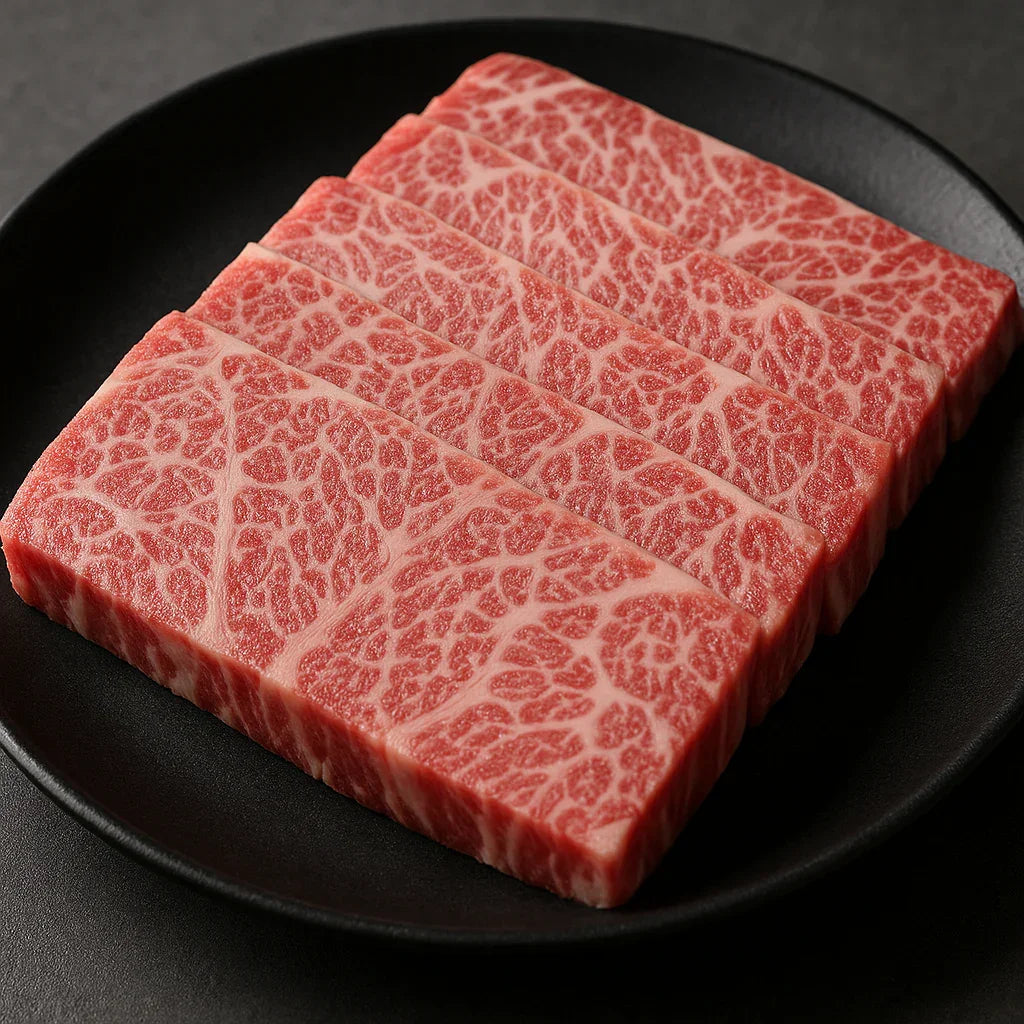


French Slow-Braised Beef Heel Muscle
French Cuisine · 200 minutes · 3 to 4 servings
French Slow-Braised Beef Heel Muscle
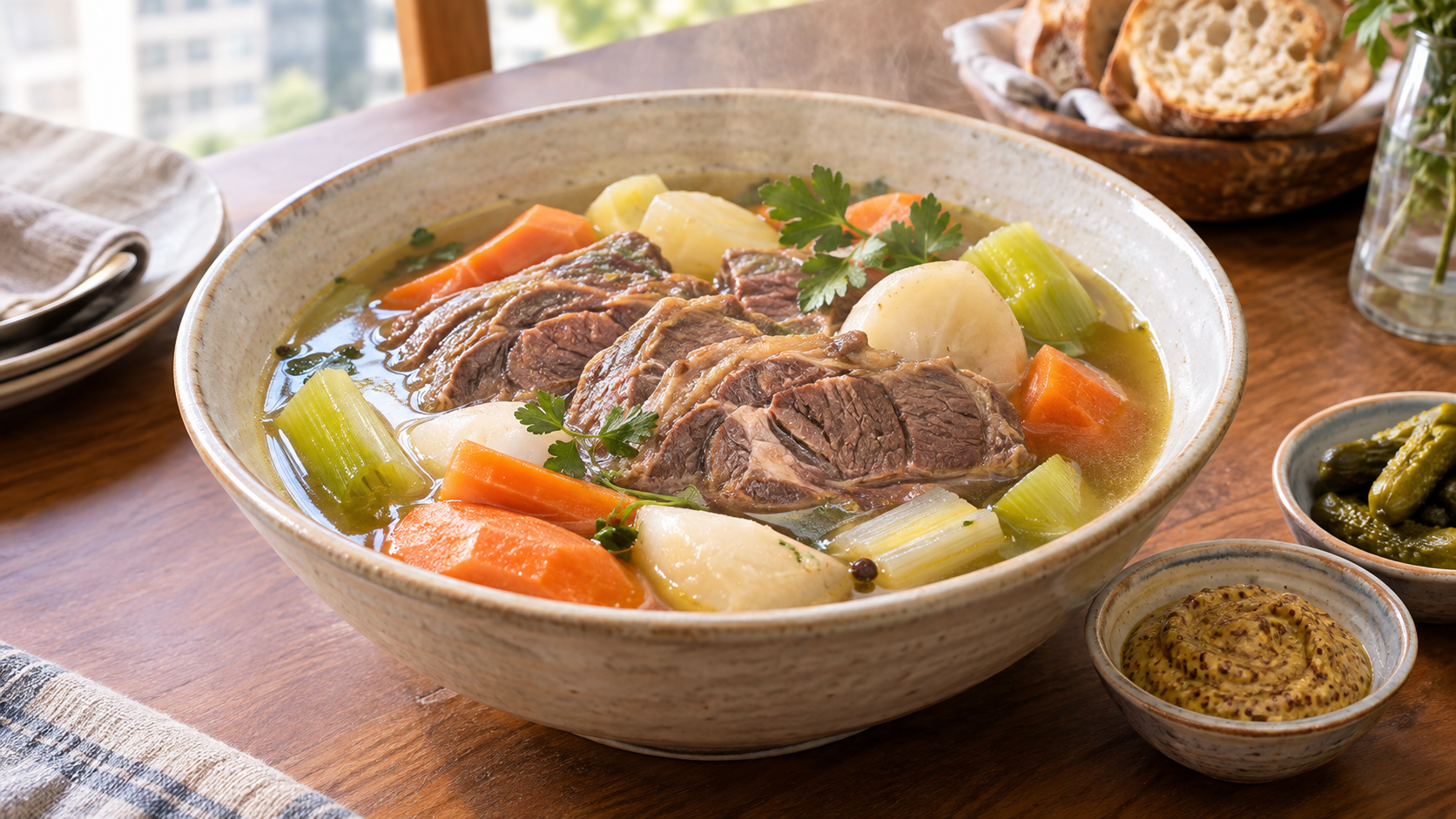
Beef Heel Muscle is not tender meat suitable for quick searing, but a working muscle from the cow's leg with a high proportion of connective tissue; this structure is ideal for the traditional French long, moist cooking method. The focus of French Pot-au-feu is not a rich sauce, but allowing the beef, carrots, leeks, celery, turnips and herbs to slowly mature in a clear broth with a beef aroma. This time, Beef Heel Muscle replaces the various beef cuts commonly found in traditional Pot-au-feu, preserving the core flavour of French home cooking while being more suitable for Hong Kong families to cook one pot at a time, serving sliced beef with rice or noodles. The researched traditional method includes soaking the beef in cold water first, skimming off the foam, then maintaining a very low heat to keep it just simmering; some classic recipes add vegetables later to avoid over-softening. Here, red wine, cream or large amounts of fat are deliberately not added, because Beef Heel Muscle itself has sufficient beef aroma and gelatin, and the clear broth, onions, cloves, thyme and bay leaves can better highlight its texture.
Quick Answer
This Beef Heel Muscle comes from the heel muscle of the cow's hind leg; it is relatively lean with rich connective tissue, making it most suitable for the low-temperature, long-time boiling of French Pot-au-feu (French beef and vegetable pot). If the product is frozen raw meat, thaw according to package instructions; generally, it can be thawed slowly in the refrigerator, cut into large pieces, then placed in a pot with cold water, adding onions, herbs and root vegetables, maintaining a gentle simmer for about 3 hours until the meat can be easily pierced with a fork and the membranes become soft, then slice and serve with mustard and pickles.
Ingredients
- Beef Heel Muscle 900g to 1kg
- Carrots 2, approx. 250g
- Leeks 1, approx. 180g
- Turnips 1 to 2, approx. 200g
- Celery 2
- Onion 1
- Cloves 2
- Garlic 2 cloves, lightly crushed
- Thyme 2 sprigs
- Bay leaf 1
- Black peppercorns 1 tsp
- Salt approx. 1 to 1½ tsp, adjust according to soup volume and taste
- Water approx. 2.5 to 3 litres, enough to completely cover the beef
- Dijon mustard to serve
- Pickles to serve
Method
-
1. Safe thawing and handling of beef
If the product is frozen raw meat, follow the thawing and cooking instructions on the packaging as a priority. A safer method is to thaw in the refrigerator in advance; if you need to speed it up, you can place the sealed, intact package in cold water, changing the water every 30 minutes. Do not thaw on a room-temperature worktop. After completely thawing, remove from the packaging, pat the surface dry with kitchen paper, trim obvious excess fat and loose membranes, but do not remove all the fine tendons inside the heel muscle.
-
2. Add to pot with cold water
Place the whole Beef Heel Muscle into a large pot, add approx. 2.5 to 3 litres of cold water, with the water level about 3 cm above the beef. Heat over medium heat until small, dense bubbles begin to appear, about 15 to 20 minutes; do not start with a rolling boil. Traditional Pot-au-feu starts with cold water to allow the meat juices to release gradually, making it easier to control the clarity of the broth.
-
3. Skim foam and add flavour base
Once the water begins to simmer, skim off the foam with a ladle. Halve the onion and insert 2 cloves into one half; wash the carrot, turnip, celery, and leek first. Add the onion, garlic, thyme, bay leaves, and black peppercorns, and season lightly with salt. Reduce the heat to the minimum to keep the broth at a gentle simmer with occasional bubbles, rather than a rolling boil.
-
4. Slow cook Beef Heel Muscle
Cover the pot about 70% and maintain a gentle simmer for approximately 2 hours. Check every 30 to 45 minutes and skim off any foam; if the liquid level drops, add only hot water. Do not rush the cooking with high heat, as this can cause the outer layer to contract and become tough. After about 2 hours, test the thickest part of the beef with a fork; if there is still significant resistance, continue slow-cooking for another 30 to 60 minutes.
-
5. Add vegetables later
When the beef has started to soften, add the carrots, turnips, leeks and celery. Continue cooking over low heat for about 35 to 45 minutes until the vegetables are cooked through but still retain their shape. Following the traditional method of French Pot-au-feu, vegetables do not necessarily need to go into the pot from the first minute; adding them later can prevent the carrots and leeks from becoming mushy.
-
6. Determine doneness and safety
After the Beef Heel Muscle is done, it should be soft, gelatinous and still sliceable; a fork should easily pierce the thick parts, and the fine tendons should change from tough and hard to soft and elastic. Regarding food safety, the whole piece of beef should be confirmed with a food thermometer to reach a centre temperature of at least 62.8°C and rest for at least 3 minutes; however, this long stew for Beef Heel Muscle, which pursues a gelatinous texture, will actually be far higher than the minimum safe temperature.
-
7. Slice and serve
After turning off the heat, let the beef rest in the hot broth for about 10 minutes, then remove and slice crosswise along the grain into pieces about 5 mm thick. Place the beef and vegetables in a deep plate, drizzle a little clear beef broth, and serve with Dijon mustard and pickles. The broth can be served in a separate bowl; if you wish to serve with rice or French bread, you can slightly reduce the broth before serving, but do not add large amounts of cream or flour to maintain the refreshing nature of Pot-au-feu.
Frequently Asked Questions
Can Beef Heel Muscle be used for French beef dishes?
Yes, and it is very suitable for French Pot-au-feu, which requires long, moist cooking. Beef Heel Muscle is a leg working muscle containing more connective tissue, which converts to soft gelatin after slow cooking, making it more suitable for this type of cooking than quick stir-frying or grilling steaks.
The Beef Heel Muscle has been cooked for a long time and is still tough; what should I do?
It is usually not overcooked, but the connective tissue has not yet softened sufficiently. Maintain a low heat and gentle simmer, cooking for another 30 to 60 minutes, and test the thick parts with a fork. Avoid suddenly increasing the heat, as violent boiling can easily cause the meat fibers to contract.
Must Pot-au-feu use many different types of beef?
Traditional versions often mix beef with different fat and gelatin levels, such as rib fingers, collier, jumeau and oxtail; but the home version can be completed with a single Beef Heel Muscle. Because Beef Heel Muscle is relatively lean with connective tissue, adding root vegetables and herbs is enough to create a complete clear broth flavour.
How can frozen Beef Heel Muscle be thawed?
Follow the product packaging instructions first. General safe methods include thawing in the refrigerator, thawing in cold water in a sealed package, or using a microwave; for cold water thawing, change the water every 30 minutes, and after microwave thawing, cook immediately. Do not thaw at room temperature or in hot water.
How can cooked French beef shank be eaten?
The most traditional way is to serve the beef and vegetables with beef broth, placing mustard, coarse salt and pickles separately. Hong Kong families can also slice the beef to serve with white rice, French bread or noodles, and drink the broth separately, for a refreshing and satisfying taste.