 Skip to content


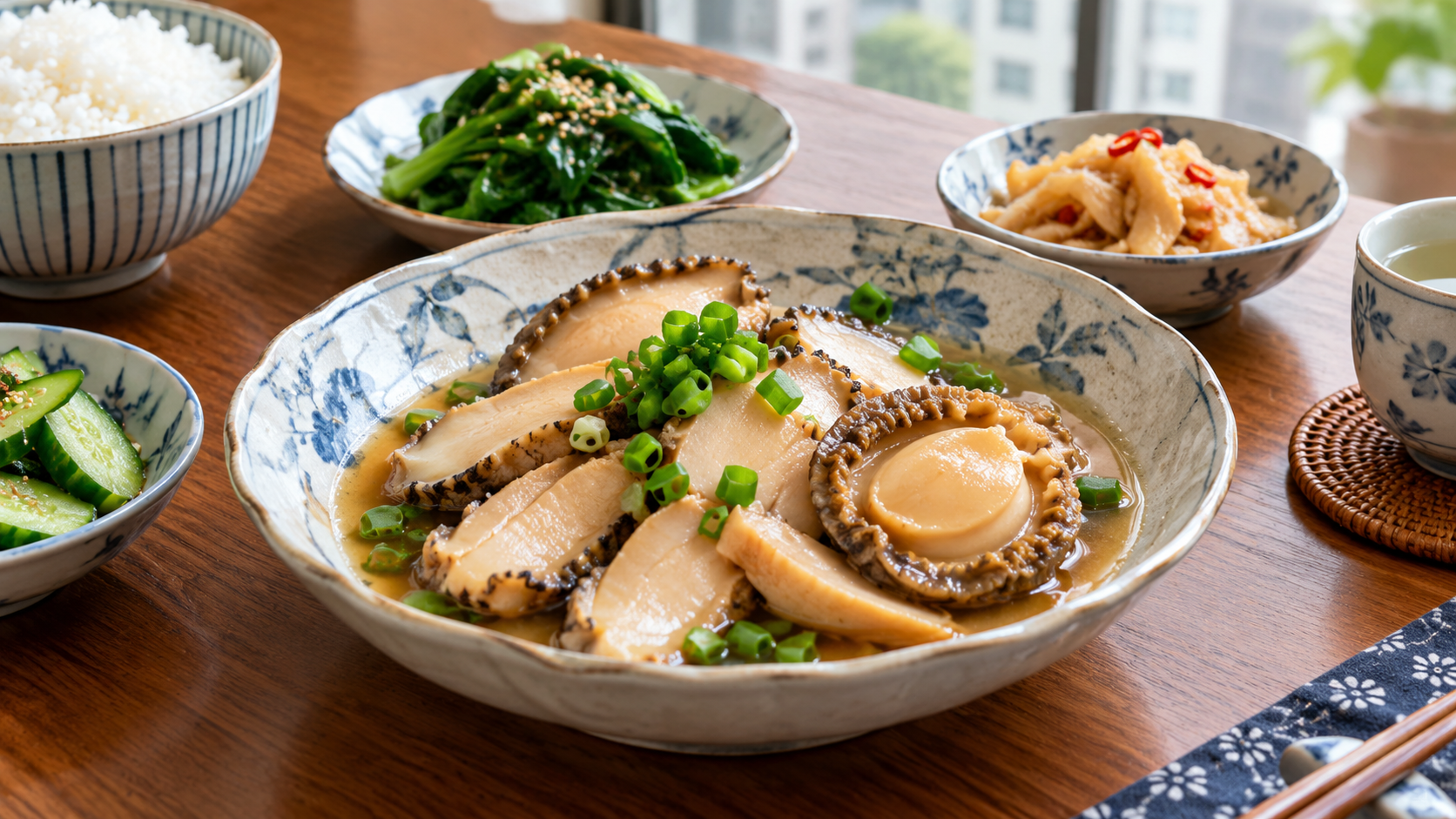
Japanese Sake Braised Abalone
Japanese cuisine · 30 minutes · Serves 2 to 3
Japanese Sake Braised Abalone
Abalone is commonly featured in high-end Japanese dishes such as sushi, steamed abalone, and simmered abalone. Among these, the simmered preparation (nitsuke) seasoned slowly with sake, dashi, soy sauce, and mirin best highlights the abalone's inherent oceanic flavour. South African Jipin abalone has a thick, substantial texture, making it suitable for gentle Japanese-style slow simmering to avoid heavy seasoning masking its freshness. This dish retains the delicate sweet and umami layers characteristic of Japanese cuisine, while adjusting the sweetness and saltiness to better suit Hong Kong families' preferences for rice accompaniments and festive entertaining.
Quick Answer
South African Jipin abalone is a premium dried or processed abalone seafood. Before cooking, follow the packaging instructions to thaw, rehydrate, or heat-treat it; do not assume it is already cooked. It is recommended to prepare this in the style of the traditional Japanese 'Awabi no Nitsuke' (simmered abalone): first simmer gently in sake and kombu dashi, then season with soy sauce and mirin to enhance the umami, allowing the abalone to absorb the Japanese sweet and savoury flavours.
Ingredients
- South African Jipin abalone 300g (complete thawing or pre-treatment as per packaging instructions)
- Kombu dashi 250ml
- Japanese sake 80ml
- Soy sauce 2 tablespoons
- Mirin 1 tablespoon
- Sugar 1 teaspoon
- Ginger slices 3 slices
- Thinly sliced white radish 100g (optional, adds a clear sweet flavour)
- Shredded spring onion small amount (for garnish)
Method
-
1. Prepare the abalone
First, complete the thawing, rehydration, or heat pre-treatment as required by the product packaging. If the abalone is still raw, wash the surface and pat dry; if it is a processed cooked product, simply heat it as indicated, avoiding prolonged heavy boiling which can make the texture tough.
-
2. Prepare the Japanese simmering liquid
In a small pot, add kombu dashi, sake, soy sauce, mirin, sugar, and ginger slices. Heat over medium heat for about 3 minutes until the alcohol aroma dissipates, maintaining a gentle simmer; do not bring to a rolling boil.
-
3. Slow simmer to infuse flavour
Add the abalone and white radish. Reduce to low heat to maintain slight bubbling, cover the pot and simmer for about 15 minutes, turning once during this time to ensure the simmering liquid evenly coats the abalone.
-
4. Adjust doneness and taste
The abalone is ready when the surface has a sheen and the centre is warm when cut open. If using raw abalone or thicker cuts, extend the heating time according to actual size to ensure the centre is not cold.
-
5. Reduce the sauce to finish
Uncover the pot and simmer over low heat for another 2 to 3 minutes to slightly reduce the liquid. Taste and adjust the ratio of soy sauce or mirin slightly to suit family preferences.
-
6. Plate and serve
Slice the abalone or serve whole on a plate, drizzle with a small amount of the simmering liquid, and top with shredded spring onion. It is recommended to serve with white rice or Japanese chawanmushi (steamed egg custard).
Frequently Asked Questions
Can South African Jipin abalone be cooked directly?
Not necessarily. Abalone products on the market come in various states, including fresh, frozen, rehydrated dried, and cooked processed. You must check the packaging label and process it according to the specified thawing, rehydration, or heating method.
Will the abalone become tough if cooked using the Japanese simmering method?
Abalone contains a high amount of muscle fibre, and excessive heat or improper time control can easily make it hard. Japanese cuisine often uses sake, steaming, or slow simmering to improve texture; the key is to maintain gentle heating.
Do Hong Kong families need very sweet mirin for Japanese-style abalone?
No. Traditional Japanese seasoning often uses mirin to bring out a sweet aroma, but for home cooking, you can reduce the ratio of sugar and mirin to let the abalone's natural umami stand out more.