 Skip to content


Baked Scallops with Ginseng, White Wine, and Cream
French cuisine · 40 minutes · Serves 2 to 3
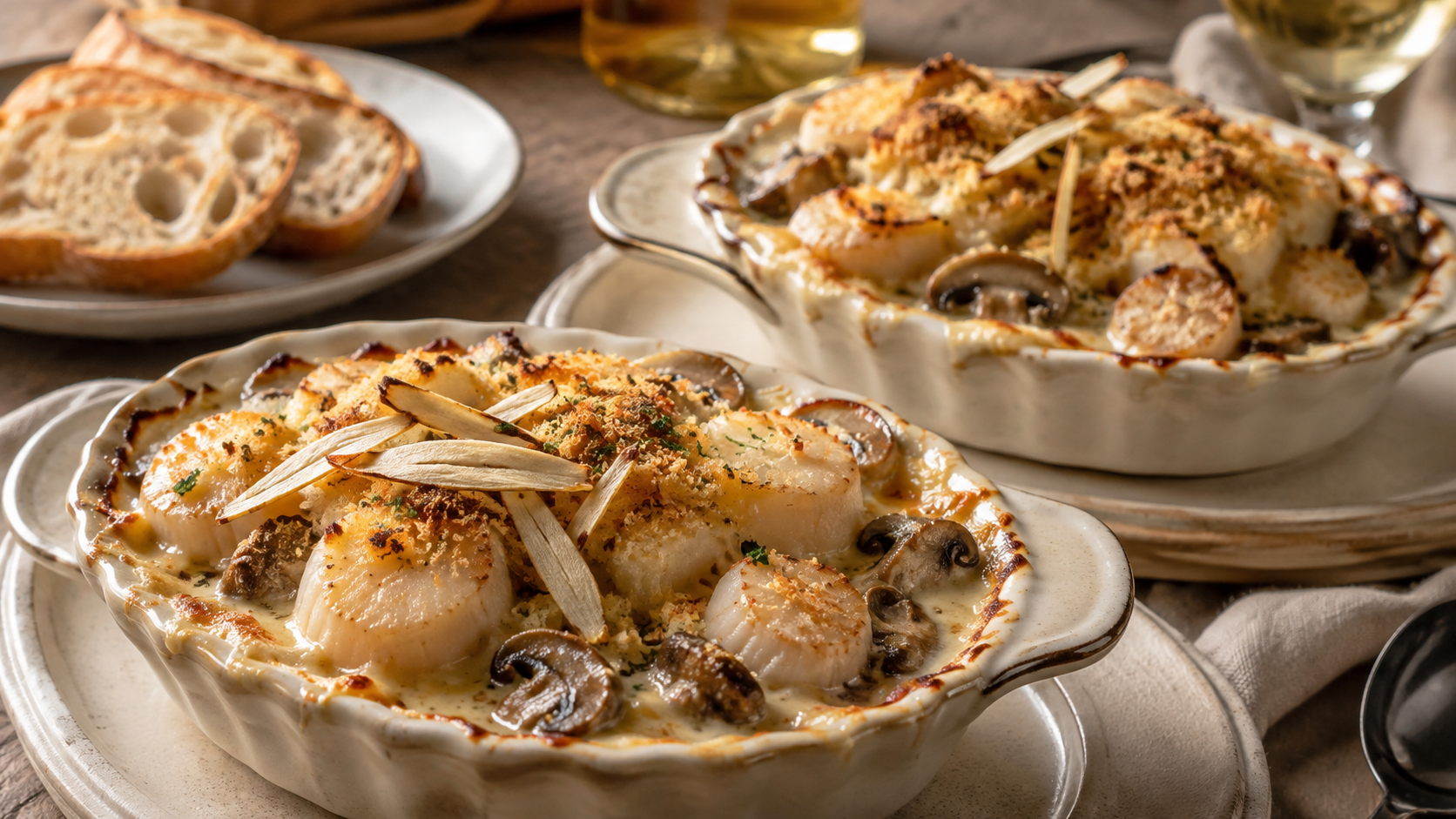
Ginseng White Wine Cream Baked Scallops
Korean ginseng dried strips are essentially dried ginseng roots, with a flavour that is herbal, slightly sweet, and has a mild bitter aftertaste; they are not suitable for consumption in large quantities like ordinary vegetables. This dish is based on the white wine, shallots, mushrooms, cream, and baked structure of the French seafood gratin Coquilles Saint-Jacques, and draws inspiration from French chefs who pair ginseng with scallops in delicate tarts. The ginseng is first infused in fragrant cream so that its flavour integrates into the sauce without leaving dry, hard fibres. The finished dish features the sweet freshness of the scallops, the aroma of the mushrooms, and a subtle sweet aftertaste from the ginseng, making it more suitable for Hong Kong family tastes.
Quick Answer
First, prepare the ginseng and frozen scallops according to package instructions. Infuse Korean ginseng dried strips in light cream over low heat to extract the aroma, then create a concentrated base using French white wine, shallots, and mushrooms. Add the scallops, top with cheese and breadcrumbs, and bake until golden. The centre of the scallops should be opaque milky white and springy to the touch before serving.
Ingredients
- Korean ginseng dried strips 8 to 10 grams
- Frozen or fresh scallops 300 grams
- White mushrooms 150 grams, sliced
- Shallots 2, finely chopped
- Dry white wine 80 millilitres
- Light cream 180 millilitres
- Butter 20 grams
- Chicken stock or seafood stock 80 millilitres
- Breadcrumbs 35 grams
- Grated Gruyère cheese or Parmesan cheese 35 grams
- Chopped fresh coriander 1 tablespoon
- Salt and black pepper to taste
- Lemon juice 1 teaspoon
Method
-
Preparing the Ingredients
If the scallops are frozen, thaw them completely according to the package instructions; if there are no specific instructions, do not assume they are cooked. After thawing, drain and pat dry the surface with kitchen paper. Quickly rinse the ginseng dried strips and cut them into shorter segments; if the packaging states that soaking is required or that they cannot be cooked directly, follow the packaging method.
-
Infusing the Ginseng Aroma
Place the light cream, ginseng dried strips, and chicken stock in a small pot. Heat over the lowest flame for about 8 minutes, keeping it gently steaming but not boiling vigorously. Turn off the heat, cover, and let it sit for 5 minutes, then strain out the ginseng. If the ginseng has become soft and the packaging confirms it is edible, you may keep a small amount of finely shredded ginseng for garnish; otherwise, use only the infused ginseng cream.
-
Sautéing the Mushrooms
Preheat the oven to 200°C. Melt 10 grams of butter in a frying pan over medium heat. Add the shallots and sauté for about 2 minutes until softened, then add the mushrooms and sauté for 5 to 6 minutes. Once the mushrooms have released their moisture, continue sautéing until the bottom of the pan is nearly dry, then add a small amount of salt and black pepper.
-
Reducing the White Wine Base
Pour in the dry white wine and cook over medium-high heat for about 3 to 5 minutes, scraping up any browned bits from the bottom of the pan, until the liquid is reduced by about half. Pour in the ginseng cream and cook over medium-low heat for 4 to 5 minutes, stirring gently. The sauce should be thick enough to coat the back of a spoon thinly. Finally, add lemon juice to season.
-
Quickly Searing the Scallops
Heat another pan over medium-high heat and add the remaining butter. Lightly sprinkle salt and black pepper on both sides of the scallops. Sear for about 45 to 60 seconds per side until the surface is golden. Remove them; do not cook them through in the pan, as this would make them tough during the subsequent baking.
-
Assembling and Baking
Divide the mushroom ginseng cream evenly into 2 to 3 heatproof gratin dishes, then place the scallops on top. Mix the breadcrumbs, cheese, and chopped coriander, and sprinkle over the surface. Bake in the oven for about 8 to 10 minutes, until the sauce is bubbling and the surface is golden.
-
Checking Doneness and Serving
Remove from the oven and let it rest for 1 minute. When cut open, the scallops should be opaque milky white and springy; they should not feel cold or look raw and transparent. If they are not fully cooked, return them to the oven and heat for a few more minutes. Serve hot with French bread, mashed potatoes, or white rice.
Frequently Asked Questions
Can Korean ginseng dried strips be put directly into this French baked scallop dish?
Yes, but dried ginseng is harder, so it is recommended to first infuse it in cream over low heat to extract the aroma. If the packaging has soaking, cooking, or consumption restrictions, you must follow the product instructions first.
What can be used as a substitute if there is no white wine?
You can substitute with an equal amount of unsweetened apple juice plus a little lemon juice, or simply increase the chicken stock and use lemon juice to add flavour. However, the acidic aroma brought by reducing white wine is closer to the original French style.
How should scallops be cooked to avoid becoming tough?
The key is to pat the surface dry first, sear quickly to colour, and then let the short baking time finish the cooking. The sauce should not be boiled vigorously with the scallops for a long time, as this can cause them to shrink and harden.
Can frozen scallops be put directly into the pan to cook?
Check the package instructions first. Different products may require refrigerated thawing, direct cooking, or other handling methods; if not handled according to product requirements, the scallops are likely to release water, which may also affect doneness and food safety.
Will the ginseng flavour in this dish be very bitter?
It will not be overpowering. The recipe deliberately uses only a small amount of ginseng and employs an infusion method, allowing the sweet freshness of the white wine, mushrooms, and scallops to balance the herbal bitter notes. This is also an adjustment made for Hong Kong family tastes.