 Skip to content


How Should Beginners Calculate Daily Protein for Muscle Gain? How Much Protein Does a 20g Protein Bar Actually Provide?
Popular Questions Answered
How Should Beginners Calculate Daily Protein for Muscle Gain? How Much Protein Does a 20g Protein Bar Actually Provide?
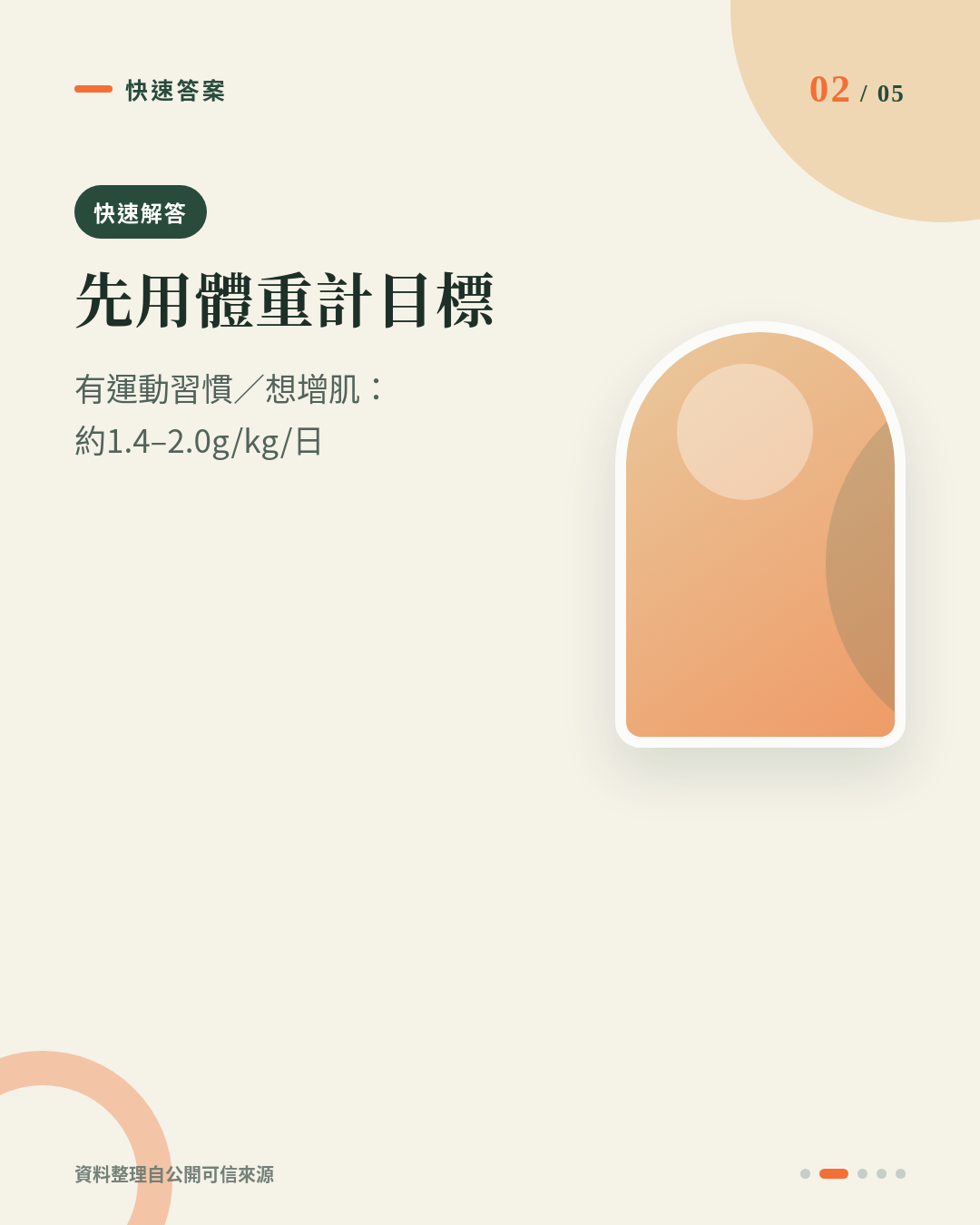
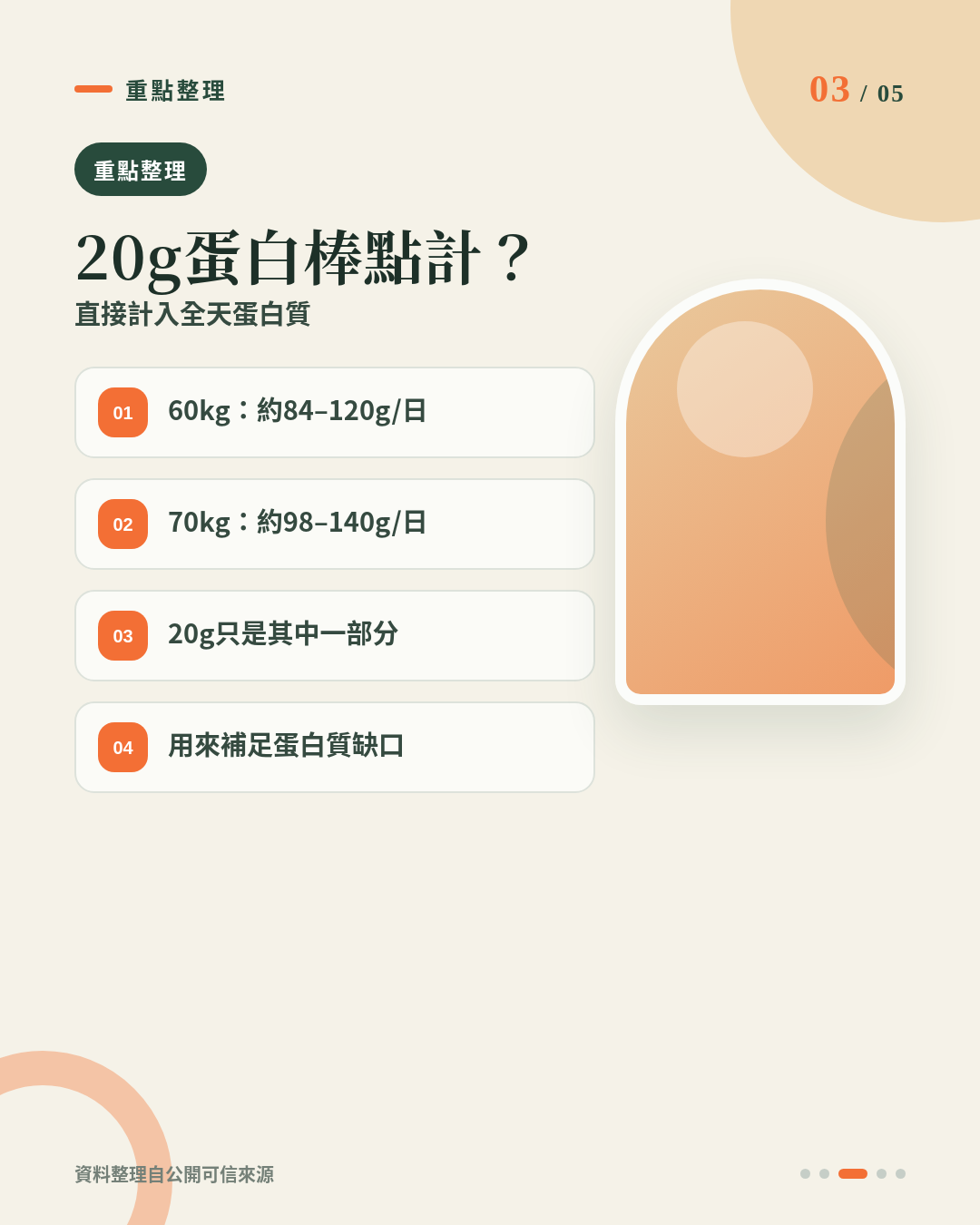
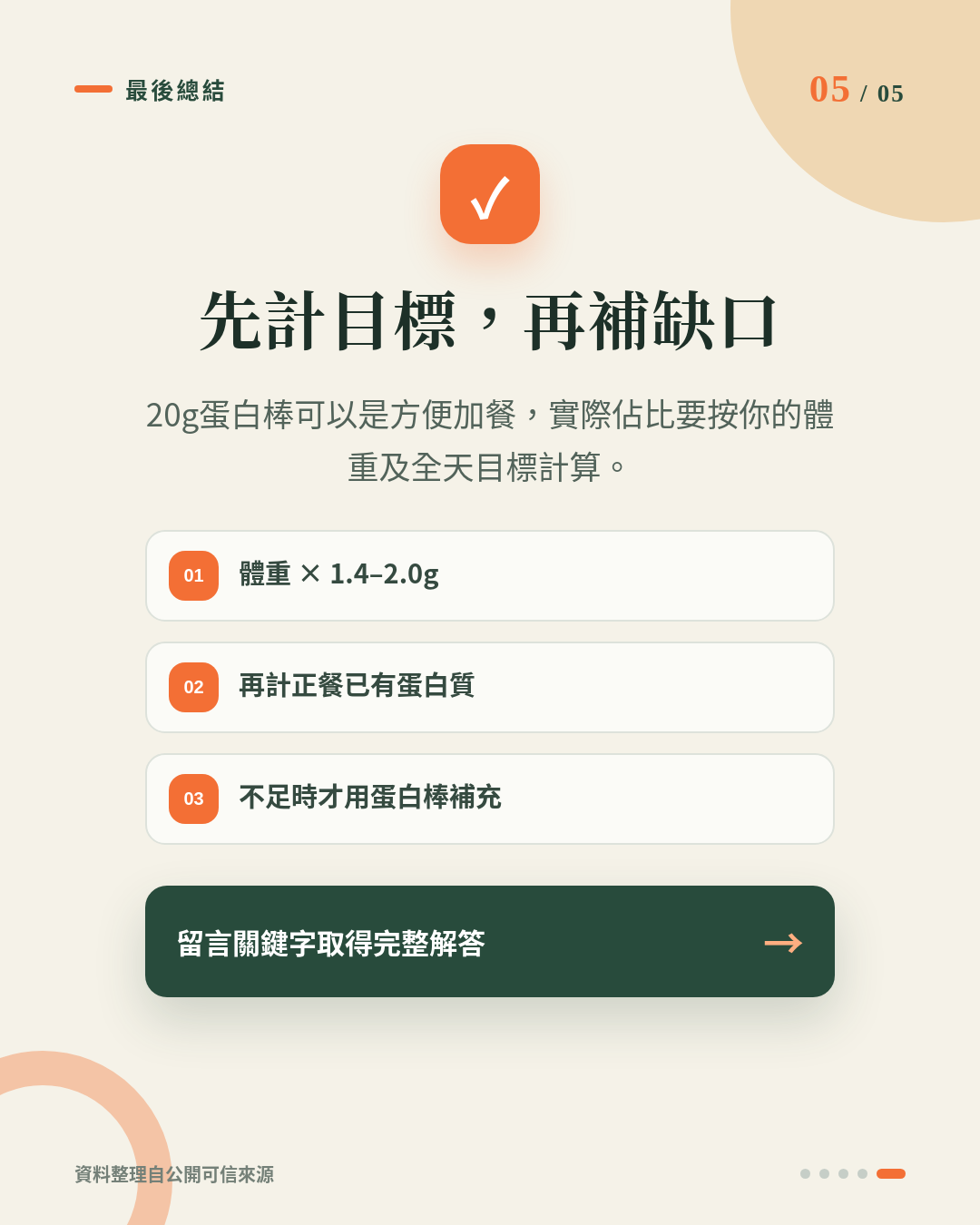
If you have a regular exercise habit or are aiming for muscle gain, you can first refer to approximately 1.4 to 2.0 grams of protein per kilogram of body weight per day. For a 60kg person, that is approximately 84 to 120g of protein; a bar labelled as containing 20g of protein accounts for about 17% to 24% of the daily target. Therefore, protein bars are more suitable as a convenient snack to supplement the day's protein gap, rather than automatically being treated as a complete meal.
Illustrated Key Points


For beginners starting to build muscle, one of the most common questions is 'How much protein do I actually need to eat in a day?' and 'Is one 20g protein bar enough?' In fact, these two questions need to be viewed separately: the daily protein target should first be established based on body weight, activity level, and training goals, before calculating how much of the gap can be filled by protein bars. The latest relevant data from the Consumer Council indicates that individuals with exercise habits or those aiming to build muscle can refer to a daily intake of 1.4 to 2.0 grams of protein per kilogram of body weight, while also noting that one should not rely solely on a single supplement but should obtain protein from a variety of foods.
1. How to calculate daily protein for beginners? Start with weight
For people with a regular exercise habit or who want to build muscle, the Consumer Council cites relevant nutritional research and International Society of Sports Nutrition data to list a reference range of approximately 1.4 to 2.0 grams of protein per kilogram of body weight per day. In other words, you can first use 'Weight (kg) × 1.4 to 2.0g' to calculate your own daily protein reference target, and then adjust according to actual diet and training conditions.
- 60kg: Approximately 84 to 120g protein per day
- 70kg: Approximately 98 to 140g protein per day
- 80kg: Approximately 112 to 160g protein per day
- This is a reference range and does not mean that eating more will definitely lead to faster muscle gain.
2. How much can a 20g protein bar fill in a day?
If the protein bar nutrition label states that each bar contains 20g of protein, you can directly add 20g to the total protein for the day. For a 60kg person's 84 to 120g reference target, a 20g protein bar accounts for approximately 16.7% to 23.8%; for a 70kg person's 98 to 140g target, it accounts for approximately 14.3% to 20.4%. Therefore, 'Is 20g enough?' cannot be answered alone; it depends on your total daily goal and how much you have already eaten at other meals.
- 60kg: 20g accounts for approximately 17% to 24% of the daily target
- 70kg: 20g accounts for approximately 14% to 20% of the daily target
- The role of a protein bar is to supplement the protein gap, not to automatically equal a meal
- If other meals already provide sufficient protein, there is no need to eat more just to chase the numbers
3. How to distribute protein throughout the day's diet?
The practical approach is to first set a daily target, then tally the protein already provided by breakfast, lunch, dinner and snacks. The Consumer Council suggests that daily diet should obtain protein from different types of food, rather than viewing protein powder or other supplements as the only source.
- Step 1: Establish a reference range using body weight × 1.4 to 2.0g
- Step 2: Record the protein intake from main meals
- Step 3: Calculate how much is still needed for the day
- Step 4: Use a 20g protein bar as a convenient snack to make up the difference if necessary
4. When is a 20g protein bar suitable to eat?
The biggest practical use of a protein bar is to provide an easily portable protein source when it is inconvenient to prepare a full meal when going out, going to work, going to school, or before and after training. The Consumer Council also points out that while supplementing protein after exercise is convenient, what is more important is the total intake throughout the day; daily diet should still maintain diversity.
- When Meal Prep means you cannot eat immediately, it can be used as a convenient snack
- When the day's protein has not reached the target, it can be used to fill the gap
- Do not treat a protein bar with 20g of protein as a complete meal just because of its protein content
- Main meals should still include different types of food to maintain a balanced diet.
5. Several common protein misconceptions for beginners
Muscle-building diet is not simply pursuing 'the higher the protein, the better'. The Consumer Council points out that after the average person exceeds the basic requirement, the effect of extra protein gradually diminishes; people with kidney disease, impaired kidney function or other health problems should consult a doctor or relevant professional before increasing protein intake.
- Misconception 1: A 20g protein bar equals a complete 20g meal — it does not
- Misconception 2: Eating more protein guarantees faster growth — there is no such guarantee.
- Misconception 3: Relying solely on protein bars and ignoring regular meals — not recommended; protein sources should be diversified.
- Misconception 4: Focusing only on the protein figure and ignoring overall diet — daily total intake and overall diet are more important.
6. Practical judgment: Is a 20g protein bar worth adding to a muscle-building meal plan?
If you already know your daily protein target and find that you are often short between main meals, a bar labelled as containing 20g of protein can become a convenient supplement option. Taking the Barebells Cookies & Caramel protein bar mentioned in the question as an example, the product data states that each bar is 55g, contains 20g of protein and has no added sugar; as for other nutritional data such as calories and fat, the data provided in the question does not give details, so estimates should not be made.
- Product Label: 55g per bar
- Product Label: 20g protein per bar
- Product Label: No added sugar
- Calories, fat and other data: The stated information is not provided
- When purchasing, please refer to the nutrition label and storage/eating instructions on the actual packaging
Frequently Asked Questions
How much protein should a beginner consume daily for muscle gain?
For individuals with a regular exercise habit or those looking to build muscle, a reference of 1.4 to 2.0 grams of protein per kilogram of body weight per day can be used. For example, for 60kg it is approximately 84 to 120g, and for 70kg it is approximately 98 to 140g.
Is one 20g protein bar enough for muscle gain?
You cannot rely solely on one protein bar. 20g is only part of it; you should first calculate your daily protein target, then see how much your main meals and other foods provide.
What is the effect of eating one 20g protein bar for a 60kg person?
Based on the reference target of 84 to 120g per day, 20g accounts for approximately 16.7% to 23.8% and can be considered part of supplementing the day's protein intake.
Can protein bars replace main meals?
They should not be automatically regarded as a complete meal. The Consumer Council recommends obtaining protein from different types of food and maintaining a balanced diet.
Is more protein better for muscle gain?
No. The Consumer Council points out that beyond basic requirements, the effects of additional protein gradually diminish. Therefore, the focus is on establishing a reasonable goal based on personal needs, rather than blindly pursuing high protein.