 Skip to content


15–30 minute high-protein Meal Prep after work: How to pair 100g Honey Char Siu Chicken Breast with rice and vegetables for easiest control?
Frequently Asked Questions
High-protein Meal Prep in 15 to 30 minutes after work: How is it easiest to control portions when pairing 100g honey-glazed char siu chicken breast with rice and vegetables?
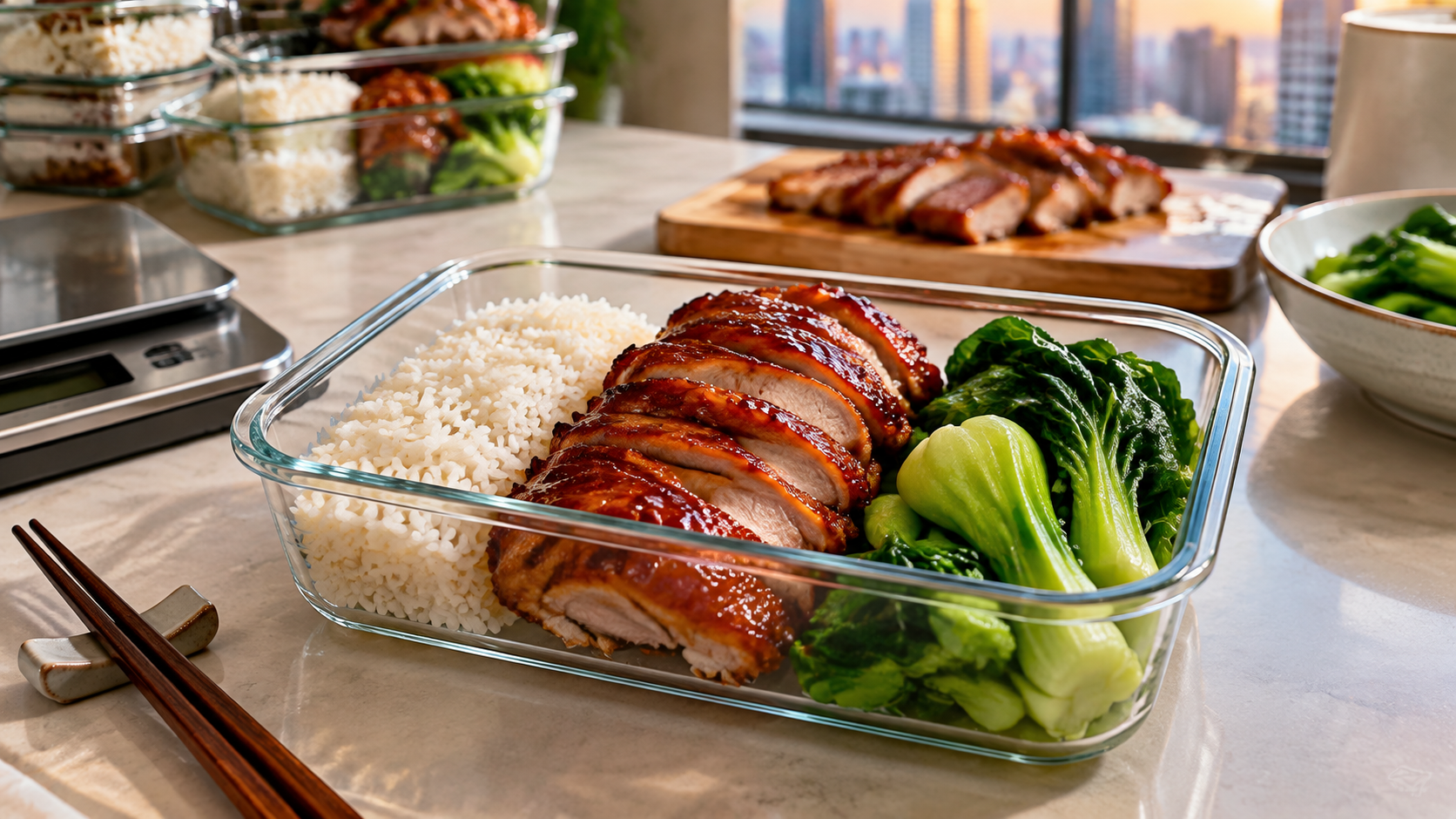
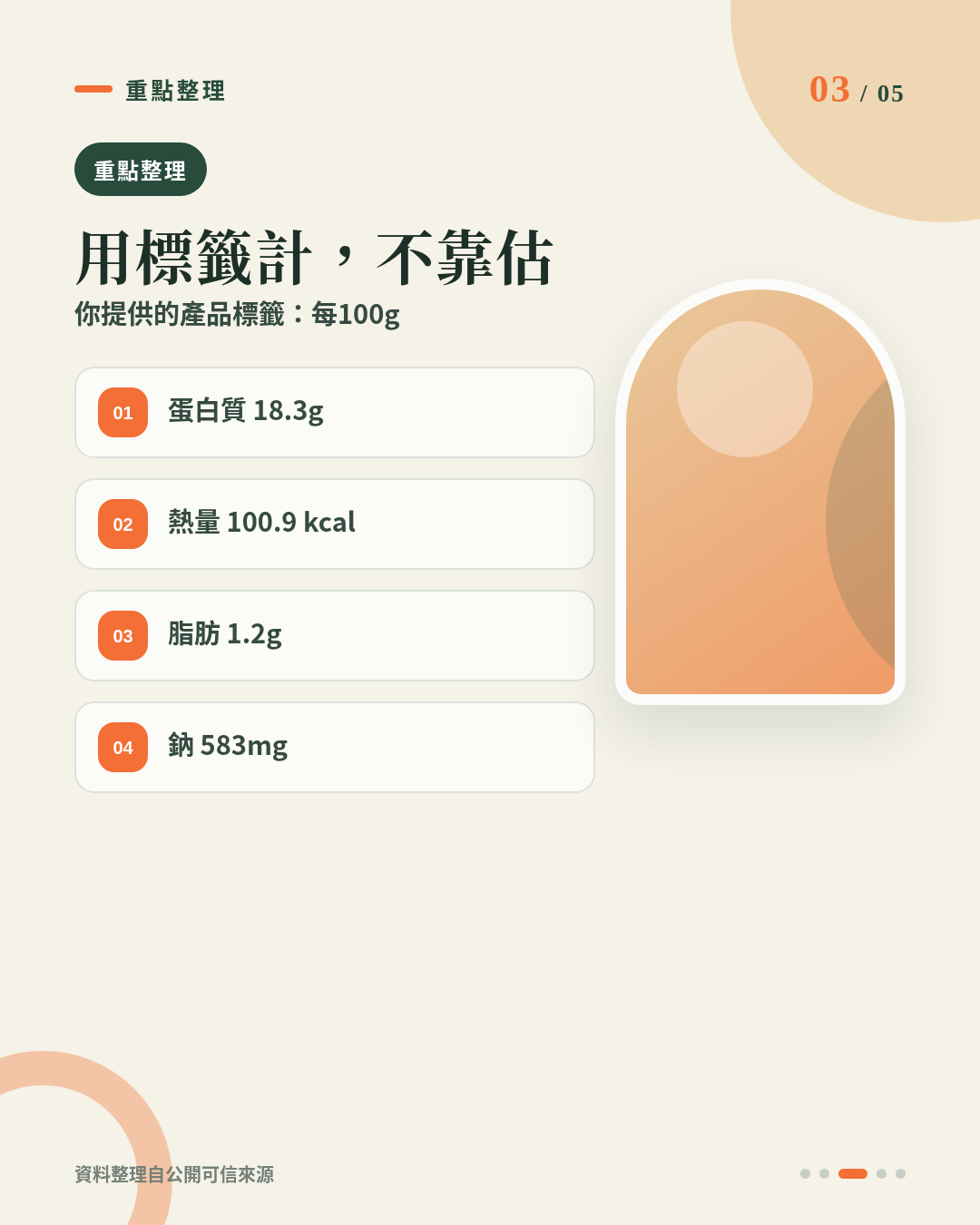
The most convenient method is to use the 100g individually packaged chicken breast as a fixed portion unit, then determine the rice quantity according to your own dietary goals, and add vegetables based on the capacity of your lunchbox and your needs. You do not need to weigh the chicken breast or portion the meat every time; when controlling calories, the focus is on checking the nutrition labels item by item, rather than relying solely on the impression that 'chicken breast = low calorie'. According to the product label you provided, every 100g of honey-glazed char siu chicken breast contains 100.9 kcal, 18.3g protein, 1.2g fat, 4.0g carbohydrates, and 583mg sodium. The actual nutritional data for rice and vegetables has not been provided, so you should not estimate the total meal calories on your own.
Key Points Illustrated
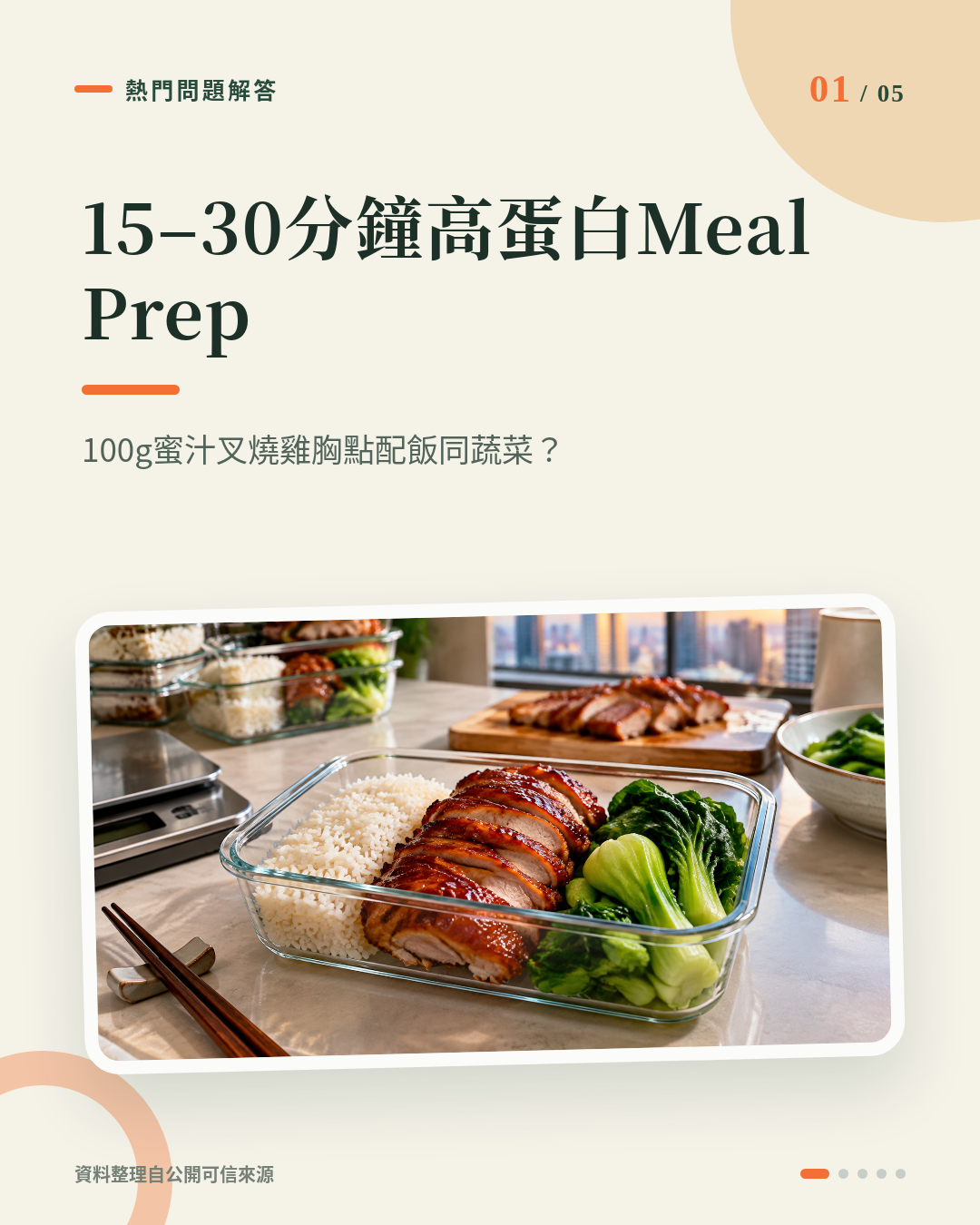
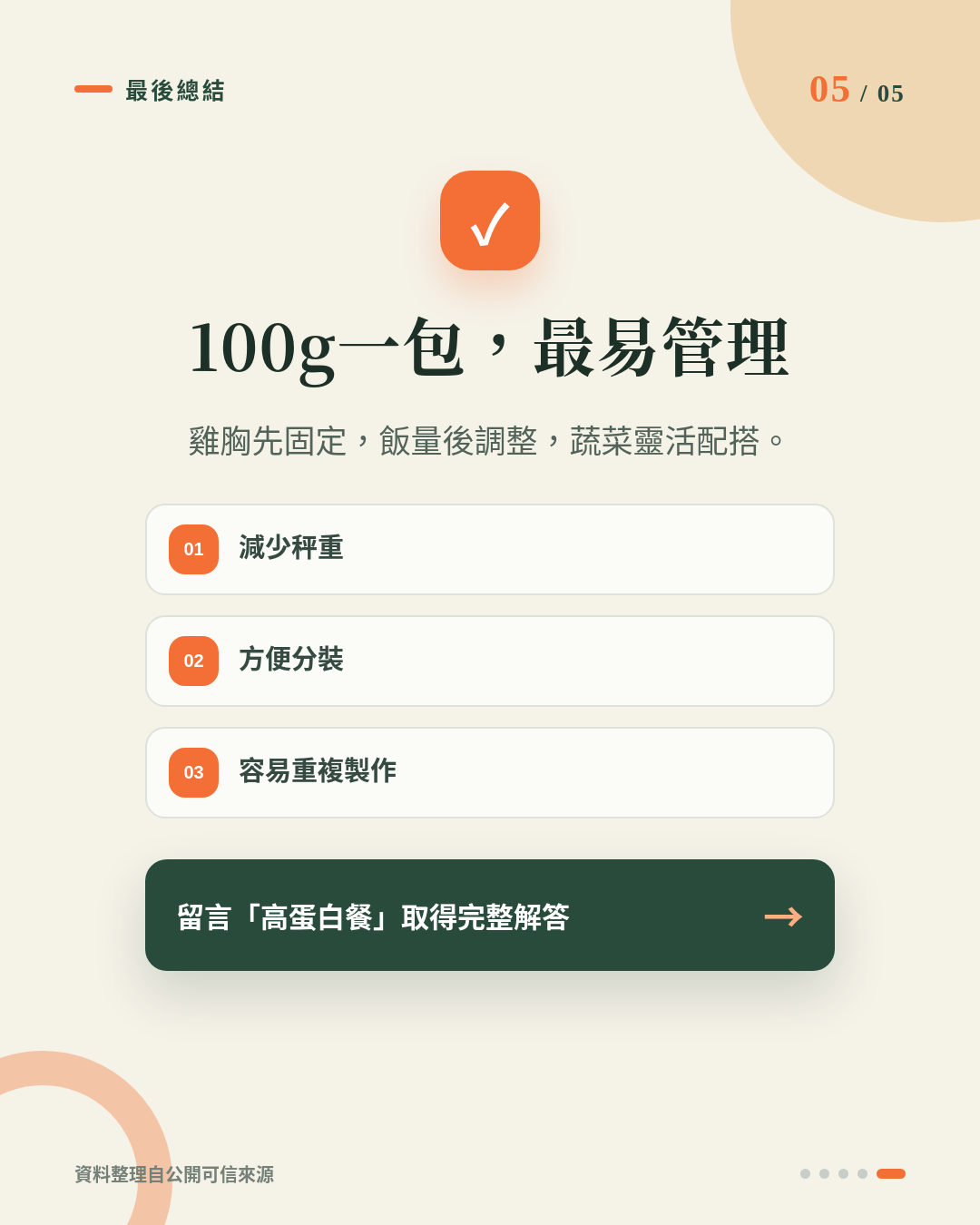
For those who only do Meal Prep after work, the real hassle is often not the cooking, but weighing, portioning, marinating, and cleaning. Using the 100g individually packaged chicken breast as a fixed unit allows you to prepare the protein main course first, then adjust the rice and vegetable quantities according to the day's needs, making the lunchbox easier to replicate. High-protein meal content in Hong Kong in recent years often compares chicken breast, rice, vegetables, and data such as protein and calories, showing that 'convenience + nutritional data' are indeed important considerations for fitness meals.
1. Why is the 100g individually packaged option the most convenient for controlling portions?
The easiest place for Meal Prep to go out of control is having to decide how much chicken to use every time. Using a 100g pack as a fixed unit, the most direct benefit is that you do not need to thaw, cut, and portion large packs of chicken first. Take one pack for each meal, then pair it with rice and vegetables as needed. According to the product nutrition label you provided, every 100g contains 18.3g protein and 100.9 kcal, so these two figures can be used directly as the basis for calculating the chicken breast portion; other ingredients should be checked against their actual data separately.
- 100g is a clear portion unit, reducing the need for repeated weighing.
- The protein and calories of the chicken breast can be calculated directly from the package label.
- Rice and vegetable quantities can be adjusted independently, without needing to change the chicken breast portion to alter carbohydrate intake.
2. How can you combine ingredients in 15 to 30 minutes after work?
If the goal is to quickly complete a lunchbox, the process can be simplified into three parts: 'chicken breast + staple + vegetables'. The chicken breast is counted directly as one 100g pack; the rice should be pre-portioned according to your usual actual needs; choose vegetables that are easy to heat or can be eaten immediately. The focus of this approach is not to pursue a one-size-fits-all rice quantity, but to make each part easy to adjust independently. If you have daily protein or calorie goals, first use the nutrition label to calculate how much the chicken breast provides, then decide how much the other ingredients need to provide.
- Fastest process: Take one pack of chicken breast → add pre-prepared rice → add vegetables.
- To reduce the number of weighings, you can pre-portion the rice into fixed amounts.
- To change calories, prioritize adjusting staples and other ingredients with clear portions, rather than arbitrarily changing the chicken breast portion.
- When there is no nutritional data for rice or vegetables, do not estimate the calories of the entire Meal Prep box on your own.
3. How to use nutrition labels to calculate protein and calories?
The most practical way is to first record the data for each ingredient separately, then add them up. Taking the chicken breast label you provided as an example, 100g already has clear figures of 18.3g protein and 100.9 kcal. If one pack is used for a meal, simply add these two figures directly to the meal calculation; if two packs are used, the chicken breast portion is doubled accordingly. As for rice, vegetables, sauces, or extra ingredients, you must use their respective package or reliable nutritional data; if there is no data, you should not estimate.
- Chicken breast: Calculate using the label data per 100g.
- Protein: Add item by item, first confirming how much the main course provides.
- Calories: Calculate chicken breast, rice, vegetables, and extra sauces separately.
- Pay special attention to sodium: The product label shows 583mg sodium per 100g; do not just look at protein and calories.
4. Meal Prep Food Safety: Quick does not mean you can skip refrigeration steps
If the lunchbox is not cooked and eaten immediately, food safety handling is equally important. The Centre for Food Safety recommends that homemade lunchboxes should be portioned according to the required amount, cooled quickly after cooking, and stored in the refrigerator; when transporting out, an insulated bag and ice pad can be used, and upon arrival at the workplace, it should be placed in a refrigerator at 4°C or below as soon as possible. Before eating, it should be thoroughly reheated until boiling; if a food thermometer is available, the core temperature should reach at least 75°C. citeturn0search7
- For later consumption: Cool and refrigerate quickly after cooking.
- Bringing lunch to work: Use an insulated bag, adding an ice pad when appropriate.
- Upon arriving at the office: Place in a refrigerator at 4°C or below as soon as possible.
- Reheating: Must be thoroughly heated; a food thermometer measuring core temperature can refer to at least 75°C.
5. Common Misconception: High-protein does not equal the whole meal is definitely low-calorie
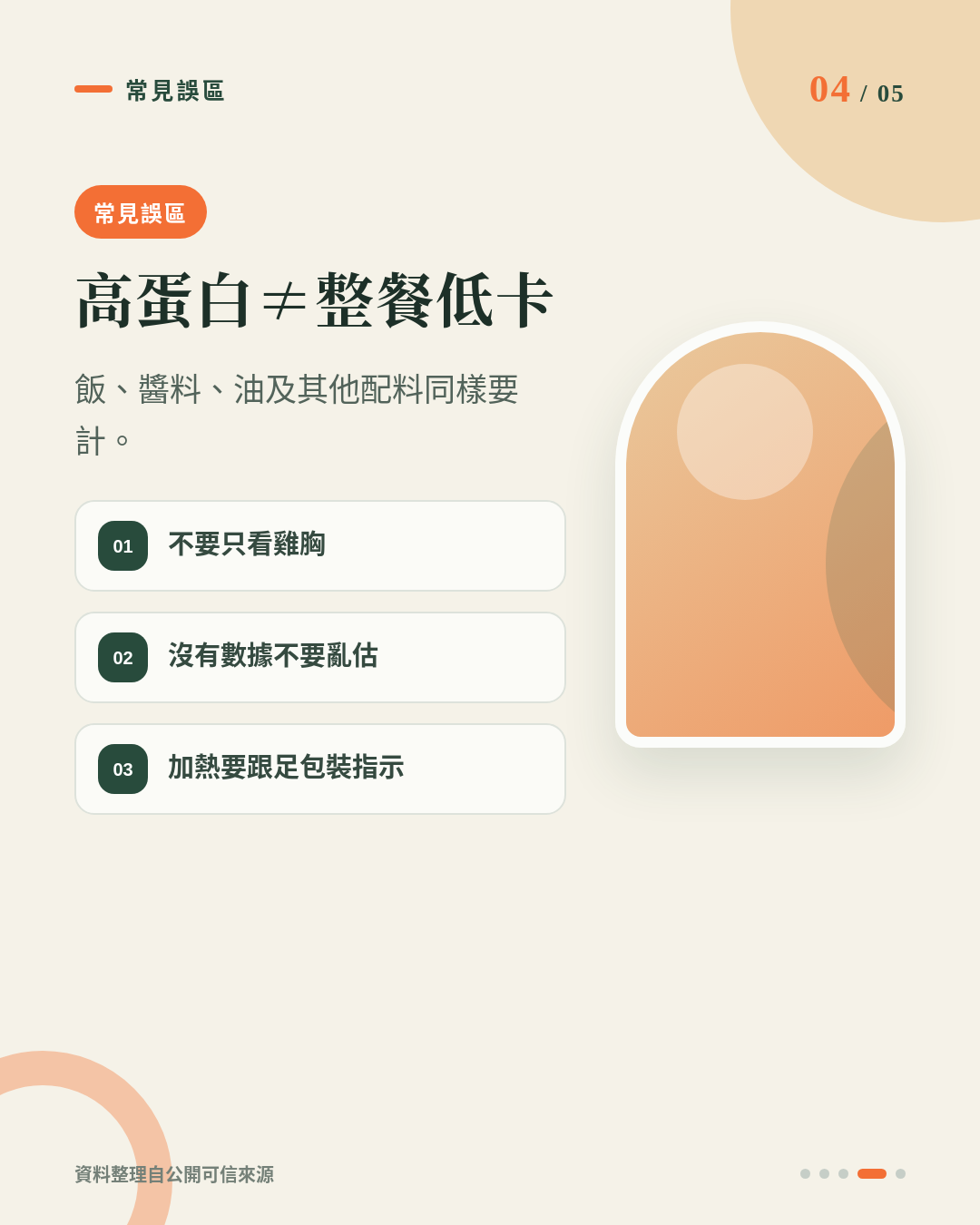
The most common issue with Meal Prep is looking only at the chicken breast and ignoring the whole meal. Even if the chicken breast nutrition label clearly lists protein and calories, rice, sauces, oil, and other ingredients will still affect the actual figures of the whole meal. Additionally, the product label indicates that this food is a quick-frozen cooked product, but is marked 'Non ready to eat', and specifies that it needs to be thawed and then pan-fried, steamed, or microwaved, with a core temperature of 75°C or above before consumption. Therefore, in actual handling, you should follow the latest consumption and storage instructions on the package in your hand.
- Do not assume the entire meal is low in calories just because it is chicken breast.
- Do not count only the protein; you may also check the energy, fat, carbohydrates, and sodium.
- Do not shorten the heating procedure specified on the packaging on your own.
- Do not estimate the nutrition of the meal box using online figures of unknown origin.
6. If you want to reduce preparation time, how can you buy it?
If your focus is on quickly assembling a meal box after work, the 100g individually packed ChamProtein® Cantonese Honey-Glazed Char Siu Cooked Chicken Breast is ideal as a portion management unit. The product data lists it as 100g x 9 packs, bulk pack 900g; the packaging label you provided also lists nutritional information per 100g. It is still recommended to refer to the ingredients, nutrition, storage, and heating instructions on the latest product packaging when purchasing. It can simplify weighing and portioning the chicken breast, but rice, vegetables, and other ingredients still need to be arranged separately according to your own dietary goals.
- Need convenient portioning: Use one 100g pack as one chicken breast portion unit.
- Need to count: Use the packaging nutrition label directly, do not rely on estimation.
- Need to control the whole meal: Adjust rice, vegetables, and other ingredients independently.
- Before purchasing: Refer to the latest packaging labels and consumption instructions.
Frequently Asked Questions
How much protein is in 100g of chicken breast?
According to the product label you provided, every 100g contains 18.3g of protein and 100.9 kcal of energy.
How much rice should be put in a Meal Prep box?
There is no fixed portion suitable for everyone. It should be determined according to your actual dietary goals and the nutritional data of the rice; as the weight or nutritional data of the rice has not been provided, calories should not be directly estimated.
Is more vegetable always better?
Vegetables can be an important accompaniment to the meal box, but the actual portion still depends on your meal box capacity, eating habits, and other ingredients. If you want to calculate precise calories, you still need the actual weight or nutritional data.
Can this chicken breast be eaten directly after defrosting?
According to the packaging image you provided, the product is labelled as 'Non ready to eat' and specifies that it needs to be pan-fried, steamed, or microwaved after defrosting until the core temperature of the food reaches 75°C or above before consumption. Therefore, do not judge solely by the words 'cooked chicken breast'; you should handle it according to the heating instructions on the latest packaging in your hand.