 Skip to content

How to handle partially thawed Frozen Chicken Shumai? Cook immediately, refrigerate, or refreeze? Explained clearly
Popular Questions Answered
How to handle partially thawed Frozen Chicken Shumai? Cook immediately, refrigerate, or refreeze? Explained clearly
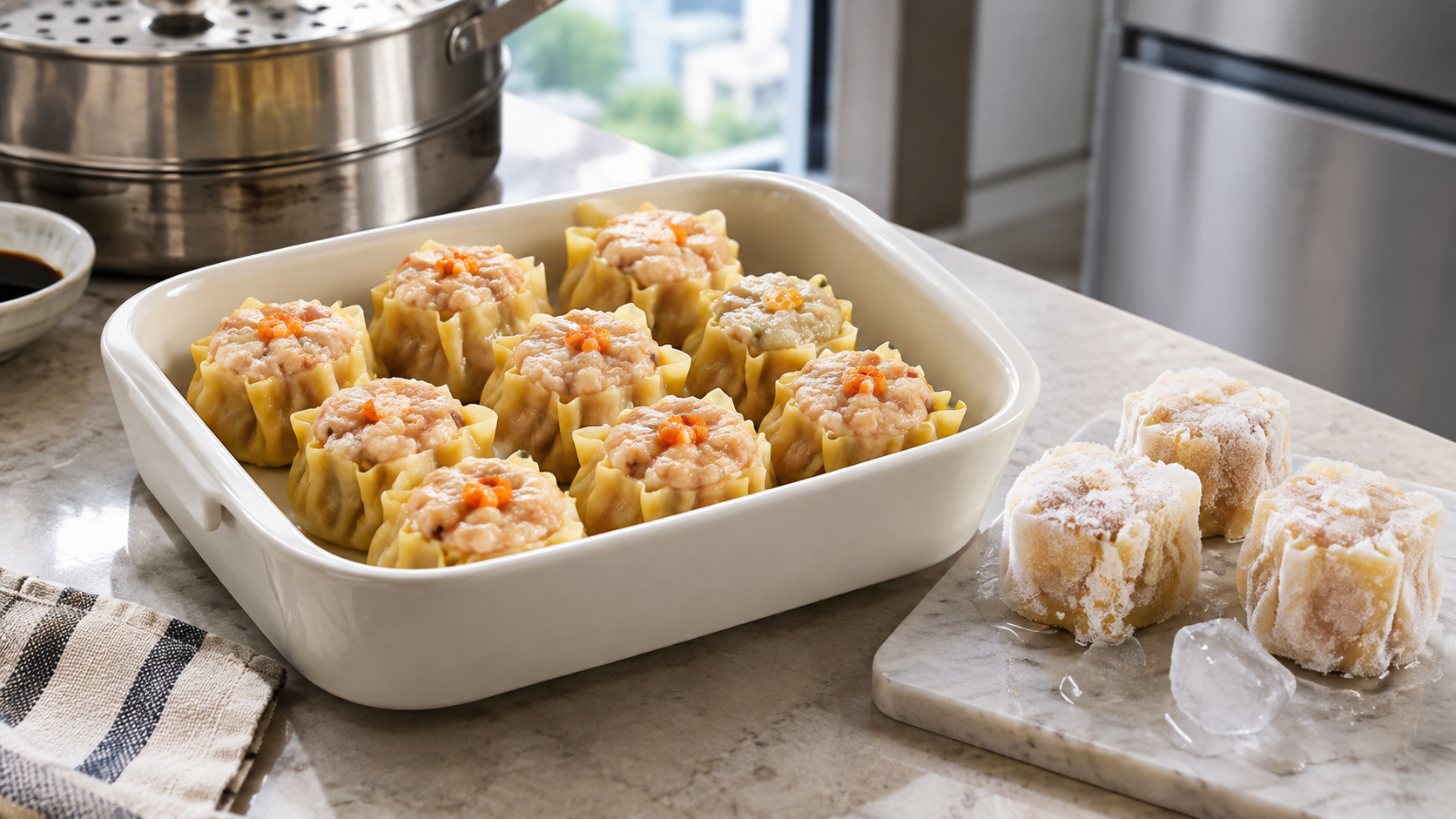
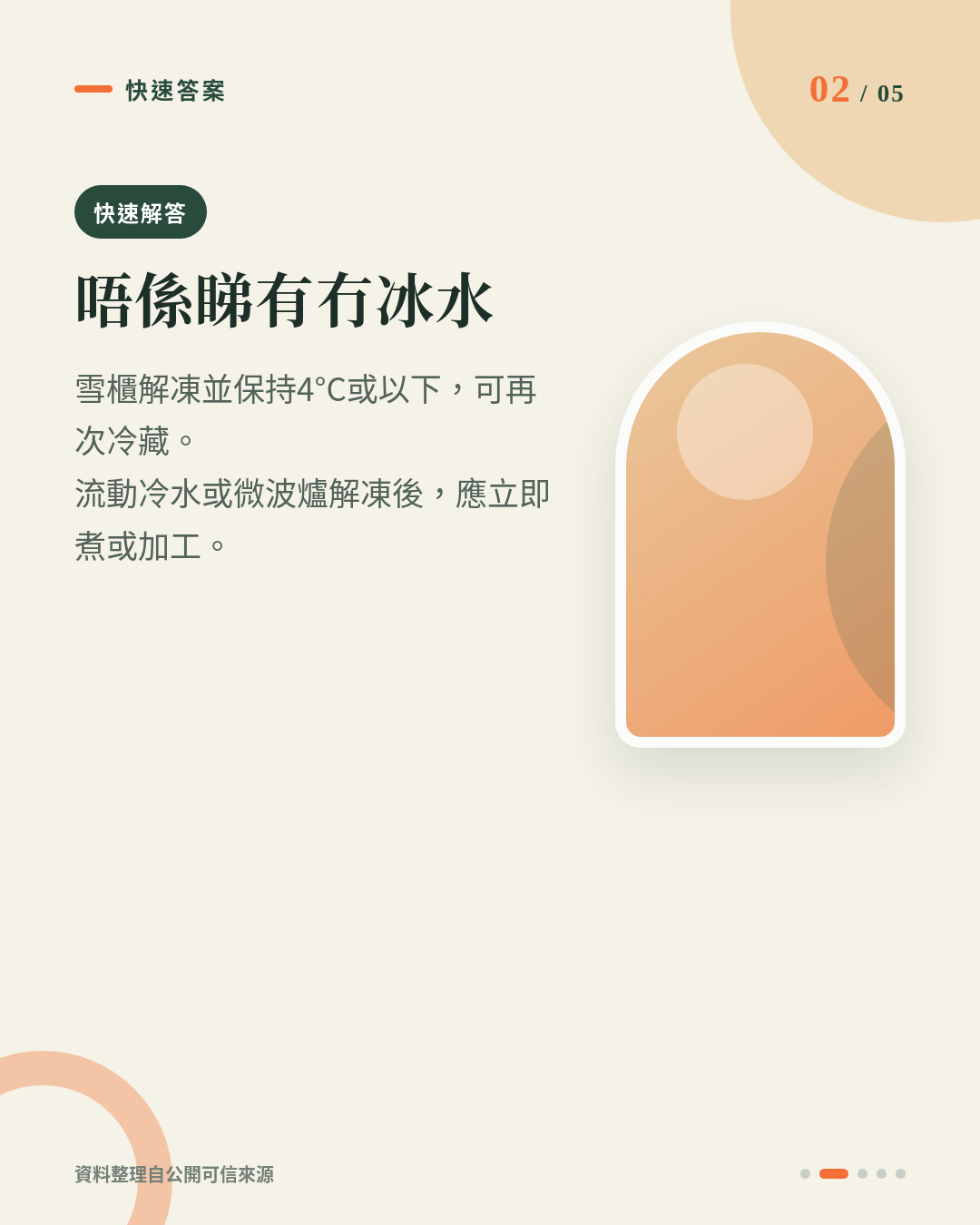
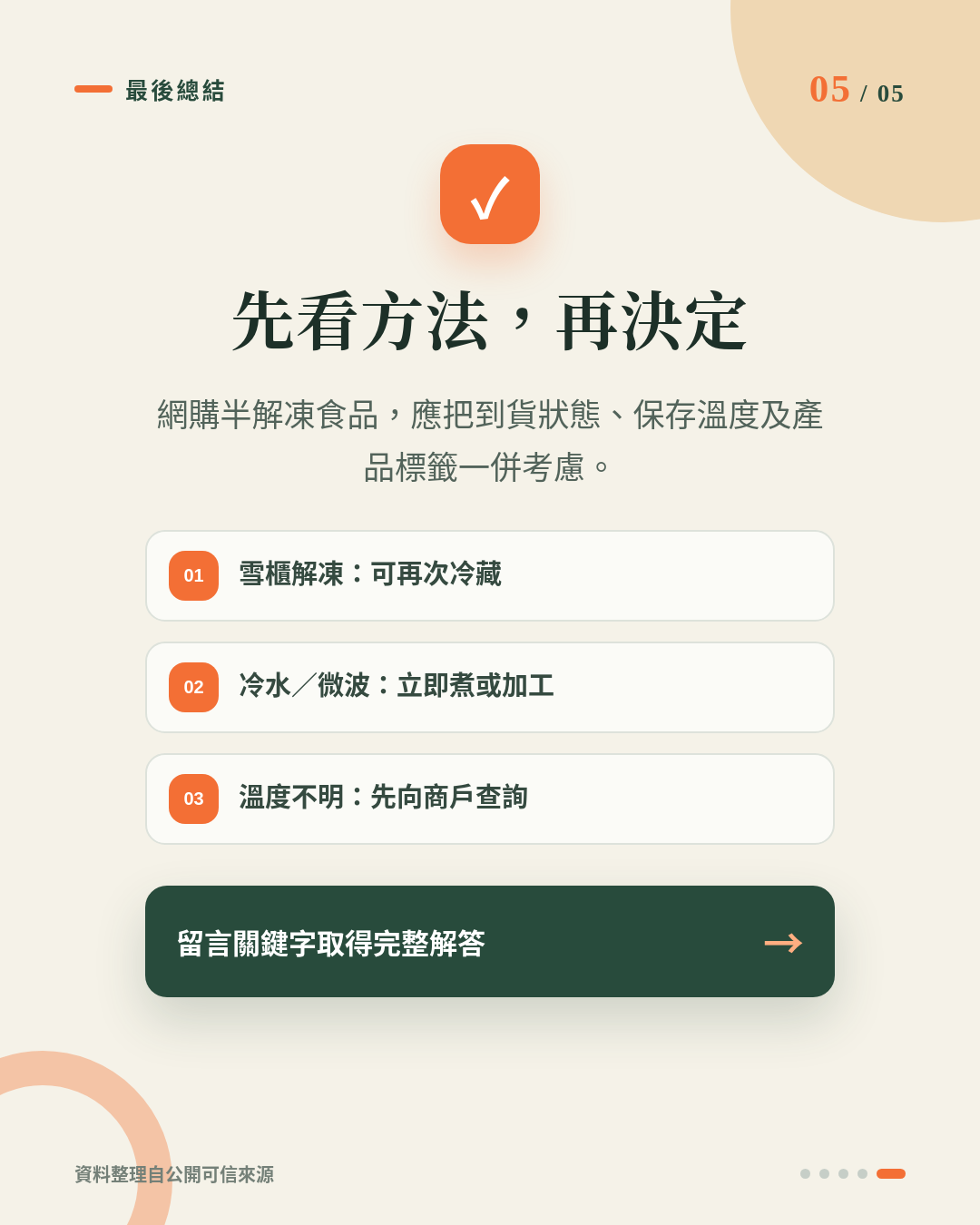
When receiving frozen chicken shumai that is partially thawed, softened, or has a small amount of ice water, you cannot rely solely on 'whether there is ice water' to determine how to handle it. First, check the packaging instructions and the storage condition upon arrival; if thawed in the refrigerator and maintained at 4°C or below throughout, the Food Safety Centre indicates it can be refrigerated again. If thawed in running cold water or a microwave, it should be cooked or processed immediately. If the temperature rose during online food delivery and cannot be confirmed, you should inquire with the merchant and not assume on your own that it can be refrozen.
Illustrated Key Points
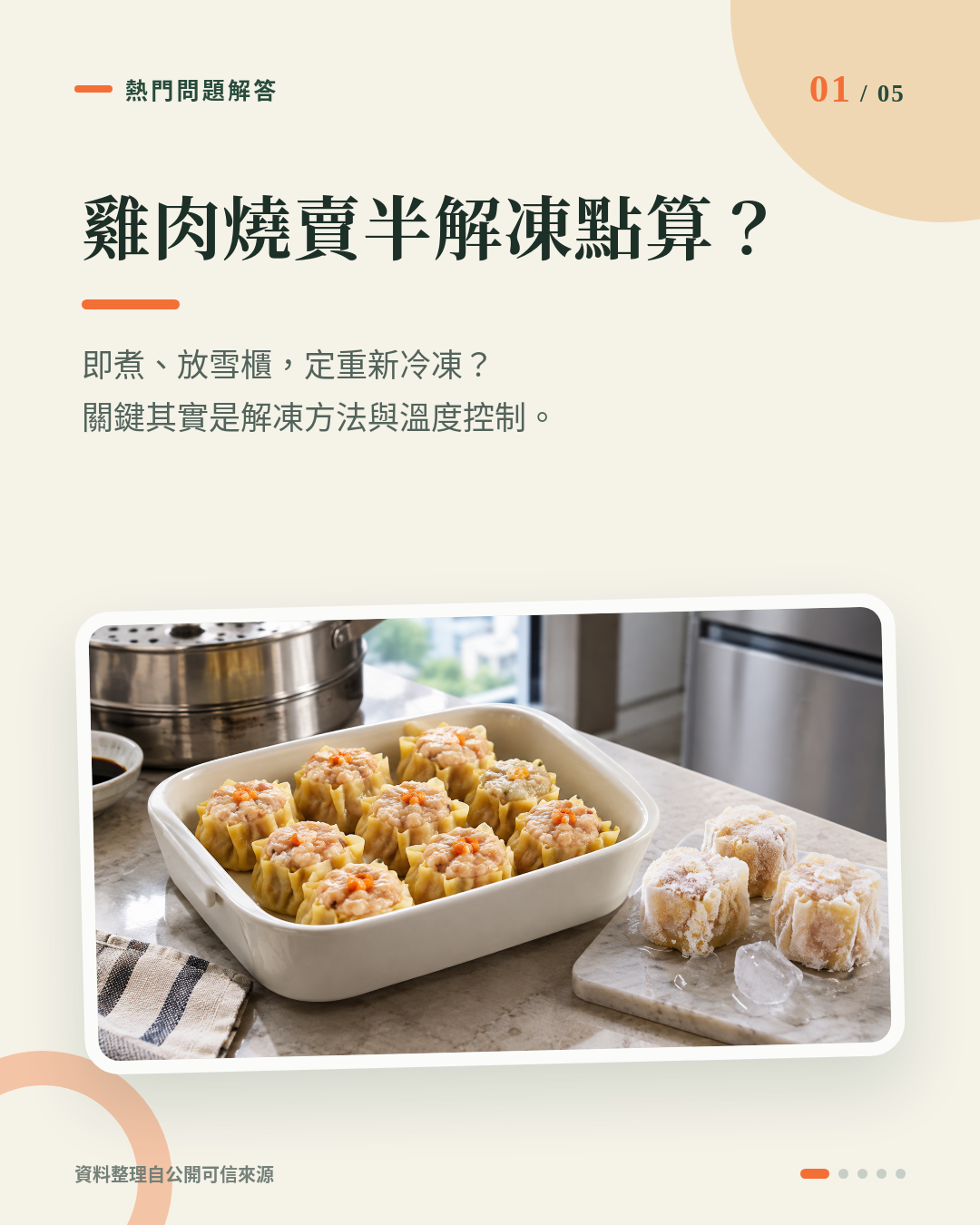
When receiving frozen chicken shumai online that is partially thawed, softened on the outside, or even has a small amount of ice water in the packaging, it is particularly confusing for those who need Meal Prep, portion control, and pre-prepared meals. The real judgment is not 'seeing water means it's definitely inedible' or 'still has ice means it can definitely be refrozen', but how the food was thawed and the temperature control throughout the process. The following breaks down how to handle partially thawed frozen food upon receipt, based on the thawing principles of the Hong Kong Food Safety Centre.
1. Receiving partially thawed goods: Check temperature control first, don't just look at the ice water
A small amount of ice water itself cannot determine if the food is safe, nor can appearance alone decide whether it should be refrozen. For online-purchased frozen chicken shumai, it is especially important to consider the 'product's original frozen requirements' separately from the 'actual storage condition during transit'. After receiving the goods, first check the packaging, product label, and merchant's storage instructions; if the food is still at a low temperature and partially frozen, handle it according to the label and reliable storage instructions. If it has clearly warmed up and the temperature during transit cannot be confirmed, inquire with the merchant about arrival handling arrangements, rather than judging solely by the amount of ice water.
- Ice water present ≠ definitely unsafe; no ice water ≠ definitely safe to refreeze.
- First check the product label, storage temperature, and merchant's arrival instructions.
- When the temperature during transit is unknown, do not assume on your own that the food has been at a safe temperature throughout.
2. Refrigerator thawing, running cold water, microwave: Handling methods differ
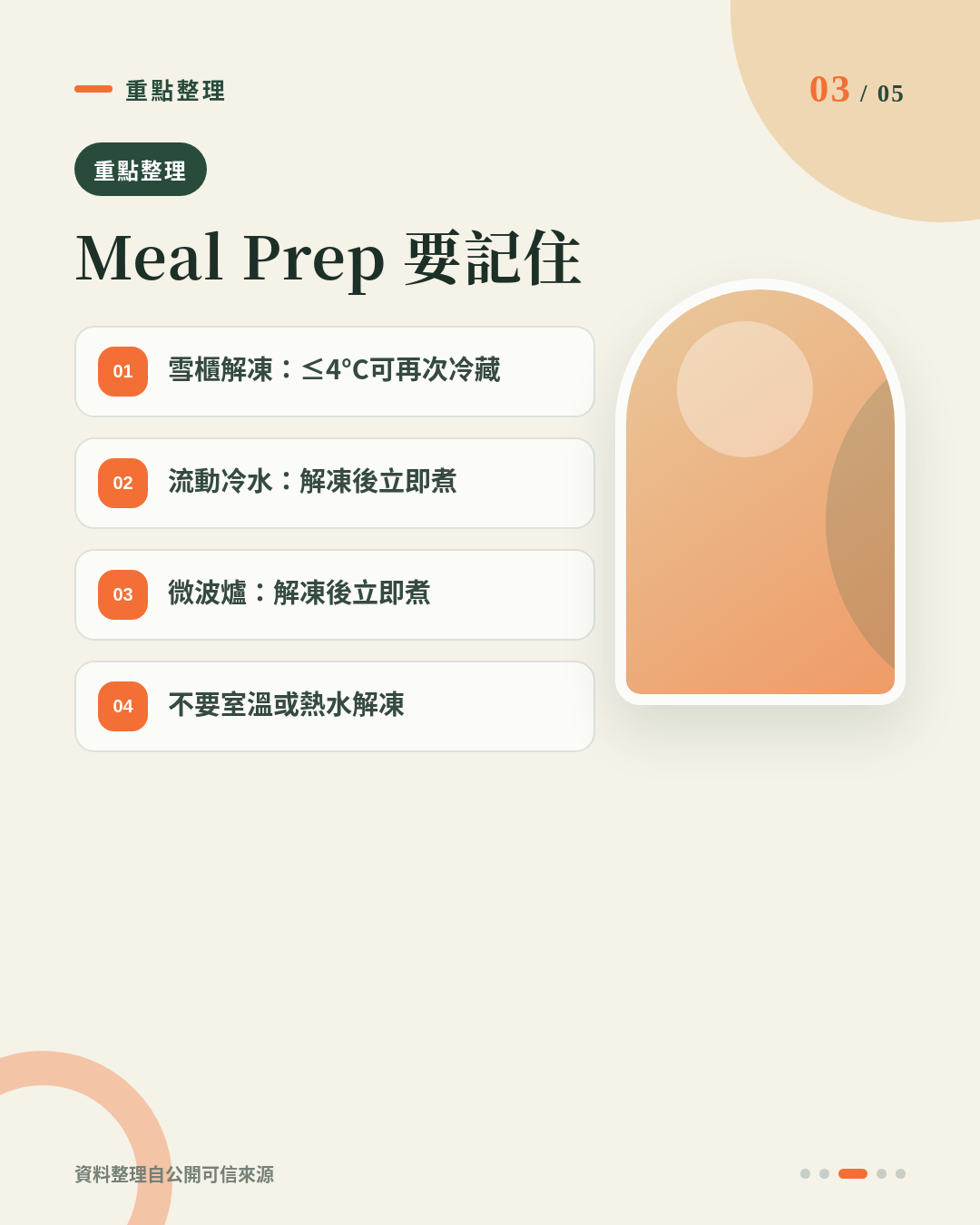
The Hong Kong Food Safety Centre lists three thawing methods: refrigerator, running tap water, and microwave, and advises against thawing at room temperature or in hot water. Thawing in the refrigerator at 4°C or below allows the food to be refrigerated again after thawing; however, if thawed under running cold water or in the microwave, it should be cooked or processed immediately. Therefore, whether the food can be refrigerated again depends on the thawing method and temperature control, not on whether a small amount of ice remains on the surface.
- Refrigerator thawing: Keep at 4°C or below; can be refrigerated again.
- Cold water thawing: cook or process immediately after thawing.
- Microwave thawing: cook or process immediately after thawing.
- Do not thaw at room temperature or with hot water.
3. What is the impact on Meal Prep? The key is 'when to cook' rather than 'how much to cook'.
If chicken siu mai are thawed in the fridge and kept at 4°C or below, subsequent cooking and chilling processes can be arranged as needed. Conversely, if thawed with cold running water or a microwave, the thawed raw food should not be returned to the fridge to wait a few days before cooking; it should be cooked or processed immediately. For Meal Prep, this means it is best to decide how many portions are needed for the day first, then choose the appropriate thawing method to avoid repeated thawing, chilling, and refreezing for batch meal prep.
- To plan Meal Prep in advance: fridge thawing is easier to coordinate with batch processing.
- After cold water or microwave thawing: do not leave it to cook several days later.
- Avoid the cycle of repeated thawing, chilling, and refreezing.
- Storage and consumption times after cooking should also follow food and food safety guidelines.
4. Ordering frozen chicken siu mai online: how to judge after delivery?
Upon actual receipt, judgment should be made based on 'packaging + condition + temperature information + label'. If only partially thawed but still frozen, do not rush to treat it as fully thawed food; check the product label and the merchant's storage requirements. If self-thawing is needed, subsequent handling methods differ for the fridge, cold running water, and microwave. If the food has clearly warmed up, or if it is unknown whether it was exposed to higher temperatures for a long time during transit, contact the merchant to confirm rather than deciding to refreeze based solely on appearance.
- Step 1: Check that the packaging is intact and review the storage instructions.
- Step 2: Observe whether the product is partially frozen, completely softened, or has clearly warmed up.
- Step 3: Recall or confirm with the merchant the storage conditions during transportation and handover.
- Step 4: Decide whether to cook immediately or refrigerate again based on the actual thawing method used.
5. Common misconceptions: ice water is not the only standard for judgment.
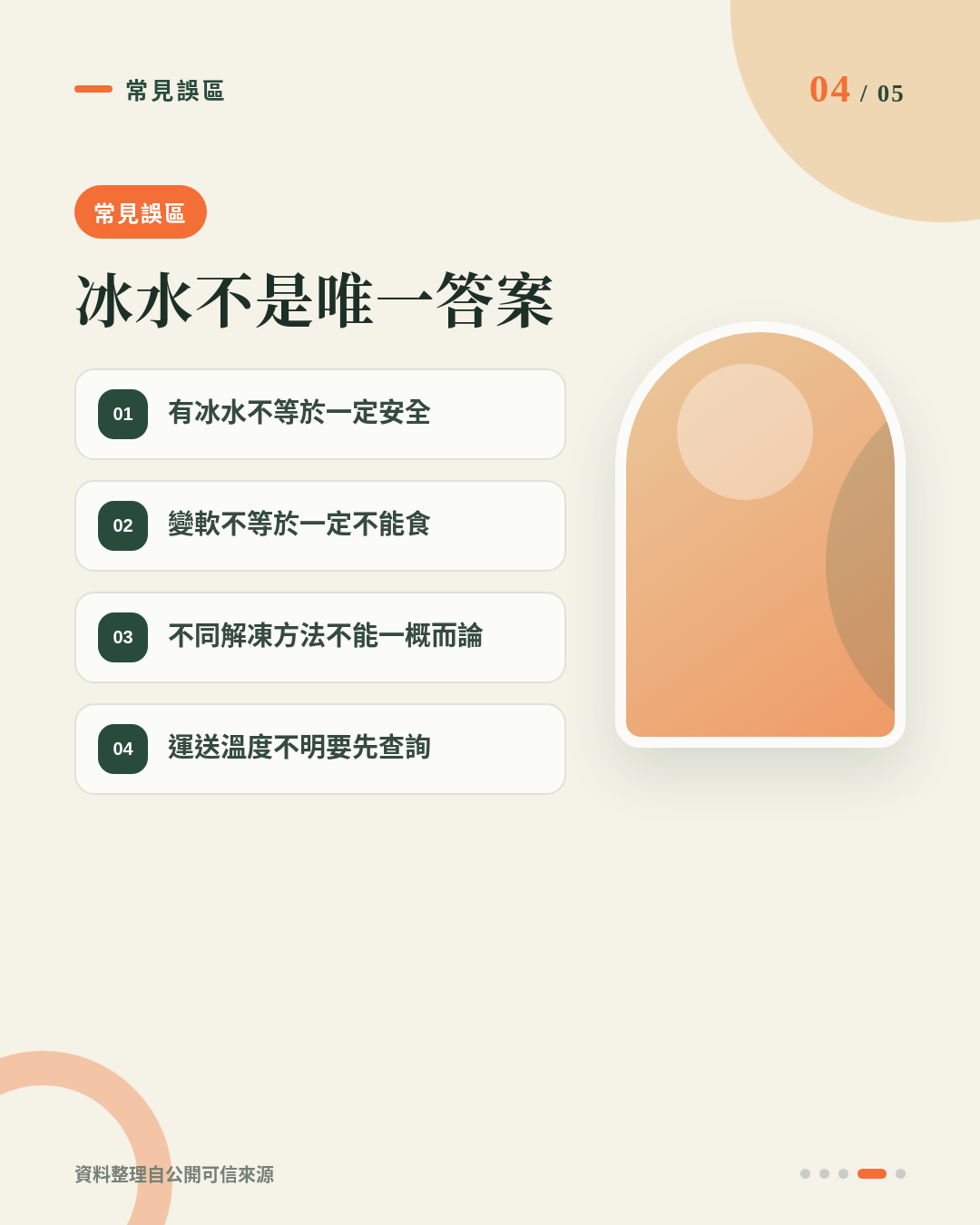
The most common misunderstanding is treating 'presence of ice' as proof of safety, or equating 'softening' directly with having to discard the food. The Centre for Food Safety actually prioritizes thawing method and temperature control. Another common issue is returning food thawed with cold running water or a microwave to the fridge for the convenience of Meal Prep, which does not align with relevant thawing principles. Thawing at room temperature or using hot water to speed up the process is also not recommended.
- Misconception 1: The presence of ice water guarantees safety.
- Misconception 2: If the food has softened, it is definitely inedible.
- Misconception 3: All thawing methods allow the food to be refrigerated again after thawing.
- Misconception 4: Thawing at room temperature or in hot water is faster and therefore more convenient.
Frequently Asked Questions
The chicken siu mai arrived partially thawed; can they be refrozen?
It depends on the thawing method and temperature control. The Centre for Food Safety points out that thawing in the fridge and keeping at 4°C or below allows for re-chilling; thawing with cold running water or a microwave requires cooking or processing immediately. If the temperature during online food delivery cannot be confirmed, refer to the product label and query the merchant first.
There is a small amount of ice water in the packaging; does this mean the chicken siu mai has gone bad?
Do not rely solely on a small amount of ice water. Consider the actual temperature of the food, whether it is still frozen, the packaging condition, delivery storage conditions, and the product label. Ice water itself is not the sole standard for judging food safety.
After thawing with cold running water, can I put it in the fridge and cook it the next day?
According to the Centre for Food Safety's thawing principles, food thawed with cold running water should be cooked or processed immediately and should not be treated as if it were thawed in the fridge and can be stored slowly.
After thawing chicken siu mai in a microwave, can they be re-chilled?
The Centre for Food Safety states that food thawed in a microwave should be cooked or processed immediately. Therefore, food thawed in a microwave should not be returned to the fridge to wait for later processing.
Which thawing method should be chosen for Meal Prep?
If you need to plan processing time in advance, fridge thawing is easier to coordinate with Meal Prep, provided the temperature is kept at 4°C or below throughout. Cold running water and microwave thawing require immediate cooking or processing, making them more suitable for situations where you are ready to handle the food right away.