 Skip to content


Want to make high-protein Meal Prep after work? How to pre-rehydrate and portion dried abalone to save the most time?
Popular Questions Answered
Want to make high-protein Meal Prep after work? How to pre-rehydrate and portion dried abalone to save the most time?
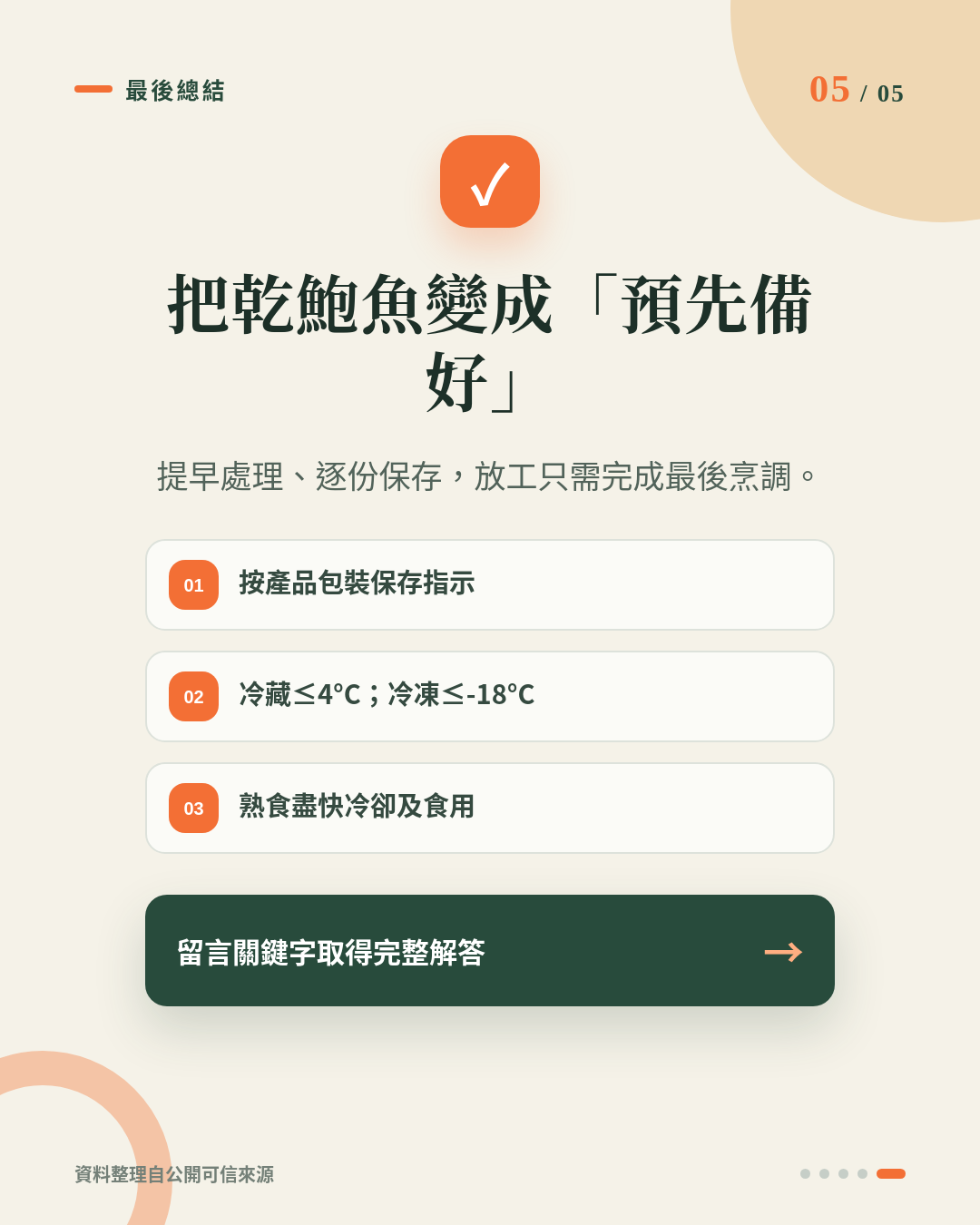
Dried abalone is not suitable as a '15-minute protein' for cooking immediately after work. A more practical approach is to arrange in advance: first check the packaging and condition of the dried goods, then follow a reliable rehydration method to refrigerate, soak, change water, and clean; after rehydrating, portion according to the consumption date, refrigerate for short-term needs, and freeze the parts needed later according to food safety principles. After cooking, divide into single-meal portions, combine with other proteins and vegetables, so that after work you only need to heat or complete the final cooking. The rehydration time will be affected by the size of the abalone, the degree of dryness, and the product handling method; a single recipe's number of days should not be taken as a fixed standard for all products.
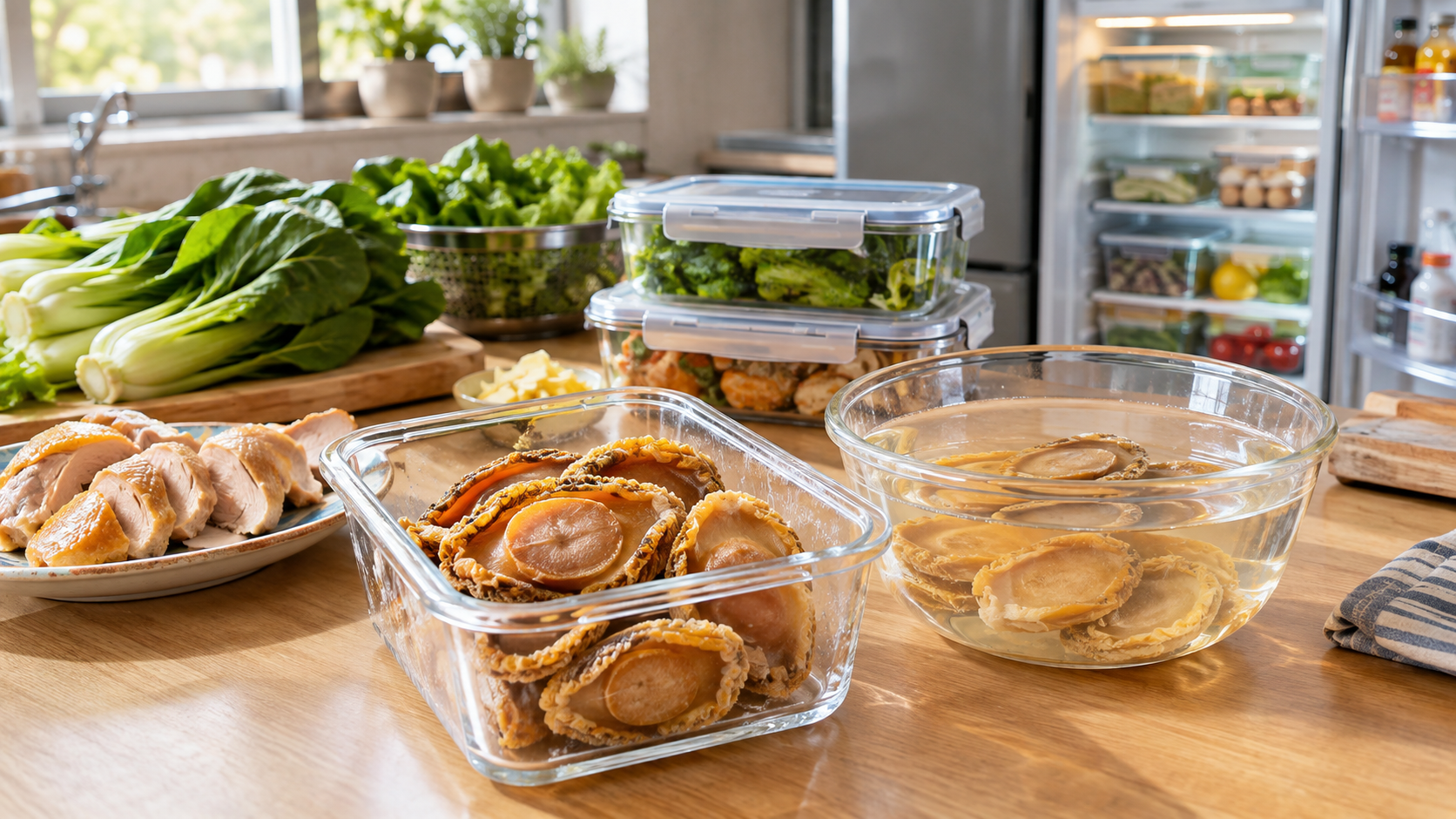
Illustrated Key Points
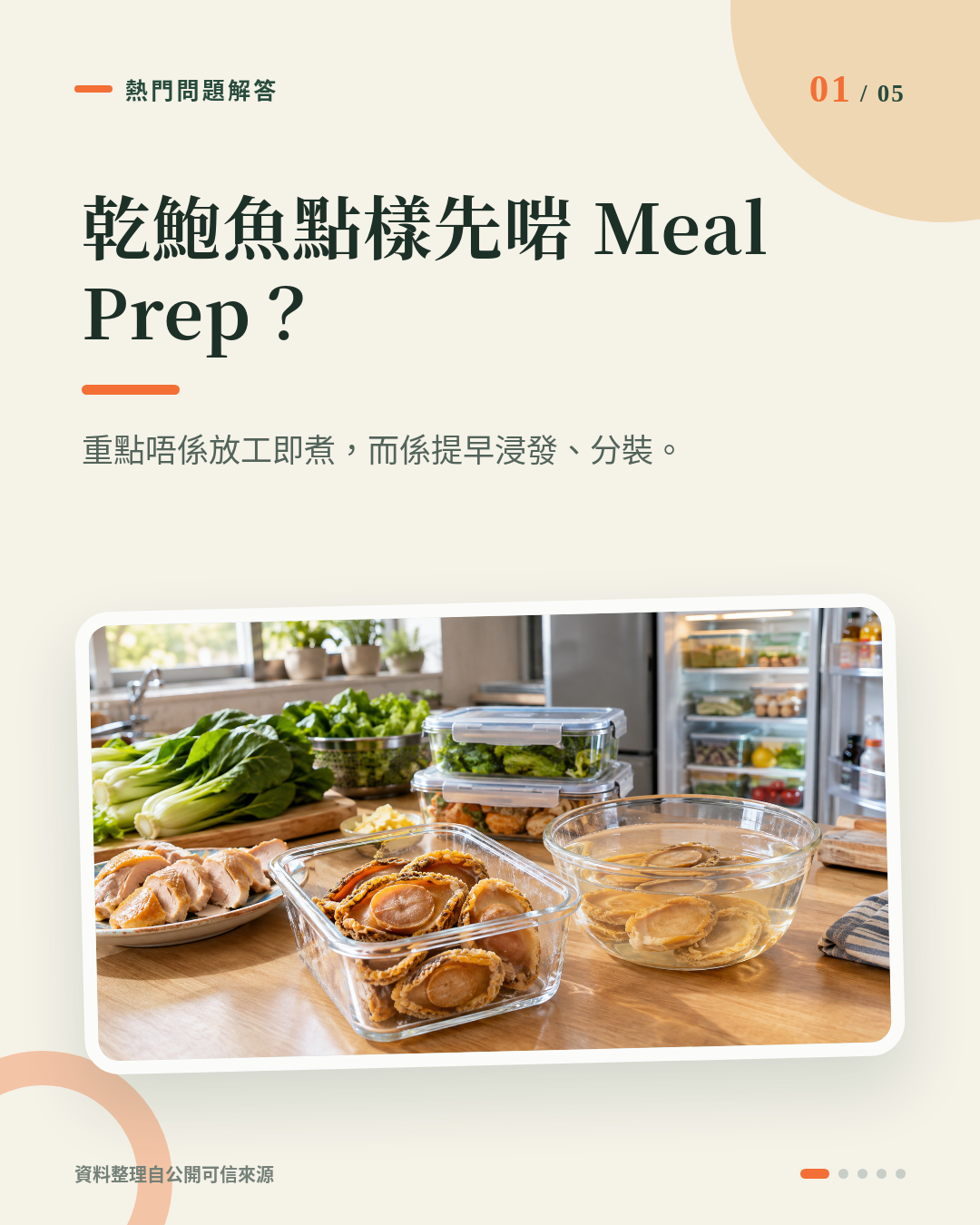
For those who are fitness, strength training, muscle building, or controlling calories, the thing Meal Prep users fear most is not that cooking is difficult, but having to start from zero every day. Dried abalone itself requires pre-soaking and processing, so it is more suitable as a 'periodic prep' ingredient rather than deciding whether to eat at the last minute before work. It is worth noting that existing product information does not provide data on protein, fat, or calories per serving, so nutrition cannot be estimated solely based on the name 'abalone'. The following focuses on how to safely move up the soaking, portioning, and cooking times, reducing daily cooking effort.
1. First, accept a reality: Dried abalone requires advance planning
Processing dried abalone is not soaking and cooking immediately. Reference methods for soaking dried abalone include placing it in a clean container, covering with cold water, and refrigerating to soak, changing water halfway, and then proceeding with subsequent soaking and cleaning; another, newer soaking guide adopts a longer, multi-stage process. The two times are different, which just illustrates that soaking time should not be rigidly applied with a fixed number. For Meal Prep, the most important thing is to separate the 'soaking day, cleaning day, cooking day, and eating day' rather than pursuing the fastest completion.
- Before starting, check the storage and handling instructions on the product packaging.
- If the dried goods are damp, have an abnormal smell, or the packaging is damaged, do not use them first.
- Use refrigerated soaking as a more manageable preparation method.
- When the product does not provide a fixed soaking time, do not promise yourself that it must be soaked for a certain number of days.
2. Process a batch at once, then portion by consumption date
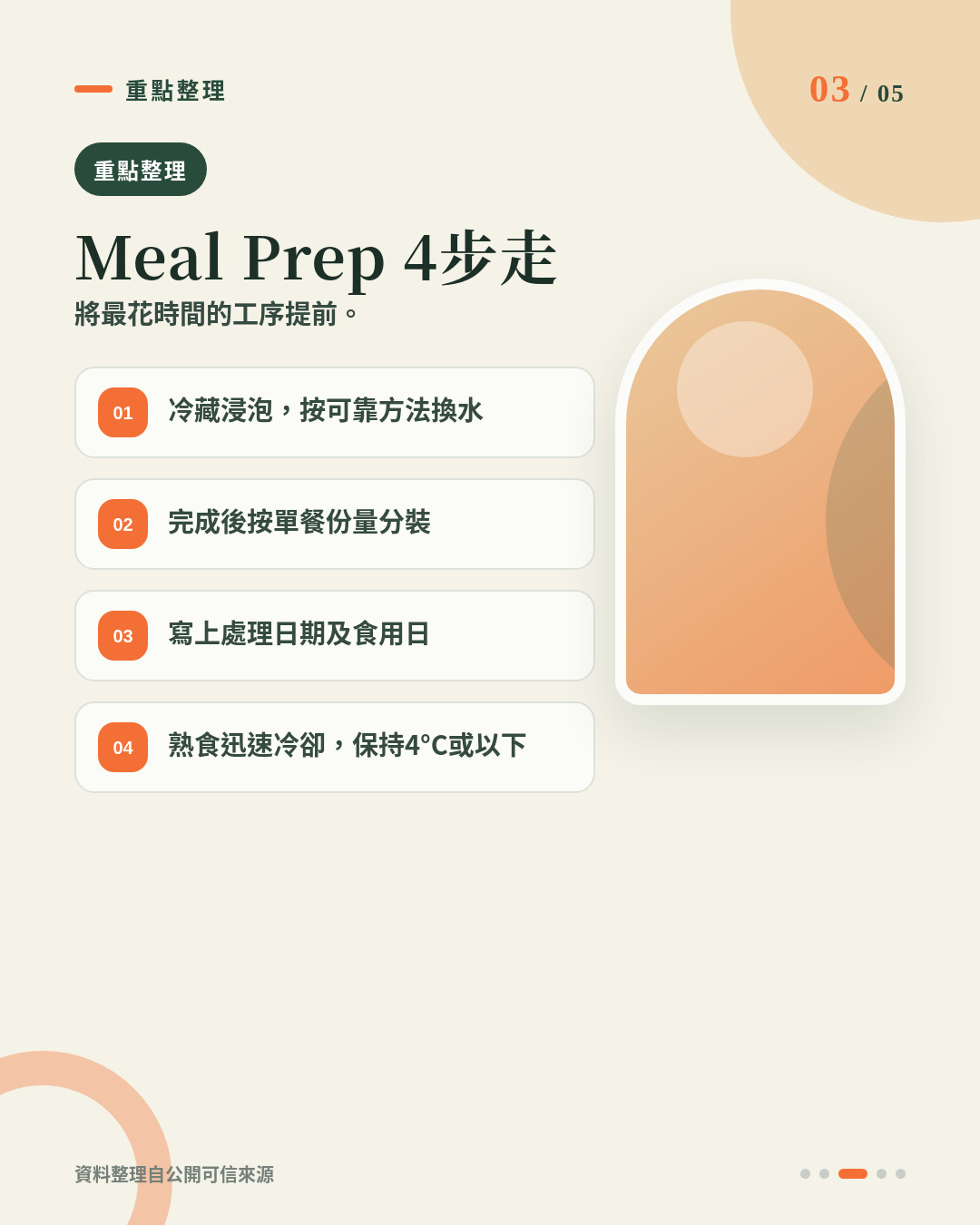
During the soaking period, use clean, food-contact suitable containers with lids, refrigerate, and change water according to the method used. After cleaning, do not repeatedly take out and put back the entire batch of abalone daily or thaw it. A more efficient approach is to decide how many meals you need in the next few days first, then portion by single meal or one to two meals, writing the processing date and estimated eating date. This way, after work you only need to take out the portion needed for the day, and the rest continues to maintain a stable storage state.
- Package each portion individually to avoid thawing the entire batch just to get one or two pieces.
- Keep containers sealed and avoid contact between fresh food juices and processed food.
- Labels must state at least 'Processing Date' and 'Eat By'.
- Chilled food must be kept at 4°C or below; frozen food must be kept at -18°C or below.
3. Distinguish four states: Unsoaked, Soaked, Cooked, and Meal Prep.
After dried abalone becomes a Meal Prep ingredient, preservation methods cannot be conflated. For unsoaked dried abalone, follow the product packaging storage instructions as a priority; if the packaging specifies freezing, store according to frozen food temperature requirements. For abalone that has been soaked but not yet cooked, it is a perishable ingredient requiring careful handling and should not be treated as ambient food simply because it was once dried. Cooked abalone and completed dishes should be handled according to cooked food cooling, refrigeration, or freezing principles. The Centre for Food Safety recommends that cooked food not eaten immediately should be cooled rapidly and placed in a refrigerator at 4°C or below within two hours; refrigerated leftovers should be consumed as soon as possible, and any food kept in the refrigerator for more than three days should be discarded.
- Unsoaked Dried Abalone: Follow the product packaging storage instructions.
- Soaked but Uncooked: Keep refrigerated, or freeze after safe portioning; do not leave at room temperature for long periods.
- Cooked Abalone: Cool rapidly before refrigerating or freezing; do not let the whole pot cool slowly.
- Completed Dishes: Best portioned per meal to reduce repeated opening, thawing, and reheating.
4. Most practical cooling, refrigeration, and thawing methods for Meal Prep.
If not eaten immediately after cooking, the critical control is the time food spends between 4°C and 60°C. The Centre for Food Safety suggests dividing large quantities of cooked food into smaller portions and placing them in shallower containers to help cool quickly; cooked food intended for refrigeration should enter the refrigerator within two hours. Refrigerated leftovers should be reheated thoroughly and avoid repeated reheating. As for frozen portions, if intended for consumption the next day or later, thaw in the refrigerator beforehand to avoid slow thawing at room temperature.
- Do not leave large pots of cooked food at room temperature for long periods.
- Smaller portions and shallow containers help speed up cooling.
- Refrigerator should be kept at 4°C or below, and freezer at -18°C or below.
- Thaw frozen food in the refrigerator first.
- Cooked food must be reheated thoroughly before eating again; the Centre for Food Safety recommends a core temperature of 75°C.
5. How to combine high-protein Meal Prep to truly save time after work?
Dried abalone is more suitable for serving as a 'pre-processed dried seafood main course' rather than the sole protein source. Since this product data does not provide data on protein, fat, and calories per serving, unverified figures cannot be used to calculate daily macronutrients. In actual Meal Prep, you can portion the processed abalone and combine it with your own planned other protein sources, vegetables, and staples when eating; for example, pre-cooked chicken, eggs, or legumes, then adjust portions according to personal nutrition goals. This way, the daily tasks that truly need to be done can be reduced to just reheating, assembling, and final seasoning.
- Process the abalone first, then portion by one meal per serving.
- Other proteins, vegetables, and staples can be prepped separately and combined when eating.
- Do not estimate the protein content of this product yourself based on the three words 'high protein'.
- Price, protein, and calorie comparisons should be based on the actual product label or reliable nutritional data.
Common Misconception: Trying to be fast actually makes the process harder to control.
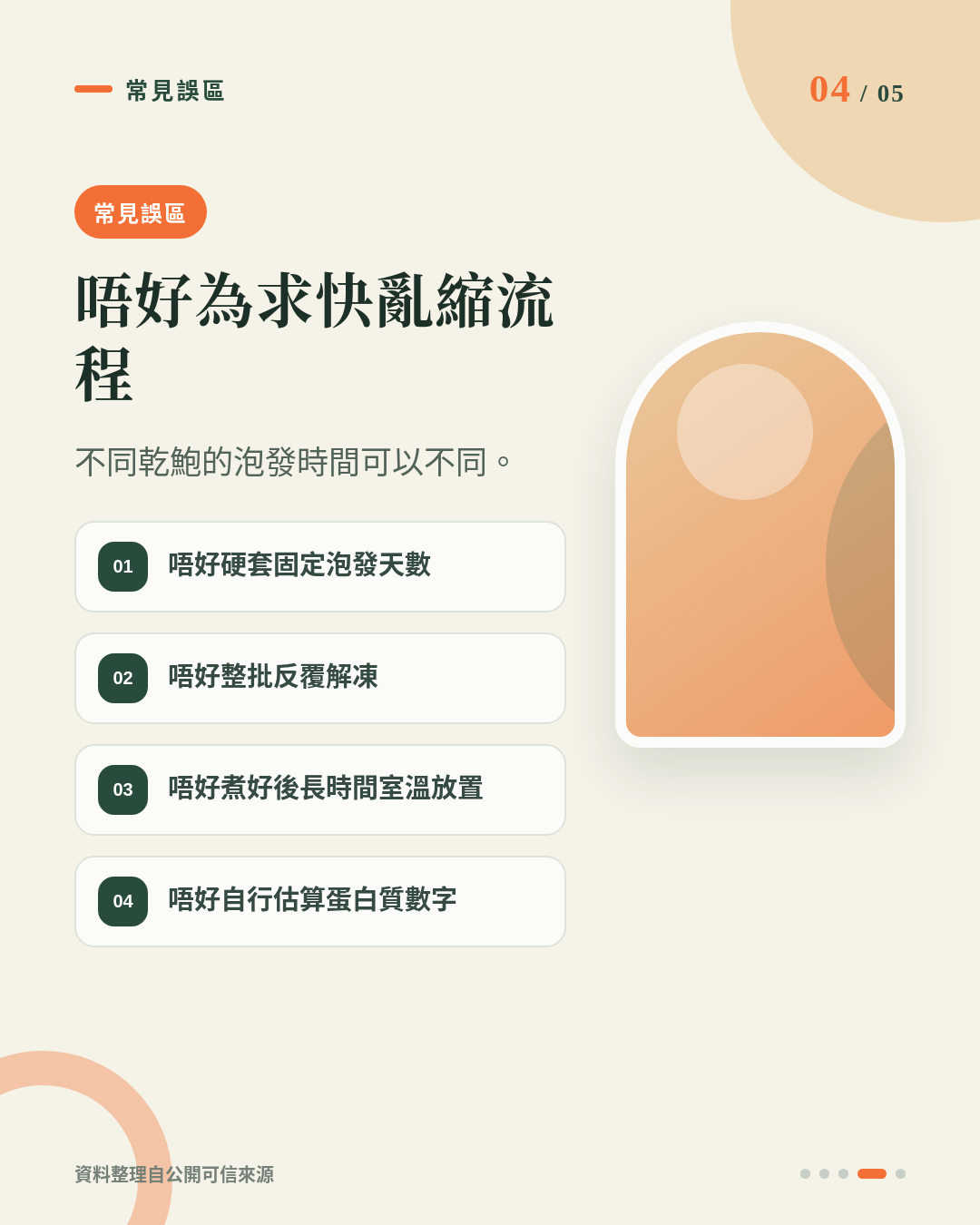
The most common issue with dried abalone Meal Prep is not cooking it slowly enough, but mixing different stages together. The most important thing to avoid is treating dried abalone like ordinary frozen meat and thawing it rapidly, arbitrarily shortening the soaking time, repeatedly thawing the entire batch of abalone, or leaving the cooked pot at room temperature to cool naturally. There are different schools of thought on soaking methods, but for food safety, packaging instructions and government food safety recommendations should take priority.
- Misconception 1: Thinking you can start processing dried abalone only after work.
- Misconception 2: Directly applying the fixed soaking days from other dried abalone recipes.
- Misconception 3: Thawing the entire batch and then refreezing the remaining portion.
- Misconception 4: Leaving cooked food at room temperature for a long time.
- Misconception 5: Estimating protein or calories based solely on the name 'abalone'.
Frequently Asked Questions
Can dried abalone be soaked in advance for a few days?
Advance planning is possible, but it is not recommended to apply a fixed number of days to all dried abalone. As shown in reference materials, methods vary from refrigerated soaking to subsequent heating processing; you should judge based on product characteristics, actual soaking state, and the reliable method adopted, while maintaining appropriate refrigeration throughout.
Can soaked but uncooked abalone be frozen?
If the product and handling method do not prohibit freezing, you can portion by single serving, seal, and freeze according to food safety principles, then thaw in the refrigerator before cooking. Since there is no reliable data supporting a specific frozen shelf life for this product, you should not write a fixed 'can be kept for several months' yourself.
How long can cooked abalone be refrigerated?
The Centre for Food Safety recommends that refrigerated leftovers should be consumed as soon as possible, and points out that leftovers kept in the refrigerator for more than three days should be discarded. Cooked food should be cooled rapidly and placed in a refrigerator at 4°C or below within two hours.
Should Meal Prep be portioned by meal?
Yes. Portioning by meal reduces the need to repeatedly open, remove, thaw, and re-refrigerate the whole batch of food when only one serving is eaten at a time, and makes it easier to write dates and manage by eating order.
How much protein is in South African 40–42 Head Premium Dried Abalone?
The product data currently provided does not list protein, fat, or calories per serving, so reliable calculation is not possible. If your goal is fitness, muscle gain, or fat loss, you should use the official nutrition label or nutritional data provided by the supplier.